Table of Contents
- One Fabric Does Not Have to Mean One Identity
- Fabric Has a Personality—but Designers Control the Character
- Chantilly: Romantic—or Minimal?
- Guipure: Feminine—or Architectural?
- The Six Variables That Change a Fabric's Identity
- From Multiple Identities to Modular Fashion
- The Modular Lace Wardrobe: One Look, Several Situations
- Why Lace Is Particularly Powerful for Modular Fashion
- Modular Design Is Not Simply About Detachable Sleeves
- Why “One Fabric, Many Identities” Matters Commercially
- One Fabric Can Also Move Between Market Categories
- United Lace: Fabric as a Creative Tool, Not Simply a Raw Material
- The Future of Fashion May Be About Designing Less—and Creating More
- FAQs
One Fabric Does Not Have to Mean One Identity
What makes a fabric romantic? What makes it powerful, professional, rebellious or luxurious?
The obvious answer might be color, motif or texture. But in contemporary fashion, the identity of a textile is rarely fixed by the textile alone.
A single fabric can communicate completely different personalities depending on silhouette, transparency, layering, proportion, lining, construction, styling and context.
Consider black Chantilly lace.
Cut into a floor-length gown over a nude lining, it becomes sensual eveningwear. Place the same lace over an opaque black base and construct it into a sharply tailored blouse, and it becomes sophisticated workwear. Layer it over a minimalist camisole with wide-leg trousers, and the language becomes contemporary urban luxury. Use only selected motifs as appliqué on a structured jacket and it begins to feel almost architectural.
The fabric has not necessarily changed.
Its identity has.
This distinction is becoming increasingly important for fashion designers and garment manufacturers because modern collections must do more with fewer, better-considered materials.
As discussed in United Lace's analysis of Fabric & Lace Trends 2026 for Thai Fashion Brands, fabric is increasingly functioning as a form of brand language rather than merely as the surface from which a garment is made.
That shift creates an important question:
Instead of asking what one fabric can make, should designers ask how many identities one fabric can create?
Fabric Has a Personality—but Designers Control the Character
Every textile begins with certain physical characteristics.
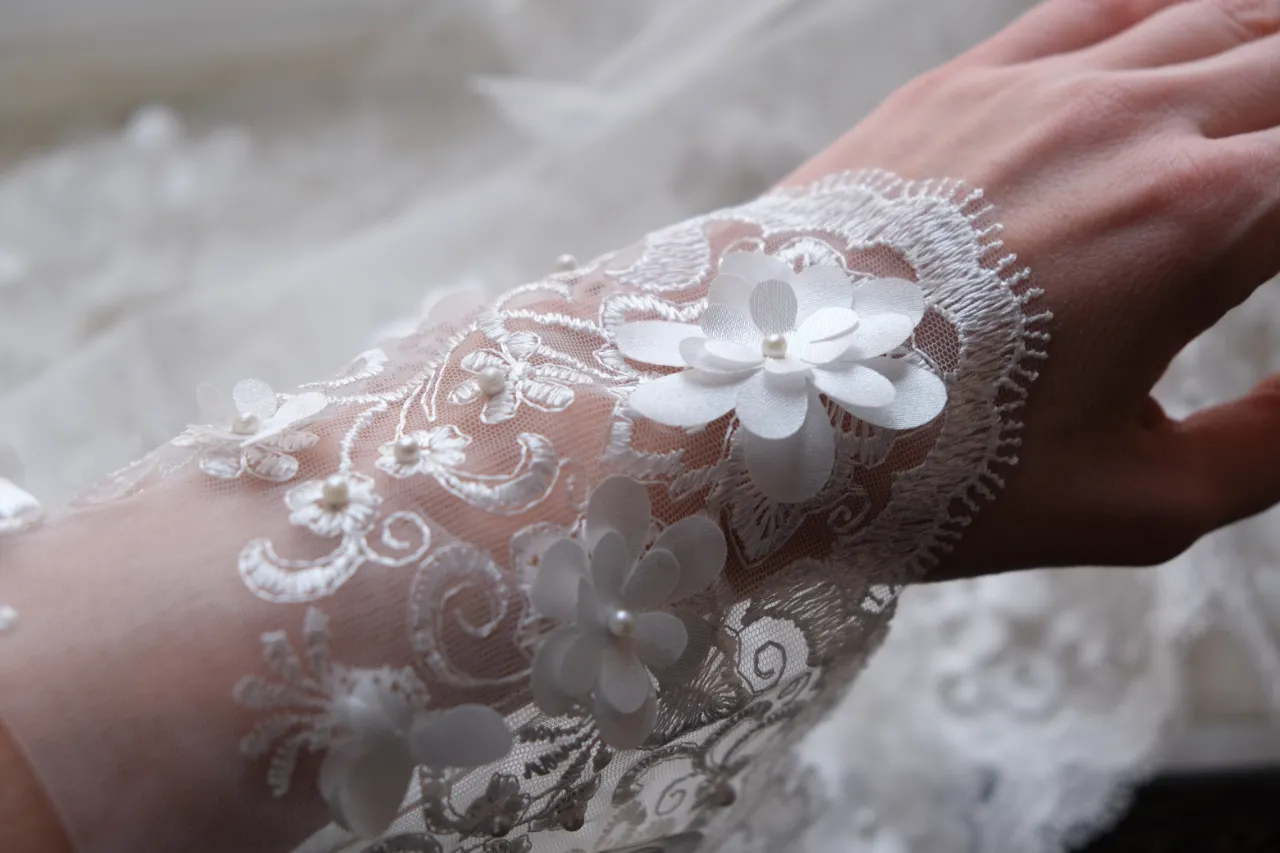
Weight determines how closely it follows the body. Drape influences movement. Transparency determines how much is revealed or concealed. Surface texture affects light. Motif scale changes visual proportion. Density determines whether the fabric feels delicate, architectural or decorative.
Lace makes these relationships particularly visible because lace combines surface, negative space and motif within the textile itself.
The United Lace lace and embroidery collection illustrates how dramatically those material characteristics can vary.
Chantilly lace offers delicate motifs and soft drape. Guipure creates stronger raised patterns and greater visual structure. Tulle lace introduces airiness and transparency. Cotton lace brings a more natural, matte character. Embroidered and embellished textiles create dimensional surfaces capable of supporting stronger occasionwear positioning.
But none of these characteristics dictates only one fashion identity.
Chantilly: Romantic—or Minimal?
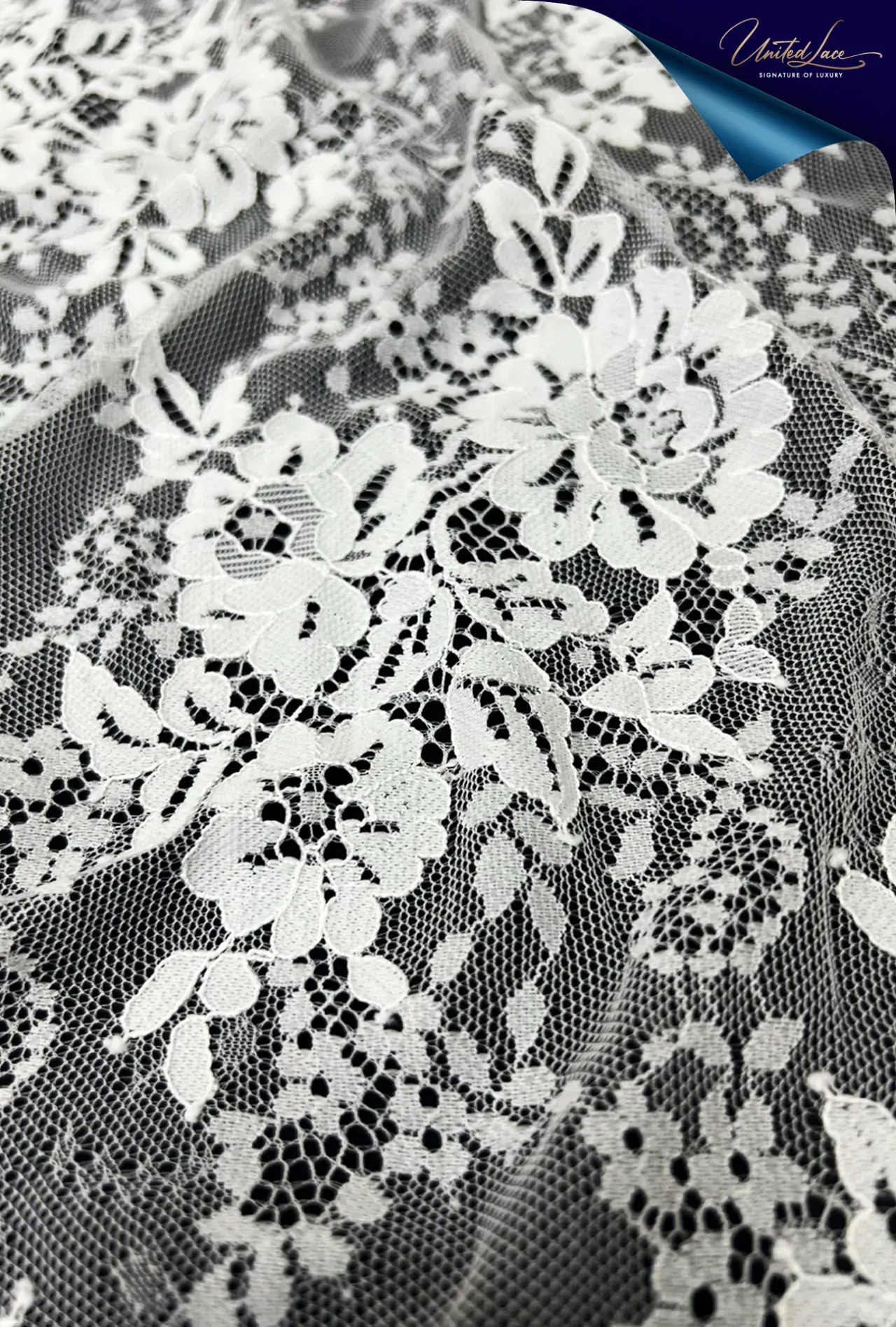
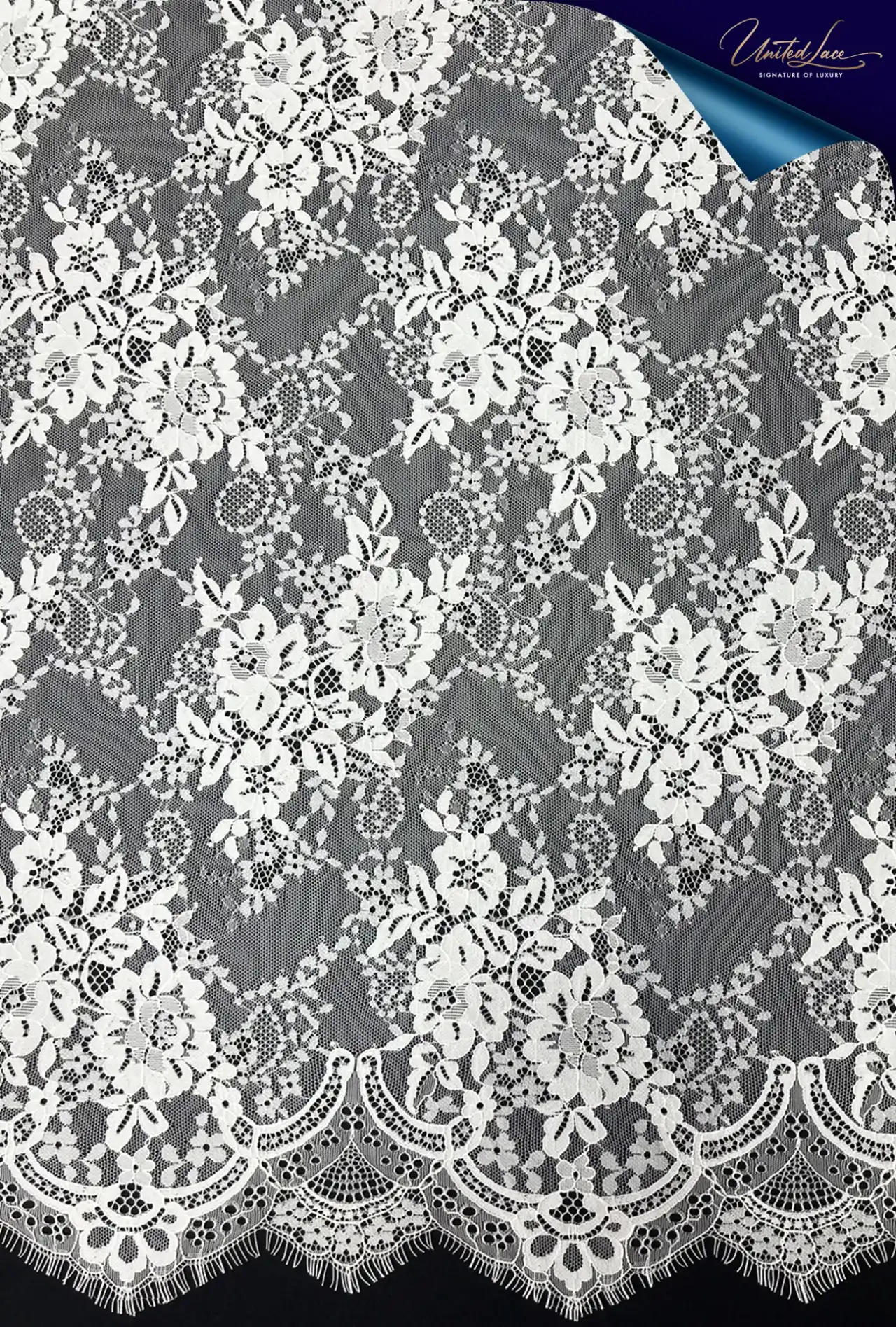
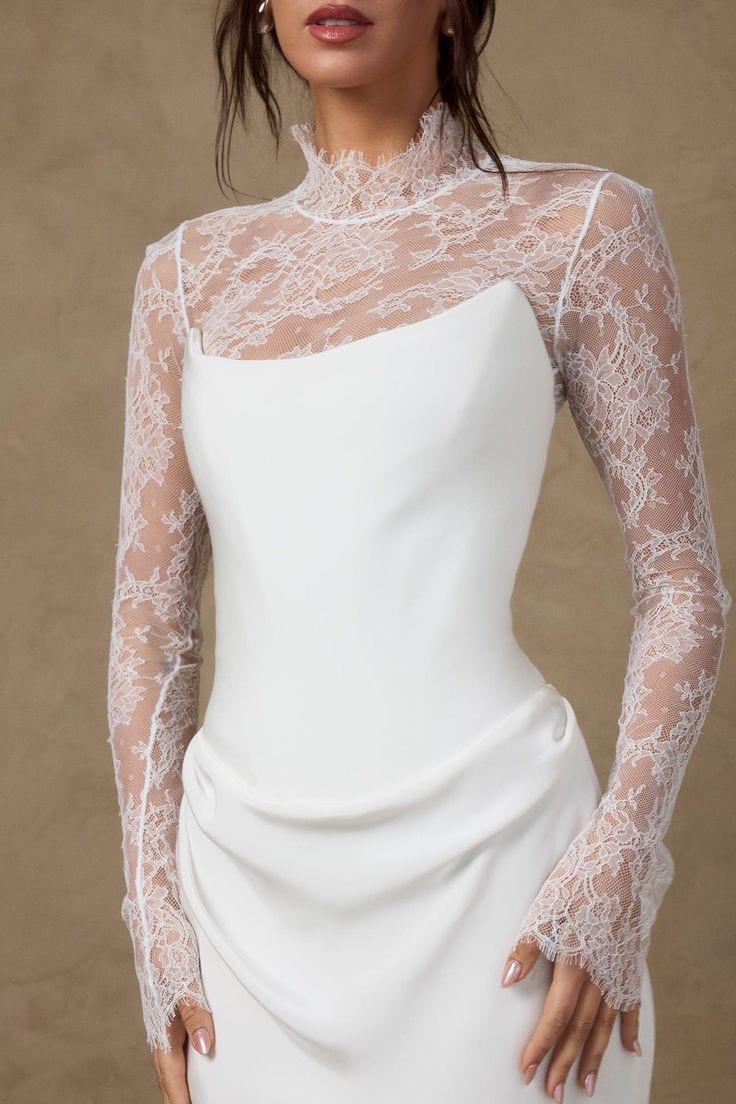
Traditionally, Chantilly lace is associated with femininity, bridalwear and romance.
Yet reduce the embellishment, introduce generous negative space and combine it with a sharply cut silhouette, and Chantilly becomes remarkably modern.
A sheer Chantilly blouse beneath a tailored blazer communicates something entirely different from the same textile used across a sweeping bridal skirt.
This versatility explains why designers should look beyond textile categories and instead study material behaviour.
For more on this evolution, see Lace Fabric Trends in 2026: The New Luxury for Fashion Brands.
Guipure: Feminine—or Architectural?
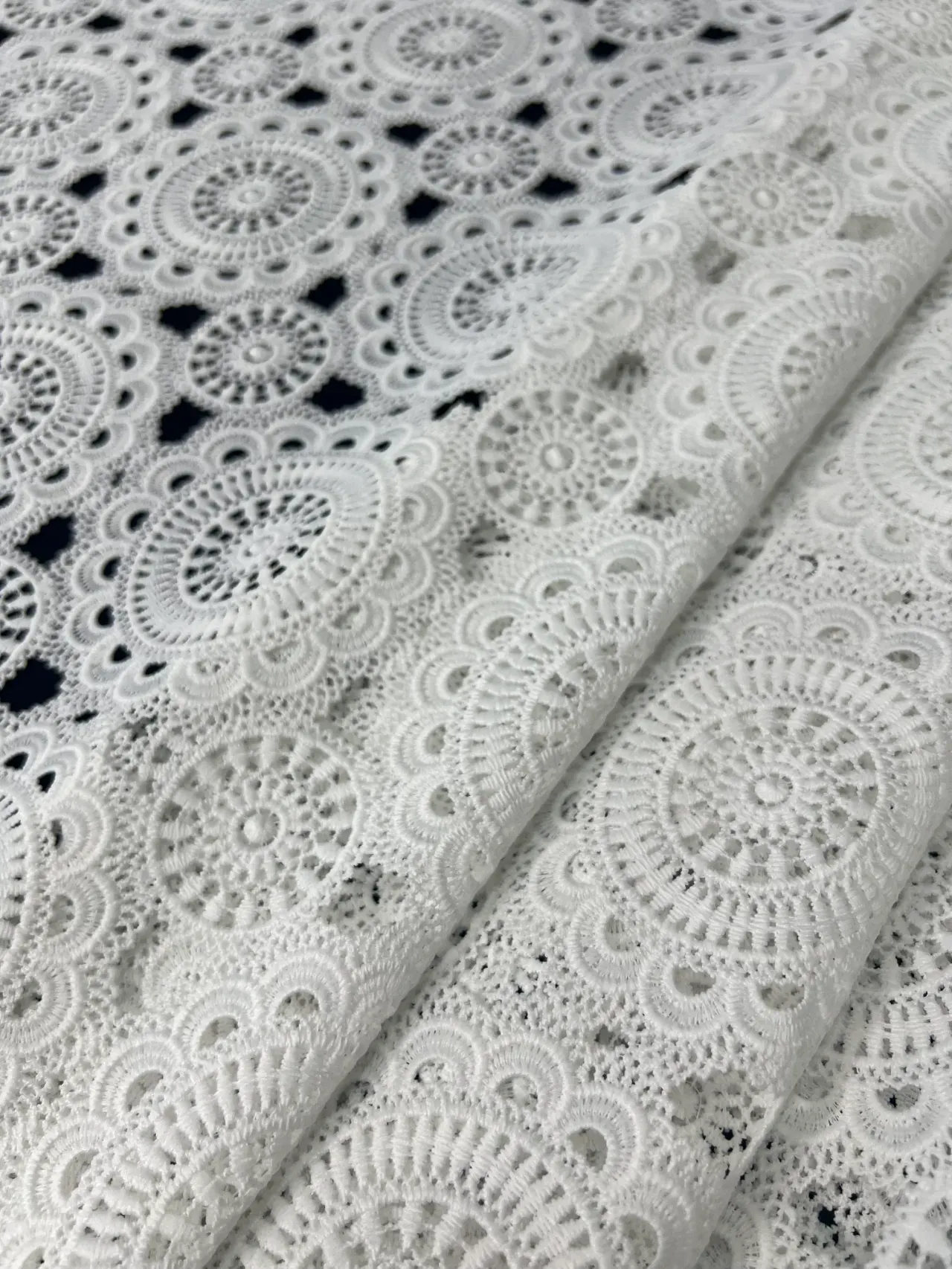
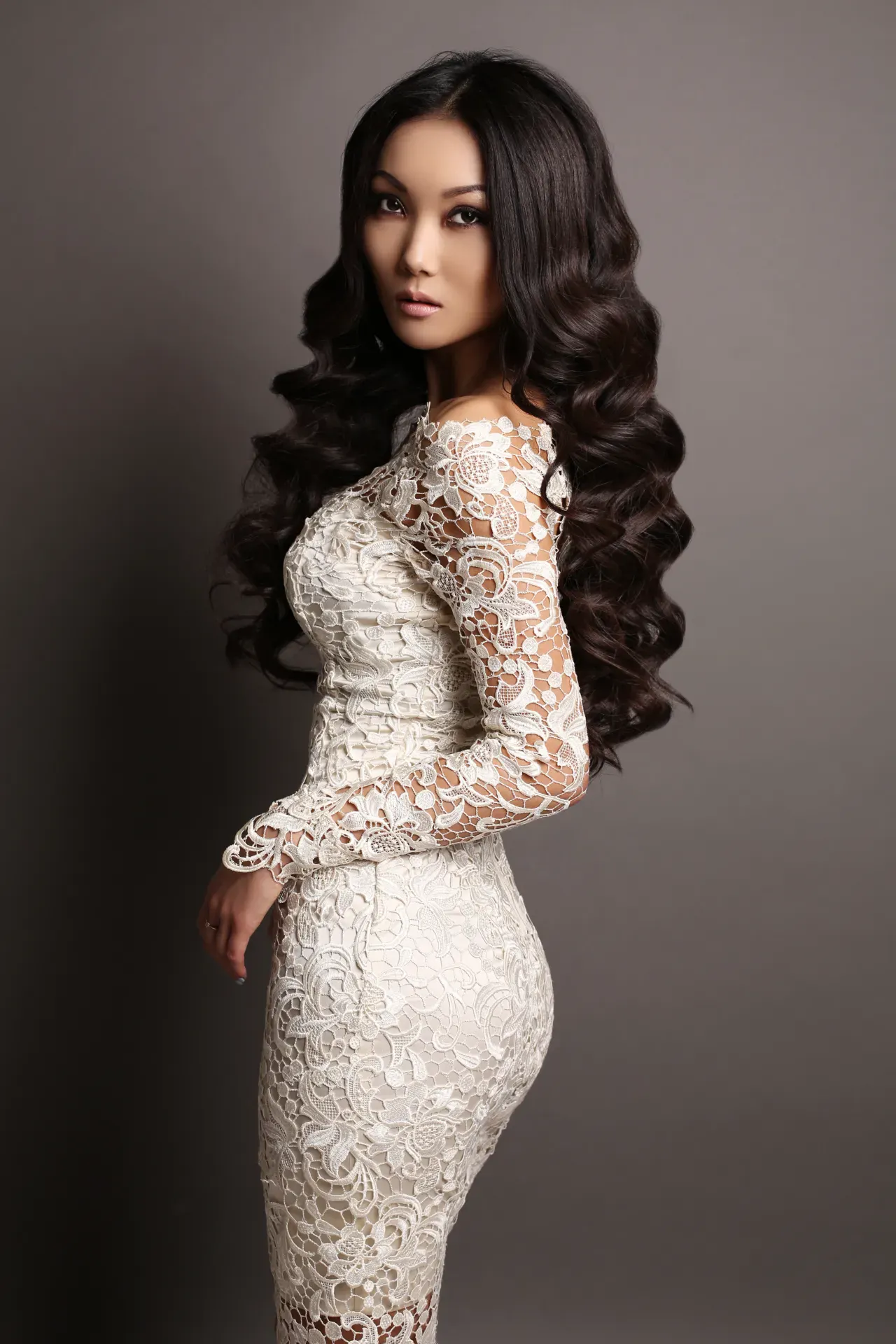
Guipure demonstrates the opposite transformation.
Its connected, raised motifs give it greater visual weight than delicate net-based lace. Used conventionally, floral Guipure can feel elegant and feminine.
But combine large-scale Guipure with geometric pattern cutting, restrained color and structured tailoring, and the textile acquires an architectural personality.
A Guipure pencil skirt can be polished. A cropped Guipure jacket can feel directional. A sleeveless Guipure dress can become occasionwear. Selected motifs extracted and repositioned as appliqué can create an almost couture-like surface.
One textile. Four products. Four identities.
That is valuable creatively—but also commercially.
The Six Variables That Change a Fabric's Identity
For designers developing collections, fabric identity can be considered through six variables.
1. Silhouette
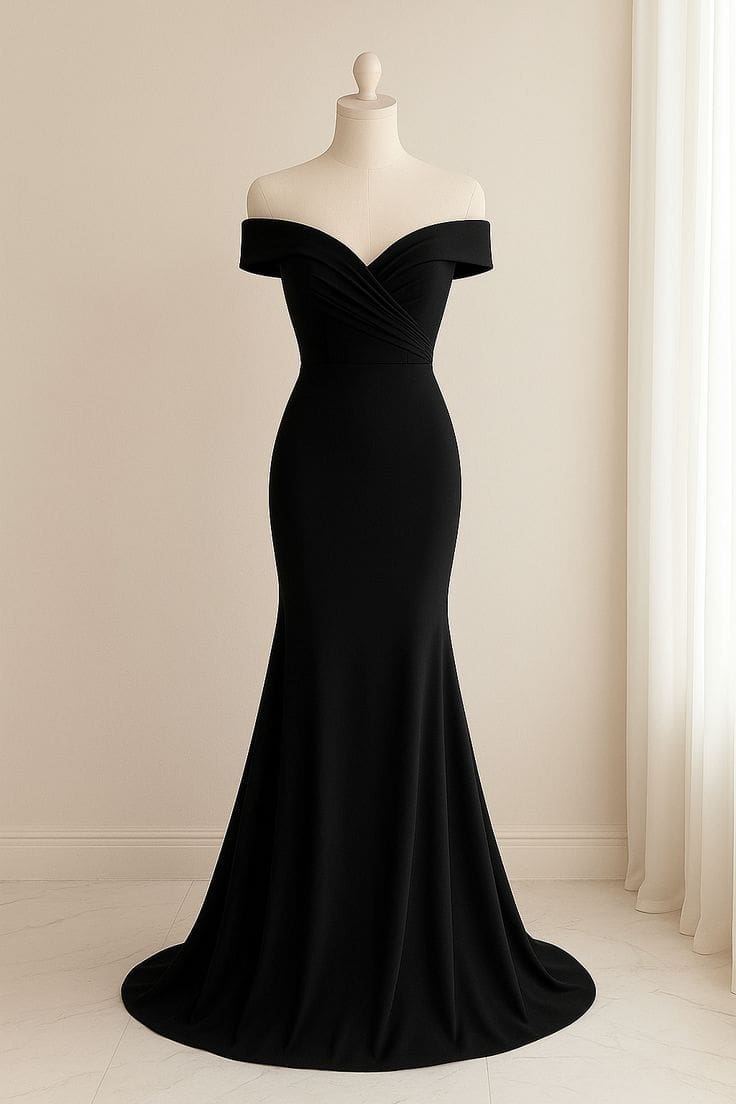
A fabric changes character when its silhouette changes.
Soft Chantilly in a flowing bias dress communicates movement and romance. The same lace in a straight shirt or structured column silhouette becomes restrained and contemporary.
Guipure in a full skirt feels decorative and feminine. Guipure cut into a compact jacket becomes stronger and more assertive.
2. Transparency
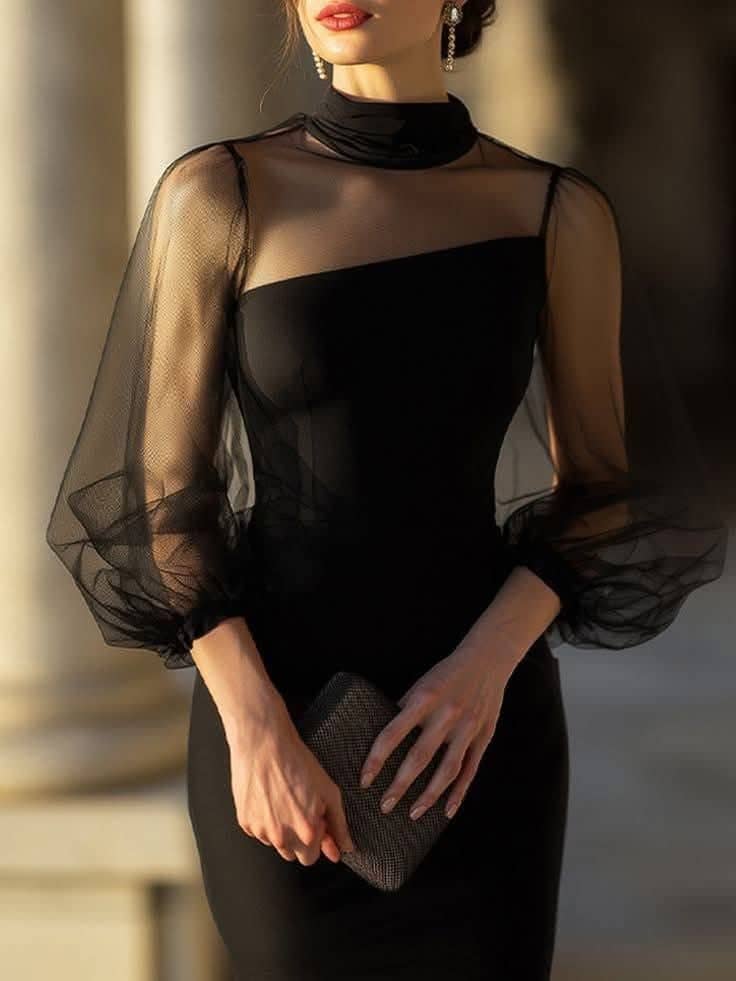
Transparency is one of the most powerful identity controls available when designing with lace.
The same lace can appear:
- sensual over skin,
- sophisticated over tonal lining,
- graphic over contrasting lining,
- subtle when used as an inset,
- dramatic when completely unlined.
This principle is explored further in Sheer Lace: The Fabric Defining Fashion's Layering Trend, where transparency becomes a construction tool rather than simply an aesthetic effect.
3. Layering
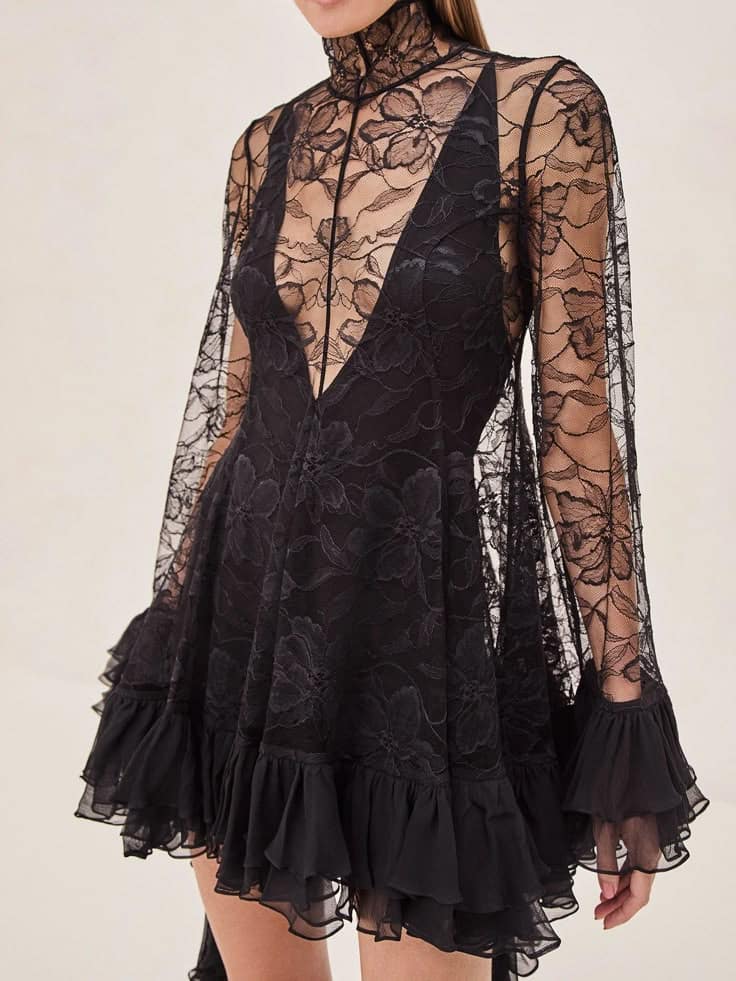
Place ivory lace over ivory and the effect is quiet and tonal.
Place it over black and suddenly every motif becomes graphic.
Layer lace over satin and luminosity enters the composition. Place it against crisp cotton and the contrast becomes more contemporary.
This means the designer can change the visual identity without changing the hero fabric itself.
4. Motif Placement
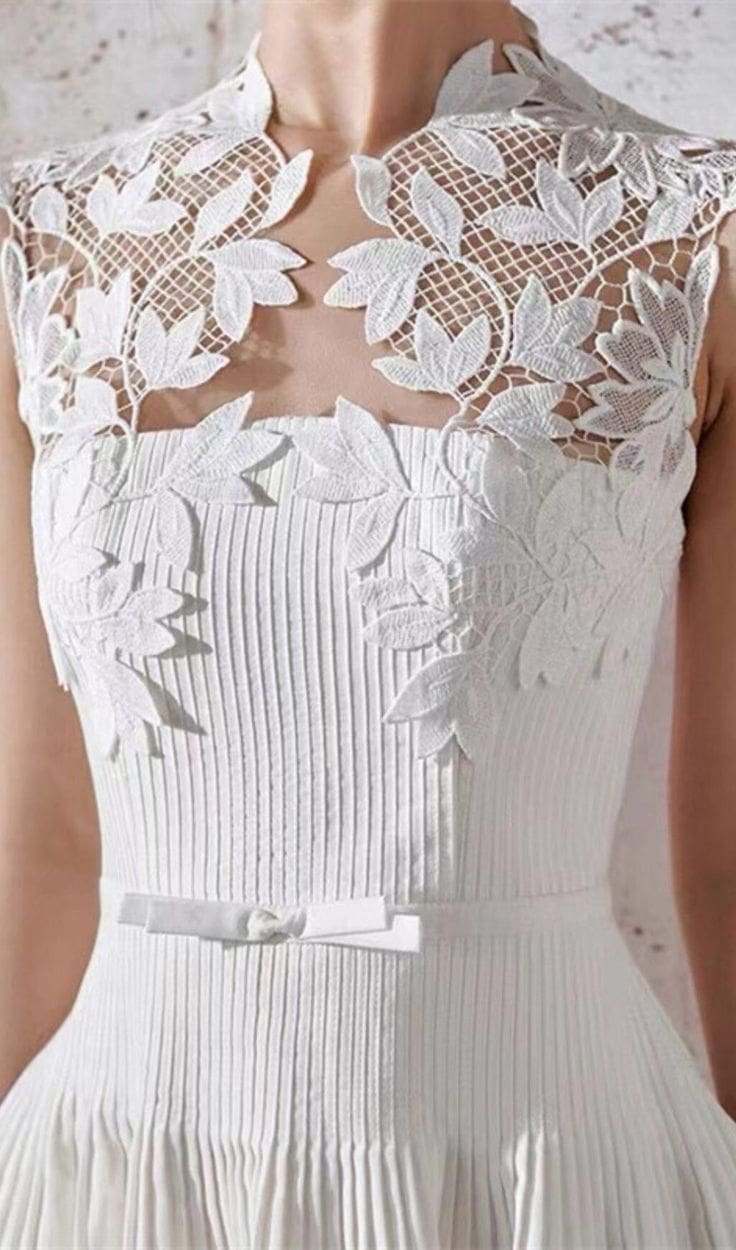
Lace does not always need to cover the entire garment.
A floral motif can migrate from body fabric to sleeve panel, neckline, hem, detachable collar or appliqué.
Strategic placement also allows designers to create visual hierarchy while controlling material consumption—an important consideration for commercial production.
5. Color
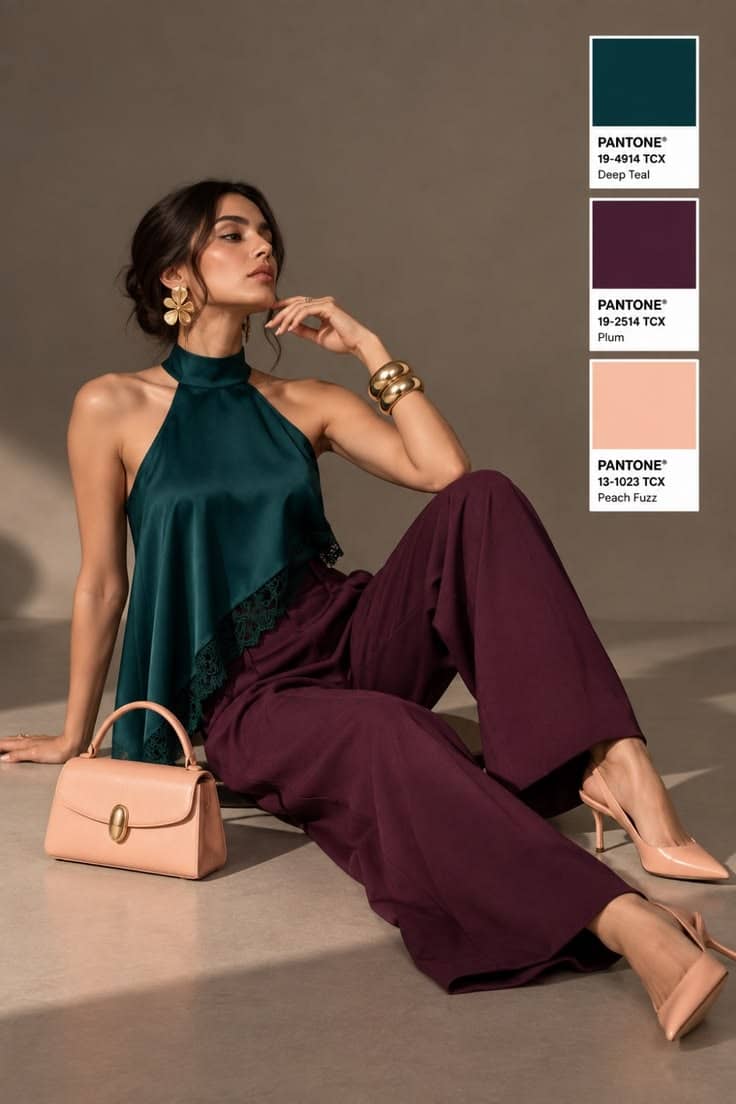
Color can transform textile perception immediately.
Ivory Chantilly may communicate bridal refinement. Black can create evening sophistication. Navy can reposition the textile toward professional dressing. A vivid jewel tone may move the same motif toward occasionwear.
Color therefore does not simply decorate lace. It changes its social context.
6. Styling
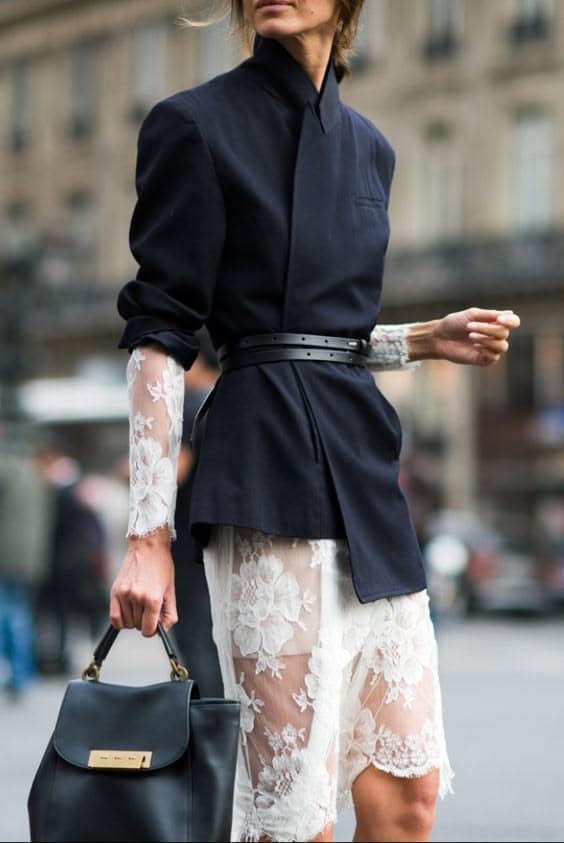
Finally, the garment does not exist in isolation.
Pair lace with pearls and satin and its heritage associations become stronger. Combine it with tailored trousers, minimal leather accessories and clean footwear and it becomes urban. Mix lace with denim or technical materials and the result can become deliberately disruptive.
The designer's job is therefore not simply to select fabric.
It is to direct its personality.
From Multiple Identities to Modular Fashion
This idea becomes even more commercially interesting when it intersects with modular fashion design.
Modular clothing is designed so that one garment—or coordinated system of garment components—can be reconfigured for different uses.
A sleeve may detach. A lace overlay may be removed. A long skirt may separate from an inner dress. A collar can transform a minimal blouse. A transparent outer layer can change an opaque day garment into eveningwear.
Instead of designing:
one garment = one appearance = one occasion
the designer begins thinking:
one garment system = multiple appearances = multiple occasions.
This is particularly relevant to lace and embroidery because these fabrics have high visual impact. A relatively small lace component can dramatically change the identity of an otherwise minimal garment.
The Modular Lace Wardrobe: One Look, Several Situations
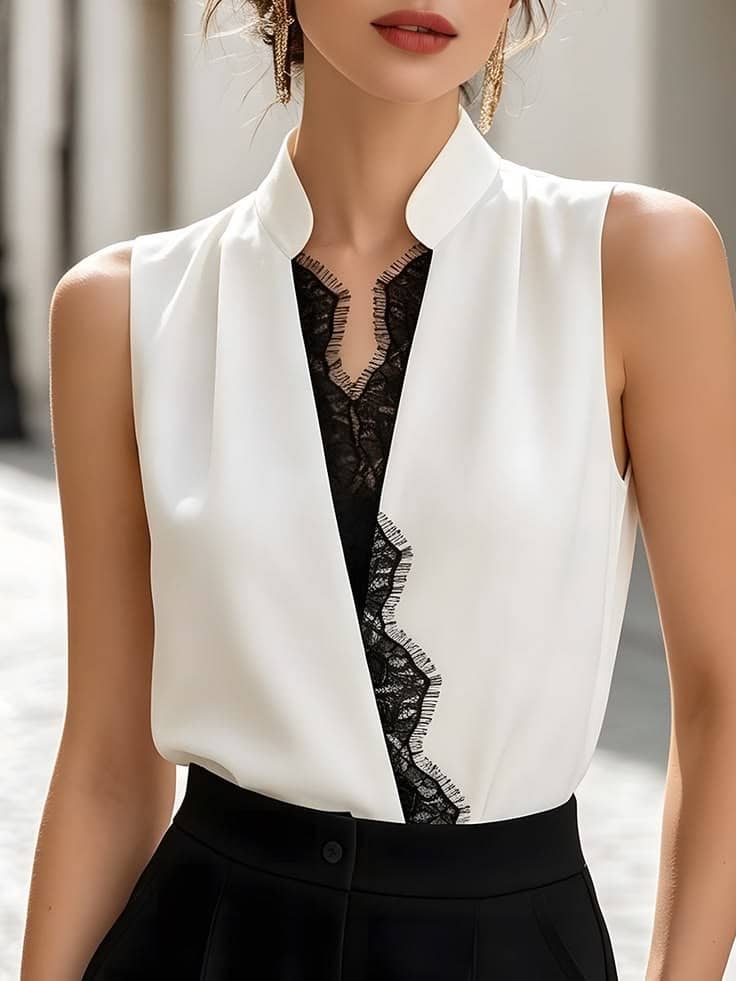
Imagine a premium fashion brand developing one core black crepe dress.
On its own, the dress is minimal and appropriate for work.
Add detachable Guipure sleeves and it becomes more expressive.
Add a sheer embroidered-tulle overlay and the dress transitions toward dinner or cocktail dressing.
Replace the overlay with an embellished lace cape or detachable collar and the garment becomes appropriate for a formal occasion.
The base dress remains unchanged.
What changes is its textile architecture.
This creates an interesting product-development model:
Base garment + modular textile element = new fashion identity.
For brands, the concept can potentially create stronger storytelling around versatility while allowing the same textile language to appear across multiple SKUs.
It also aligns naturally with the evolution of lace for modern workwear, where lace is moving beyond traditional bridal and evening categories into professional wardrobes.
This movement from textile to finished garment is also visible through Parry Lace Studio, United Lace's own fashion label. By translating lace and embroidery from fabric into wearable pieces, Parry Lace Studio demonstrates an important principle for designers and garment developers: the identity of lace is ultimately determined by how the textile is cut, proportioned, layered and styled—not by its category alone. For B2B buyers, seeing lace considered in a finished-fashion context can also help bridge the gap between fabric sourcing and product development.
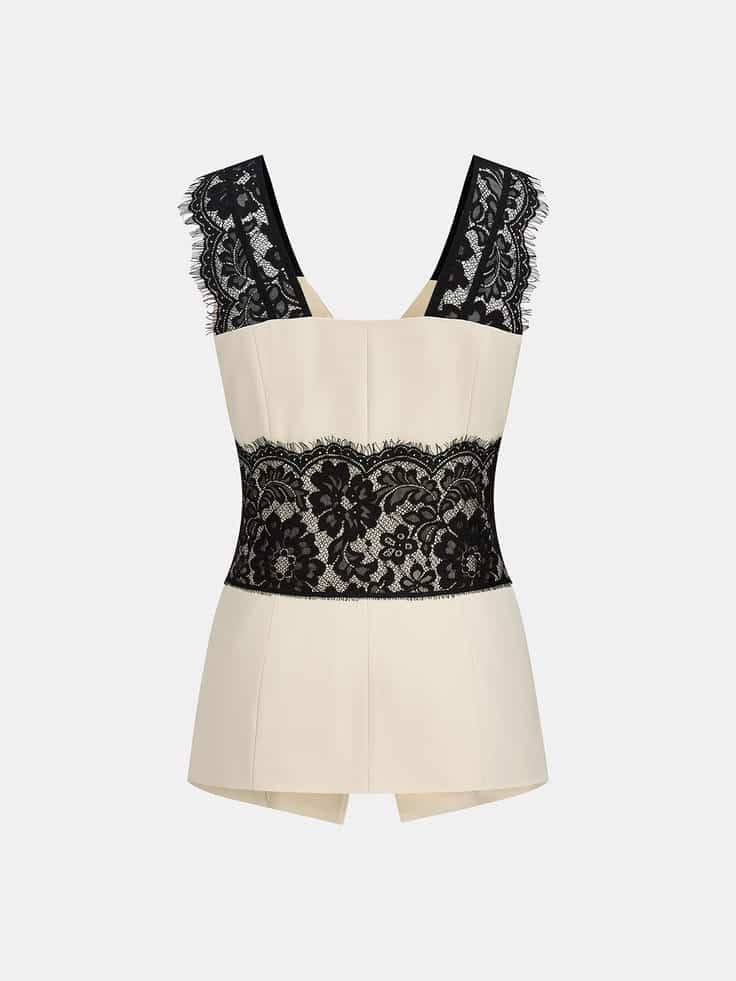
Why Lace Is Particularly Powerful for Modular Fashion
Not every fabric changes a garment's identity with the same efficiency.
Lace does.
This happens because lace simultaneously introduces pattern, texture, transparency and craftsmanship.
A detachable plain-fabric sleeve changes silhouette.
A detachable lace sleeve changes silhouette and surface identity.
An embroidered tulle overlay introduces motif, transparency, dimensionality and movement simultaneously.
This gives lace an unusually high visual impact relative to the amount of material used.
Chantilly Lace: The Transformative Layer
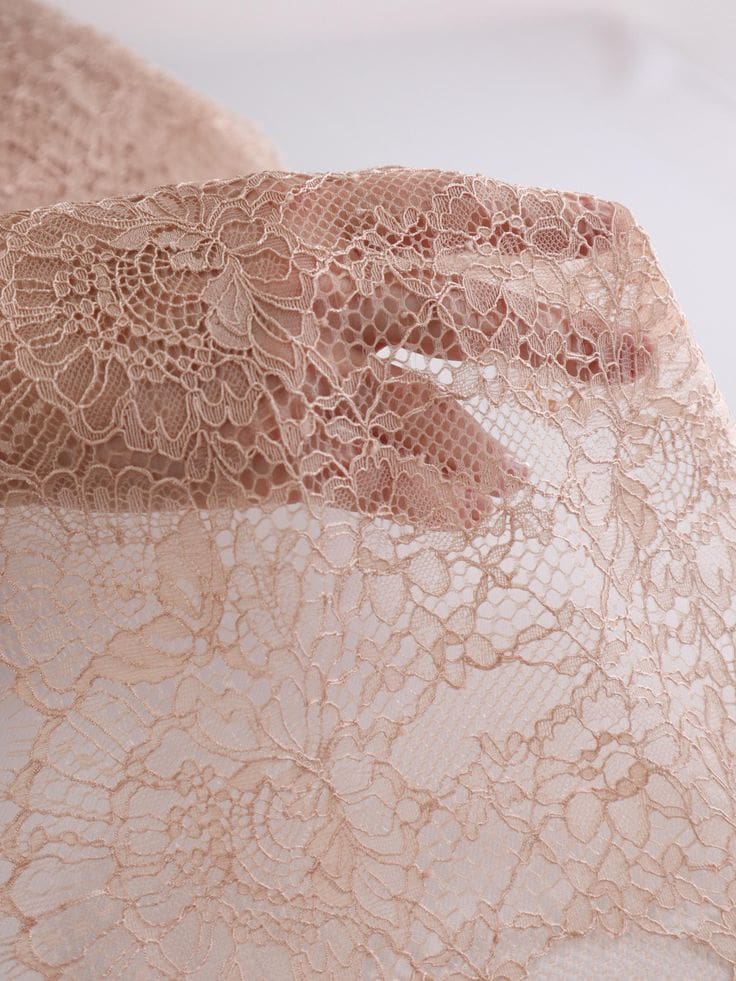
Fine Chantilly works particularly well for:
- removable sleeves,
- sheer overlays,
- detachable yokes,
- evening layers,
- lightweight overskirts,
- scarves and neck treatments.
Its soft drape allows it to transform garments without introducing excessive structure.
Guipure Lace: The Structural Module
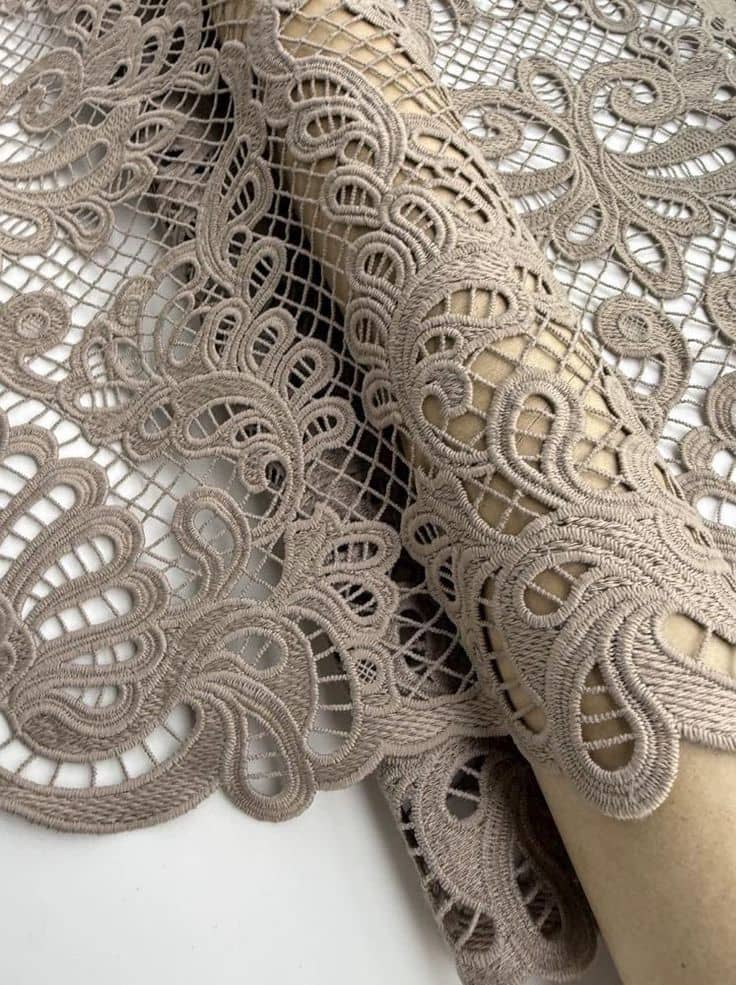
Guipure is better suited to components requiring definition:
- detachable collars,
- cuffs,
- structured sleeves,
- peplums,
- bodice panels,
- statement belts,
- jacket sections.
Its raised motifs create visual authority, making even relatively small modules noticeable.
Tulle and Embroidered Tulle: The Illusion Module
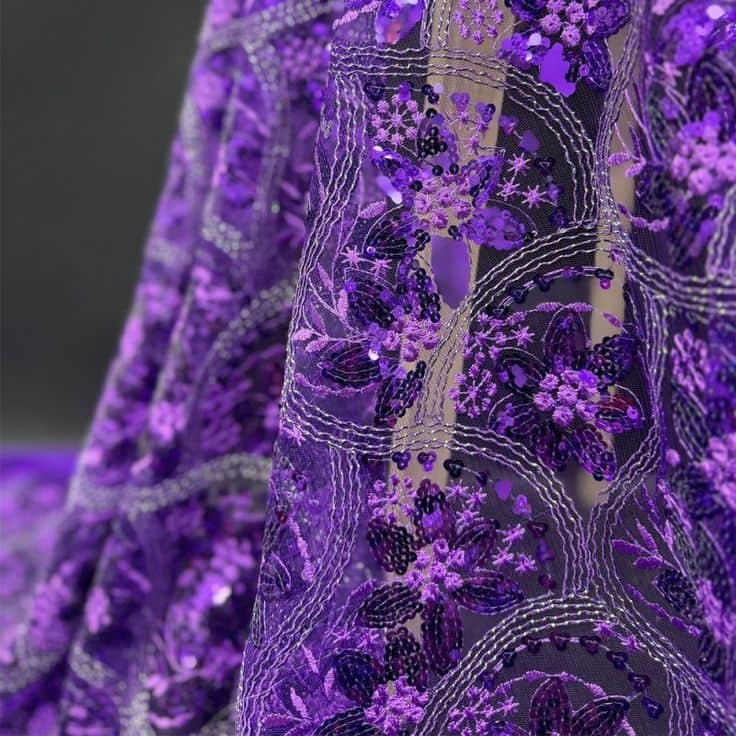
Tulle-based lace offers perhaps the greatest potential for modular layering because transparency allows the garment underneath to remain visible.
A transparent embroidered layer can effectively create a second visual surface without replacing the first garment.
Appliqué and Embroidery: The Customization Module
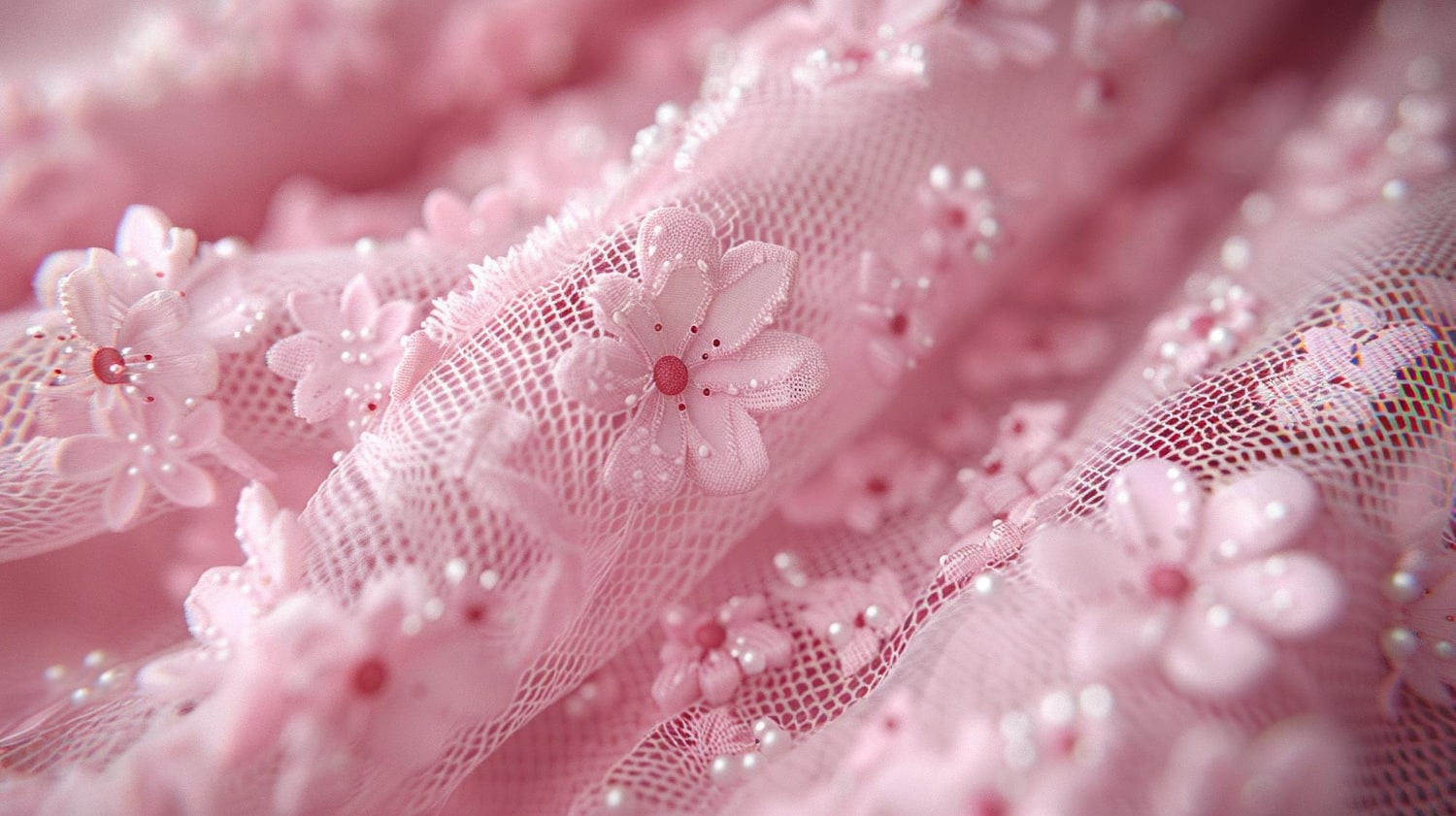
Appliqué creates another possibility: controlled transformation.
Instead of changing an entire layer, designers can develop removable embroidered motifs, floral components or decorative panels.
This can be especially useful for bridal, occasionwear, performance wardrobes and limited-edition fashion.
Modular Design Is Not Simply About Detachable Sleeves
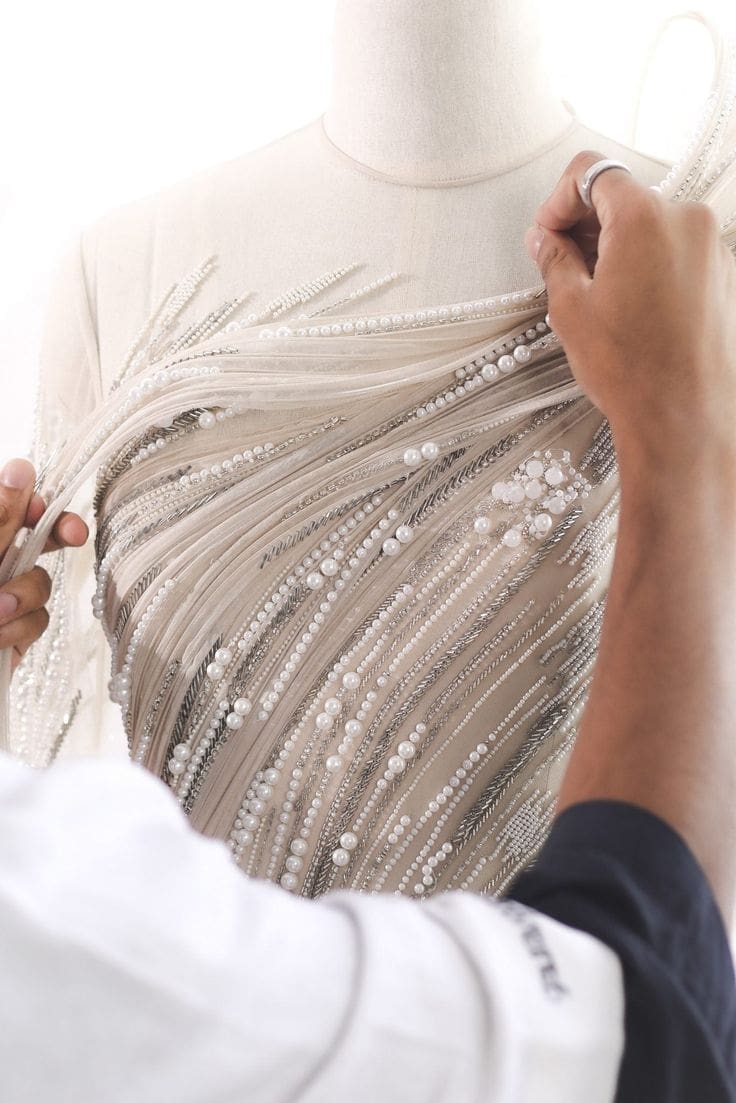
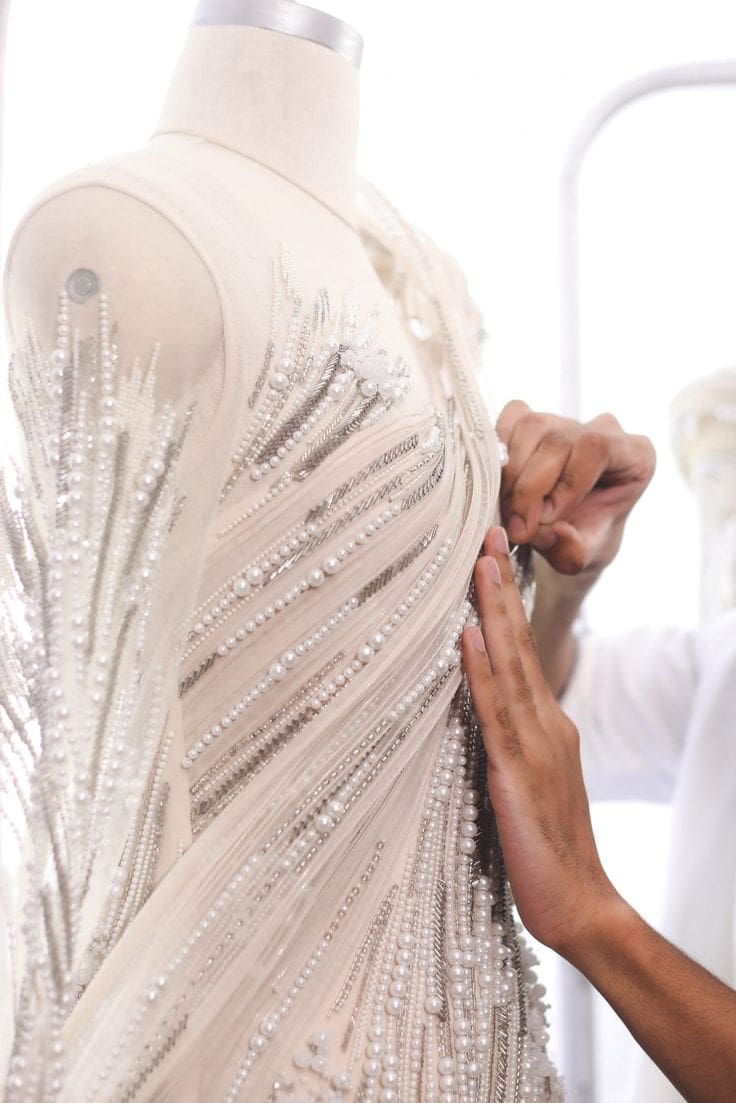
There is a risk of reducing modular fashion to clever mechanisms.
True modularity begins earlier—with pattern engineering.
Designers must consider attachment points, seam stability, motif continuity, closures, weight distribution and how the garment looks both with and without each component.
For lace, motif placement becomes particularly important.
A detachable panel should not appear as though decoration has simply been added onto a finished garment. Its pattern must relate to the underlying silhouette.
This is where sourcing and design development become connected.
A fashion designer choosing wholesale lace fabric in Thailand for modular production should evaluate more than appearance. Motif repeat, usable width, hand-feel, drape, stability, cutting efficiency and repeat-order consistency all influence whether the modular concept can move successfully from sample to production.
United Lace's broader discussion of lace fabrics for modern fashion brands addresses this production-focused approach to lace selection.
Why “One Fabric, Many Identities” Matters Commercially
For fashion brands, the idea is not merely creative.
It can become an assortment strategy.
Instead of sourcing a completely unrelated textile for every design, a brand can develop a recognizable material language around selected hero fabrics.
For example, one Guipure design could appear as:
- the body of a premium dress,
- sleeves on a blouse,
- a panel on a jacket,
- a detachable collar,
- an overlay on a skirt.
The customer sees five products.
The brand sees one textile story developed across five applications.
This can strengthen collection coherence while giving designers more opportunities to explore the commercial potential of a successful fabric.
It is especially relevant for boutique and emerging labels, where creating strong brand identity without building an unnecessarily fragmented material library can be advantageous.
United Lace explores this relationship between textile and brand DNA further in Starting a Clothing Brand with Lace: How to Select the Fabric That Defines Your Brand Image.
One Fabric Can Also Move Between Market Categories
Perhaps the most interesting implication is that fabric identity no longer needs to follow traditional product categories.
Lace once belonged predominantly to bridal, lingerie and occasionwear.
Today it can move through:
Workwear → Resort → Streetwear → Occasionwear → Bridal → Contemporary Ready-to-Wear
The difference lies in execution.
A restrained Guipure blouse can enter the office. A cropped version can enter contemporary fashion. A full Guipure dress moves toward occasionwear. Ivory Guipure combined with couture construction can enter bridal.
Likewise, the same delicate lace can communicate restrained luxury rather than decoration when motif density, color and silhouette are controlled—a design philosophy examined in Why Quiet Luxury Lace Looks “Still—Yet Expensive”.
For manufacturers and designers, this expands the commercial vocabulary of lace enormously.
United Lace: Fabric as a Creative Tool, Not Simply a Raw Material
For more than seven decades, United Lace has developed expertise around lace and embroidery fabrics for designers, fashion brands, retailers and garment manufacturers.
That experience reinforces an important principle:
Selecting fabric should never be separated from understanding what the fabric can become.
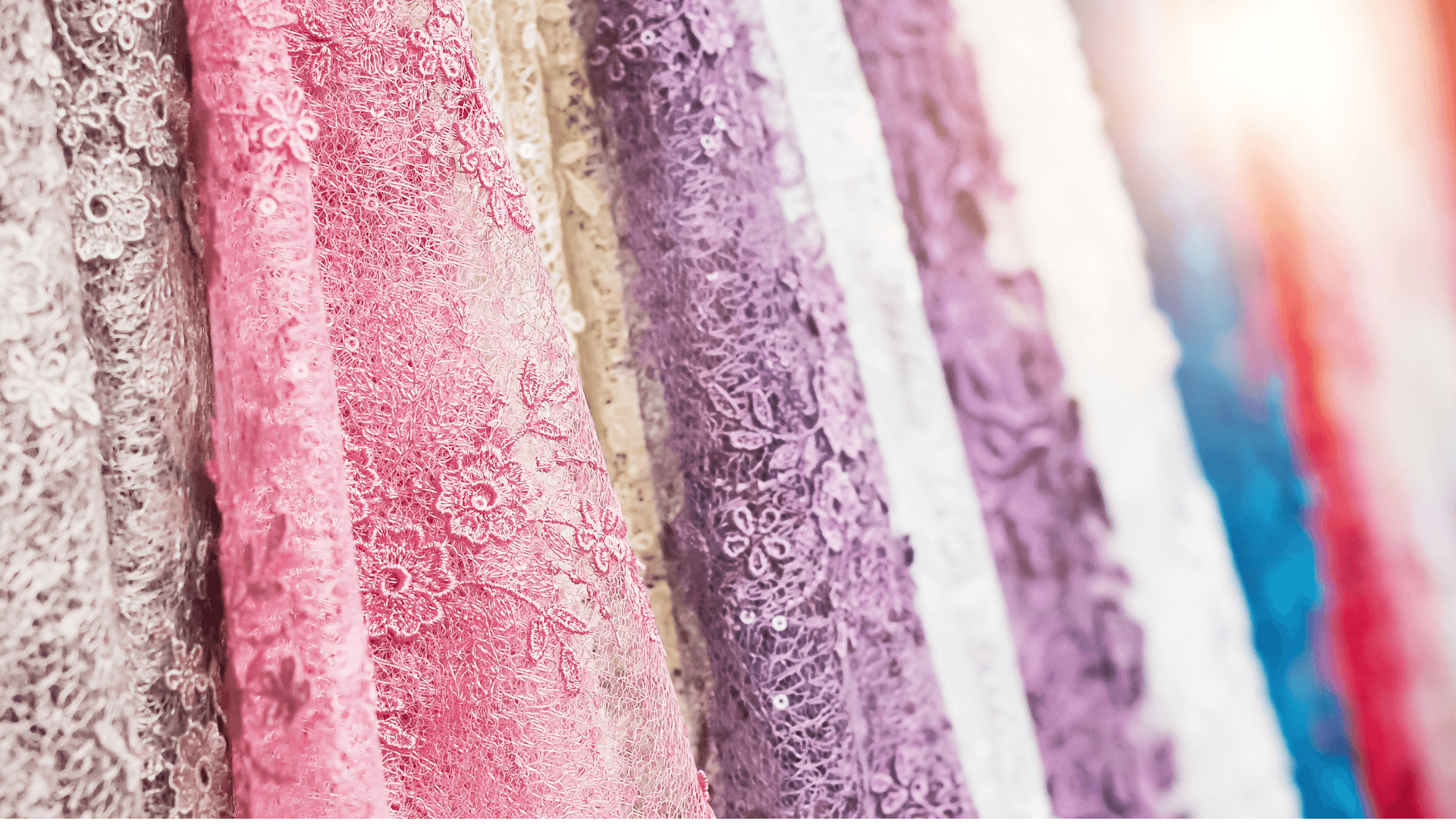
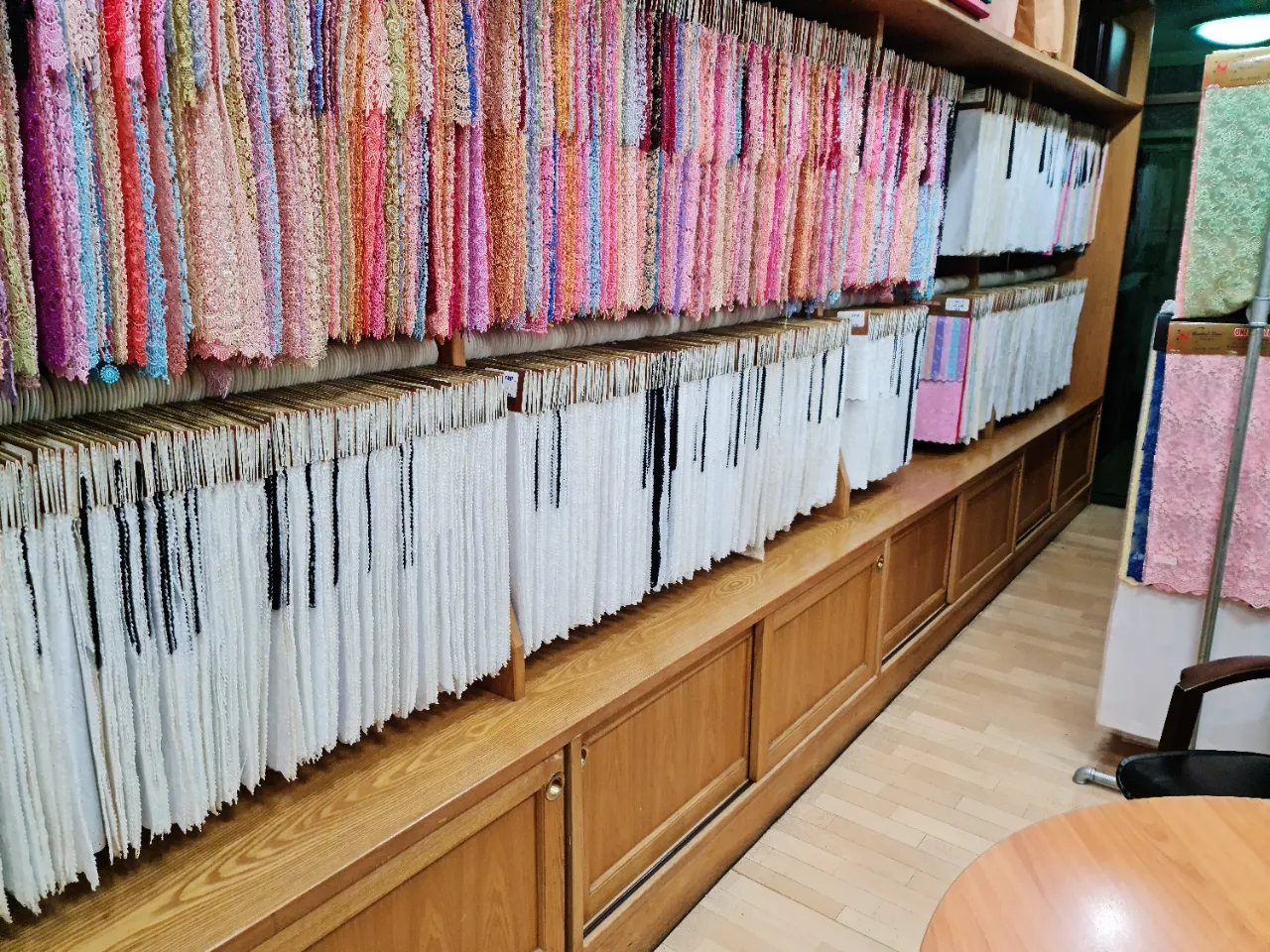
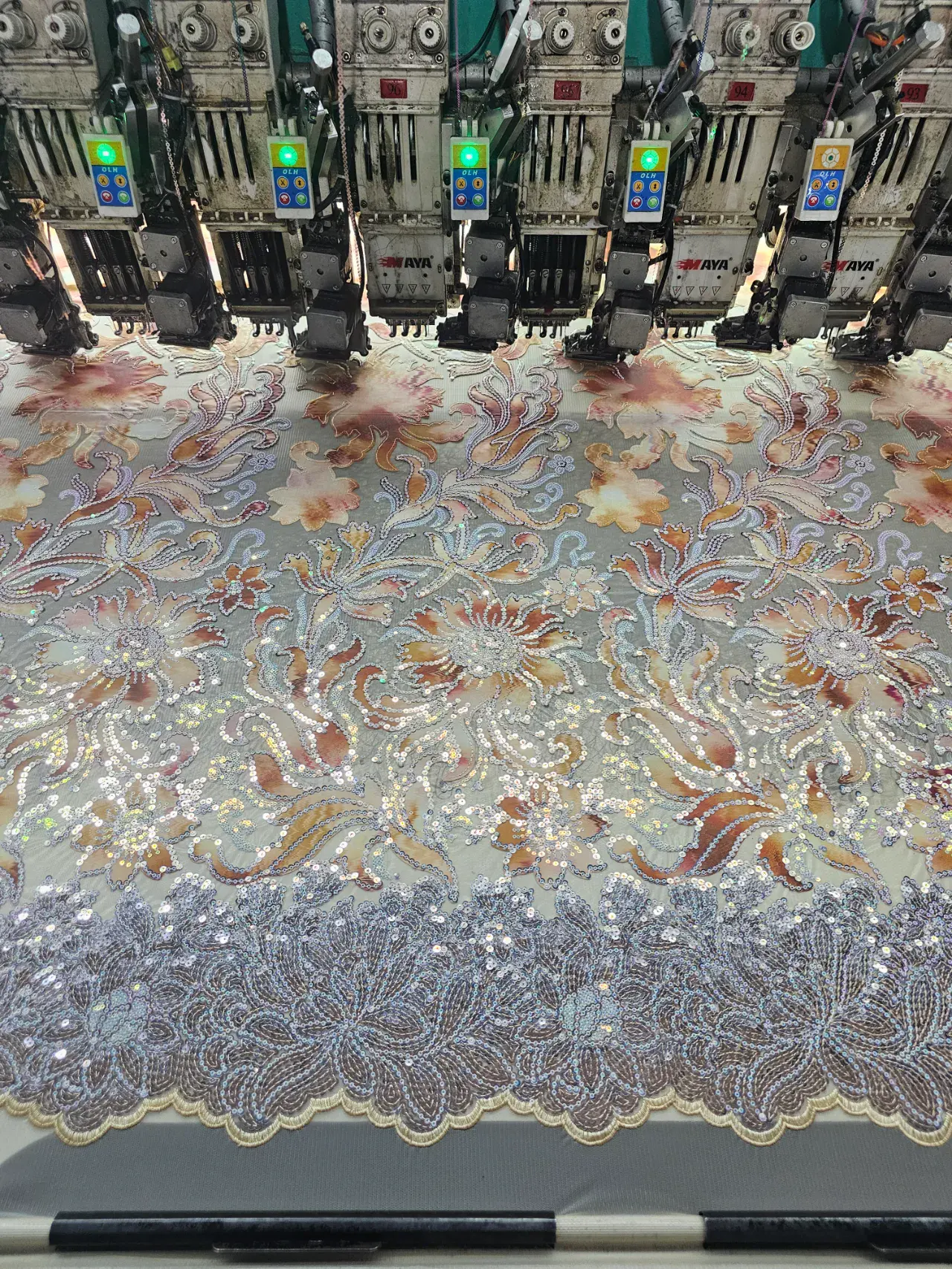
United Lace specializes across categories including Chantilly, Guipure, French lace, cotton lace, tulle, appliqué, embellished embroidery, metallic lace and other contemporary lace constructions. Designers can explore the broader United Lace product collection when developing fabrics for ready-to-wear, bridal, eveningwear, workwear or modular collections.
The connection between textile expertise and garment application can also be explored through Parry Lace Studio, United Lace's own fashion label. It provides a complementary perspective on how lace can move beyond the fabric roll and become part of a complete fashion identity.
For B2B buyers, the objective should therefore not simply be to ask:
“Which lace is the most beautiful?”
Better questions are:
How many products can this lace create?
How many identities can it communicate?
Can it move between occasions?
Can it become part of a recognizable brand language?
And can the supplier support consistent production when the successful design needs to be reordered?
Those questions turn fabric sourcing from purchasing into strategy.
The Future of Fashion May Be About Designing Less—and Creating More
Fashion has spent decades convincing consumers that a new occasion requires a new outfit.
Modular thinking challenges that assumption.
A garment can move.
A textile can change personality.
A lace overlay can transform day into evening. A Guipure collar can transform minimalism into statement dressing. A transparent embroidered layer can convert an opaque silhouette into something entirely new.
For designers, this creates a fascinating new creative discipline: designing transformation itself.
For manufacturers, it requires greater precision in component construction and repeatability.
For fashion brands, it opens possibilities for richer storytelling, coordinated capsules and products designed around versatility rather than one-time styling.
And for fashionistas, it changes the relationship with clothing from simply owning more garments to discovering more possibilities within each garment.
Ultimately, one fabric does not have one identity.
Its identity depends on what the designer asks it to become.
And perhaps that is one of the most relevant directions for contemporary fashion: not endlessly searching for another material, another garment or another trend—but discovering how much creative territory already exists inside one exceptional piece of fabric.
To explore premium lace and embroidery fabrics for your next collection, contact United Lace.
We supply fashion brands and garment manufacturers across Thailand and worldwide.
LINE Official: @unitedlace | Instagram: @united.lace | Bangkok Showroom by Appointment.

 |  |  |  |  |
#unitedlace #lace #embroidery #cottonlace #drylace #frenchlace #eyelet #chantillylace #lacewholesale #fancylacefabric #lacewholesaleonline #multicolor #tencel #cotton #guipure #wholelacesupplier #lacesupplier #lacecharacteristic #laceproperties #innovation #ecofriendly
FAQs
What does “one fabric, many identities” mean in fashion?
It means that a single textile can communicate different aesthetics depending on silhouette, color, lining, transparency, layering, motif placement and styling. For example, Chantilly lace can become bridal, evening, professional or contemporary fashion without losing its core textile characteristics.
What is modular fashion?
Modular fashion refers to garments designed with interchangeable, removable or reconfigurable elements. Detachable sleeves, collars, lace overlays, overskirts and appliqué panels can allow one garment to adapt to different occasions and styling requirements.
Which lace is best for modular fashion design?
The appropriate lace depends on the module. Chantilly lace and tulle lace are effective for lightweight overlays and sheer components, while Guipure lace is useful for more structured collars, cuffs, sleeves and panels. Embroidered tulle and appliqué are particularly suitable for decorative transformation.
Can lace be used for workwear as well as eveningwear?
Yes. Lace identity depends heavily on construction. Guipure, cotton lace and restrained lace patterns can work effectively in premium professional clothing when combined with opaque linings, controlled transparency and tailored silhouettes. The same textile can take on a more formal identity through different styling and construction.
How can one lace fabric be used across several products?
A designer can use one hero lace as full garment fabric, sleeves, panels, overlays, trims, collars or appliqué. This creates visual consistency across a collection while allowing each SKU to maintain a distinct silhouette and purpose.
Why is modular fashion relevant to fashion brands and garment manufacturers?
Modular design allows brands to explore greater versatility from coordinated materials and garment components. Commercially, it can support stronger collection storytelling and differentiated product configurations, although successful production requires careful pattern engineering, attachment systems, material testing and quality control.
Where can fashion designers source premium lace in Bangkok?
United Lace is a Bangkok-based specialist in wholesale lace and embroidery fabrics serving fashion designers, garment manufacturers, fabric retailers and brands. Its portfolio includes Chantilly, Guipure, French lace, tulle, cotton lace, appliqué, embellished and other fashion-focused lace categories. Designers can review the United Lace product collection for sourcing and collection development.
How does Parry Lace Studio relate to United Lace?
Parry Lace Studio is United Lace's fashion label, offering another perspective on how lace and embroidery can move from textile selection into finished fashion. It demonstrates how decisions involving motif, proportion, layering, silhouette and styling can change the identity of lace once it becomes a garment.
What should B2B buyers consider when sourcing lace for modular garments?
Beyond appearance, buyers should evaluate motif repeat, usable fabric width, weight, drape, hand-feel, transparency, cutting efficiency, attachment compatibility, color consistency and repeat-order availability. These factors determine whether an attractive prototype can become a commercially scalable garment.