Table of Contents
- Introduction: When Luxury No Longer Needs to Explain Itself
- When Luxury No Longer Means “A Lot of Detail”
- The New Role of Lace in Modern Fashion
- What “Stillness” in Lace Really Means
- Why “Simple Lace” Often Looks More Expensive Than Highly Detailed Lace
- Lace Through the Lens of a Designer Boutique
- What Kind of Lace Is “Still—Yet Expensive” for Modern Brands?
- Chantilly Lace Spacing: What “Good Spacing” Actually Means
- Guipure Lace Motifs: What “Clear Motif, Not Too Dense” Means
- Tulle Lace Negative Space: When “Empty” Is Actually Design
- Controlled, Polite Colors in Lace: Why “Quiet” Color Looks More Premium
- Why a Supplier Who Understands “Stillness” Matters (B2B Reality)
- Conclusion: In the Quiet Luxury Era, Lace Isn’t Measured by Beauty—But by Precision
- FAQs
Introduction: When Luxury No Longer Needs to Explain Itself
The shift in the meaning of luxury in fashion isn’t driven by taste alone—it’s driven by measurable change in consumer behavior. Over the past few seasons, premium customers have become less impressed by visual “proof” of effort and more responsive to confidence, discipline, and consistency in design.
In the past, luxury was often paired with spectacle: dense ornamentation, heavy embroidery, intense embellishment, and patterns engineered to capture attention instantly. Today, however, the brands that look most expensive are frequently the ones that feel the most restrained—clean silhouettes, controlled emotion in materials, and textiles that don’t “explain themselves” too loudly. This is the logic of Quiet Luxury, and within this movement, lace has evolved from decoration into something more strategic: brand language.
That is why quiet luxury lace is no longer just a “pretty surface.” It is increasingly treated as a high-level tool for brand expression—especially for designer brands, boutique labels, and premium manufacturers who must communicate value without relying on excess. If you are building future-facing collections, it helps to align lace choices with broader runway-to-retail direction—especially the emerging palette and material mood shaping next season’s premium consumer preferences, as explored in Color Trends 2026: 7 Shades That Will Define the Future of Fashion.
For B2B stakeholders, the question is no longer “Which lace looks the most elaborate?” The question is: Which modern luxury lace fabrics create the most premium perception while staying scalable, wearable, and production-ready? In other words: which lace delivers the “still but expensive” aesthetic—quiet, composed, and unmistakably premium.
When Luxury No Longer Means “A Lot of Detail”
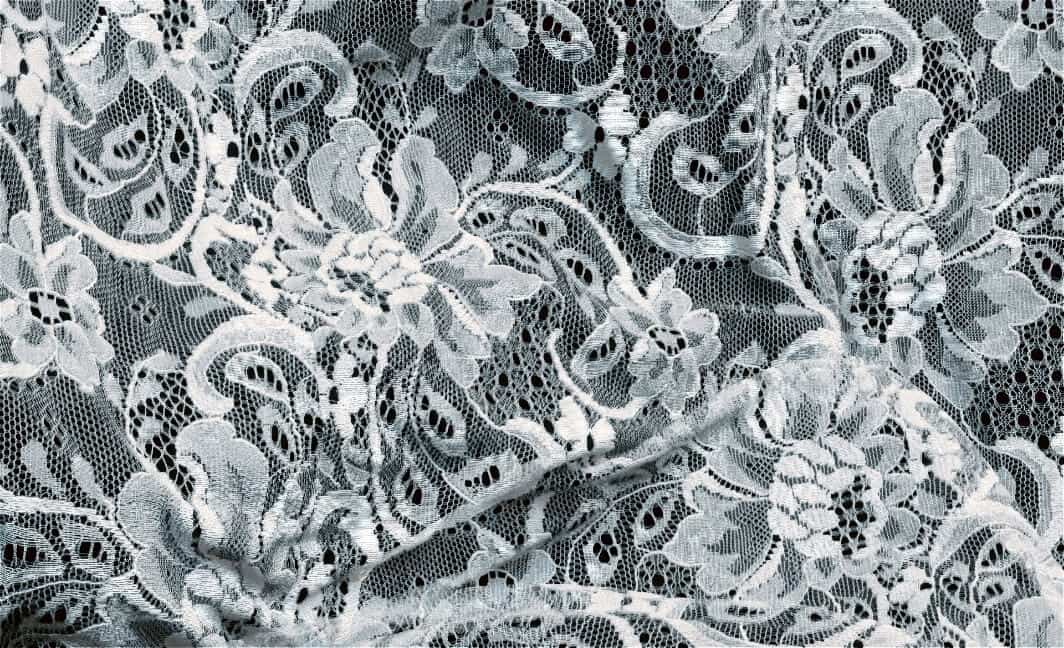
- More pattern density
- More embroidery
- More production time
- Therefore, “more expensive”
But today’s mid-to-high purchasing power consumers—especially repeat buyers who understand construction and finishing—are not primarily looking for evidence of “effort.” They are looking for signals of confidence. And in fashion, confidence rarely means adding everything possible. It means being able to choose—and being willing to remove.
What has changed is not the desire for luxury, but the language of luxury. The market increasingly responds to:
- Texture over pattern (lace texture vs pattern density matters more than volume)
- Rhythm over fullness (motif placement and spacing create premium pacing)
- Drape over spectacle (how lace falls and behaves signals quality)
In this new framework, lace is not required to be “the loudest element.” Lace must be exactly right—calibrated to silhouette, aligned with brand mood, and stable in production. Modern lace does not need to shout. Modern lace needs to perform—in sampling, in bulk production, in photography, and in repeat orders.
This is why luxury lace fabric sourcing has become more technical and more strategic for B2B decision-makers: designers, product developers, merchandisers, and sourcing teams. If you want a wider view of what “new luxury” means specifically in lace design direction and market adoption, reference Lace Fabric Trends in 2026: The New Luxury for Fashion Clothing Brands.
The New Role of Lace in Modern Fashion
In the past, lace had a relatively narrow role: it decorated garments to feel feminine, formal, romantic, or ceremonial. Lace was placed where it could be seen and was expected to draw attention.
In modern fashion, lace is increasingly selected not because it “stands out,” but because it means something—and because it supports brand identity. Modern lace is chosen when the brand wants to communicate refinement without noise.
Modern luxury lace fabrics—when selected correctly—can do the following:
- Not steal the spotlight from silhouette
- Not compete with pattern cutting and construction
- Support the design rather than explain it
That’s why lace has become a key instrument for brands with taste. It is also why lace selection has become a brand-level decision, not a last-minute styling choice.
For premium ready-to-wear and designer boutique collections, lace must now function as a controlled “surface architecture”—something that frames the garment rather than dominates it. This shift is especially visible in modern corporate dressing and elevated minimalism; see how designers are positioning lace inside professional silhouettes in Lace for Workwear: The Rise of Luxury Office Lace in 2026.

What “Stillness” in Lace Really Means
In lace, “stillness” does not mean plainness, and it definitely doesn’t mean cost-cutting simplicity. Stillness is not the absence of design—it is the presence of discipline.
“Still” lace refers to the ability of a lace to control itself without relying on visual volume or overstatement. It is luxury expressed through restraint.
Stillness in lace typically means:
- The pattern is not overly dense
- There is intentional breathing space for the eye
- Texture is clear but not noisy
- A controlled color palette for lace supports calm premium mood
- The overall visual intensity is calibrated, not exaggerated
This kind of lace requires strong design judgment and skilled curation because it leaves no room to hide imperfections. In loud lace, flaws can be disguised by density. In quiet lace, the smallest issues become visible immediately—edge definition, stitch consistency, motif clarity, dye stability, and the way the lace drapes.
That is why lace quality consistency for production becomes a critical KPI for quiet luxury lace programs. To sharpen internal evaluation criteria (especially for sampling and QC), your team can use a structured checklist approach like the one in How to Tell the Quality of Lace.
Why “Simple Lace” Often Looks More Expensive Than Highly Detailed Lace
This is the heart of modern luxury thinking and the point where many designer boutiques and brand owners unintentionally misread value.
The common assumption is: “More detail means harder to make, therefore more expensive.”
But in premium fashion, the reality can invert.
Quiet luxury lace often looks more expensive because it:
- Allows the silhouette to lead
- Works across multiple collections without visual fatigue
- Avoids trend expiration (it doesn’t date quickly)
- Supports long-term cost control through reusability and consistency
For designer boutique brands, this becomes an intelligent investment. One lace can evolve across multiple SKUs and seasons while still preserving a cohesive premium brand image. This is particularly powerful for brands that must balance creativity with commercial repeatability.
In B2B terms: the best lace is not always the one that looks most dramatic on the rack. The best lace is the one that provides design longevity, merchandising flexibility, and photographic performance—especially on e-commerce platforms where subtle quality cues matter. Brands looking to combine restraint with distinctive signatures may find useful direction in Quiet Luxury x Lace: Distinctive Lace Designs by Guipure, Cotton Lace and Laser Cut Lace.
Lace Through the Lens of a Designer Boutique
When fabric is no longer a component but a brand tool, lace selection becomes a strategic decision. Designer boutique brands operate differently from mass brands and couture houses, and that positioning makes lace more important than many brands realize.
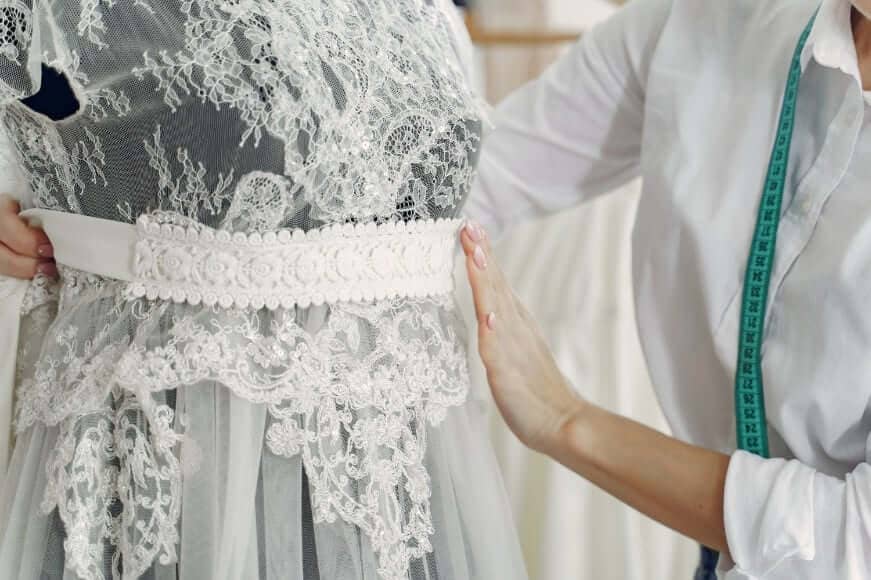
A boutique brand does not sell volume. It sells perception. Therefore, lace must be selected not just for beauty—but for its ability to express the brand.
That is why lace for designer boutique collections must do three jobs simultaneously:
- Communicate premium taste without visual noise
- Scale into production without quality instability
- Support the brand’s signature across multiple designs
Lace helps boutique brands because:
- Boutique brands sell perception, not only product
- Lace can make a boutique brand look “mature” without requiring high volumes
- Lace can become a signature surface, reinforcing brand handwriting
Lace and the Balance Between Creativity and Sellability
The best lace may not be the prettiest lace in the store. Often, it is the lace that allows the brand to continue—creatively and commercially.
A good lace does not merely attract attention. It supports the brand’s ability to repeat quality, deliver on time, and maintain a consistent premium image—especially when working with factories that require stable material behavior. For brand teams that want deeper foundational references on classic luxury lace aesthetics and how to translate them into modern garments, see Elegant & Luxurious Look with French Lace.
This is why lace fabric selection for brand identity is a commercial strategy, not just an aesthetic choice.
What Kind of Lace Is “Still—Yet Expensive” for Modern Brands?
“Still—yet expensive” is not a single look. It is the result of controlling multiple design variables at once:
- motif hierarchy
- spacing rhythm
- texture depth
- drape behavior
- color stability
- compatibility with patterns and construction
The lace that fits this category might not be the most visually dramatic. But it is often the lace that works best across design, production, and merchandising.
For B2B buyers, this is where luxury lace fabric sourcing becomes a high-return activity: the right lace reduces sampling failures, minimizes QC issues, supports consistent brand image, and improves sell-through.
Below are three lace archetypes that consistently deliver the “quiet—yet expensive” effect.
Chantilly Lace Spacing: What “Good Spacing” Actually Means
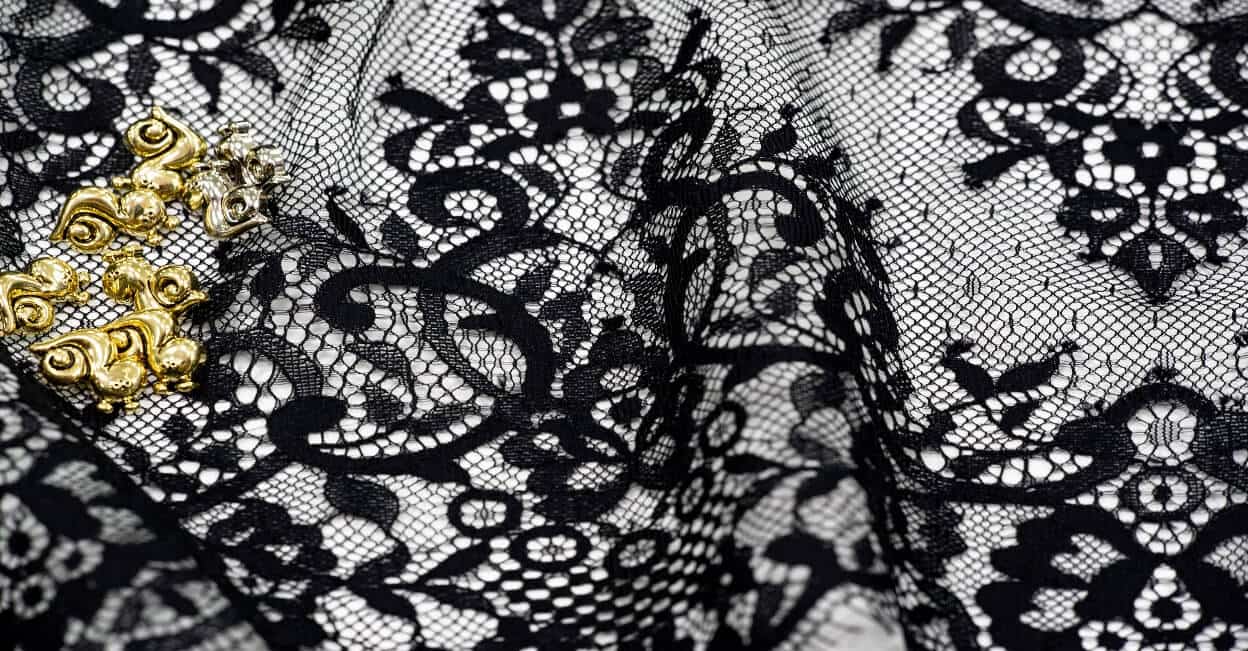
- delicate micro-floral and vine motifs
- fine, crisp linework
- a soft premium mood—luxury without showing off
This is why Chantilly is highly compatible with quiet luxury lace: it whispers rather than shouts.
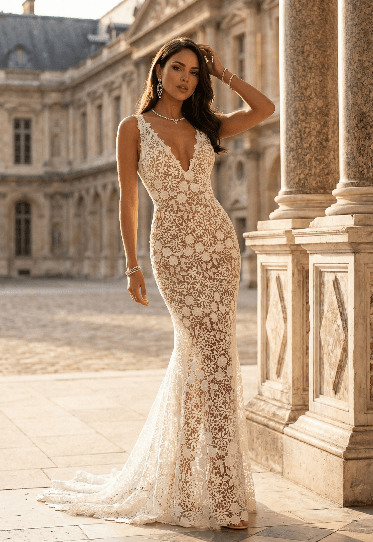
However, chantilly lace spacing does not simply mean “the motifs are far apart.” It refers to intentional composition: how motif, negative space, and overall rhythm are arranged to support a garment.
In practice, “good spacing” means:
- motif-to-space ratio is balanced and deliberate
- visual rhythm supports silhouette lines rather than fighting them
- the lace remains readable when lined, layered, or photographed
- motif distribution works with seams, darts, and paneling
In B2B development, Chantilly with strong spacing reduces risk: it is easier to integrate into multiple patterns, easier to style, and easier to maintain consistent premium appeal across a collection.
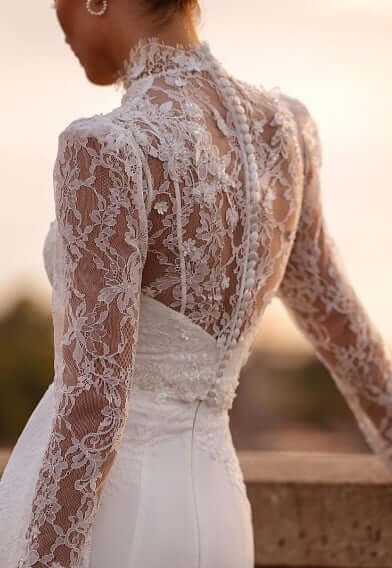
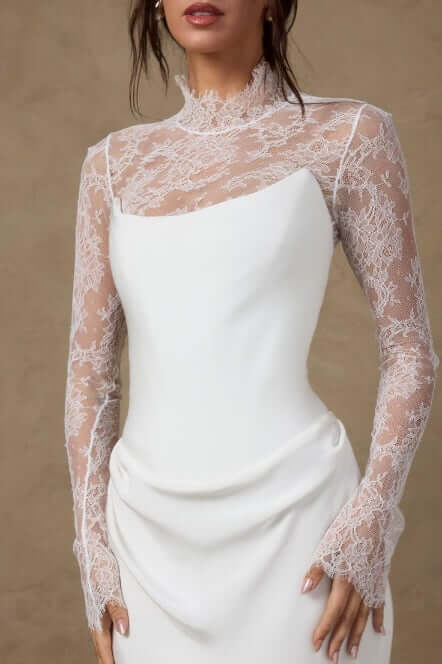
This is why Chantilly remains a core option in lace for premium ready-to-wear, office luxury capsules, and modern bridal—especially when the brand needs subtlety with clear value cues.
Guipure Lace Motifs: What “Clear Motif, Not Too Dense” Means
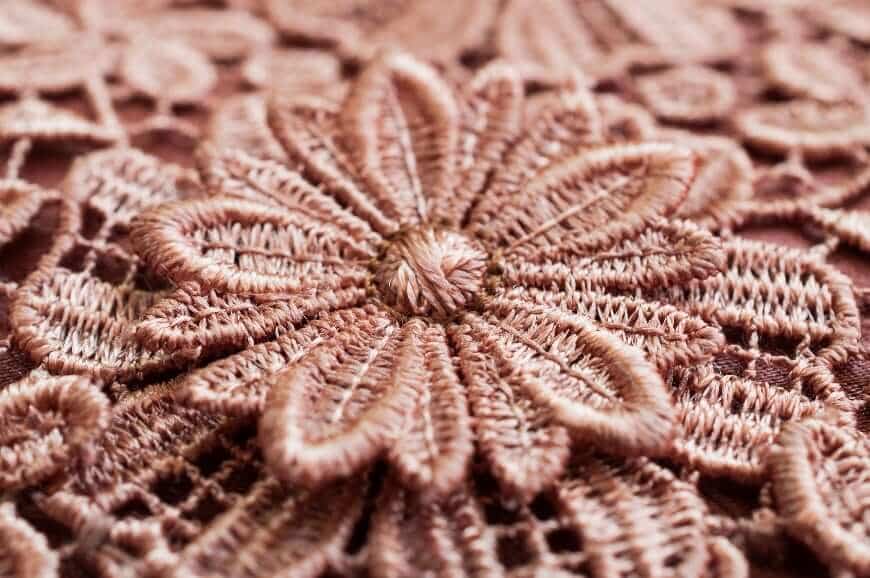
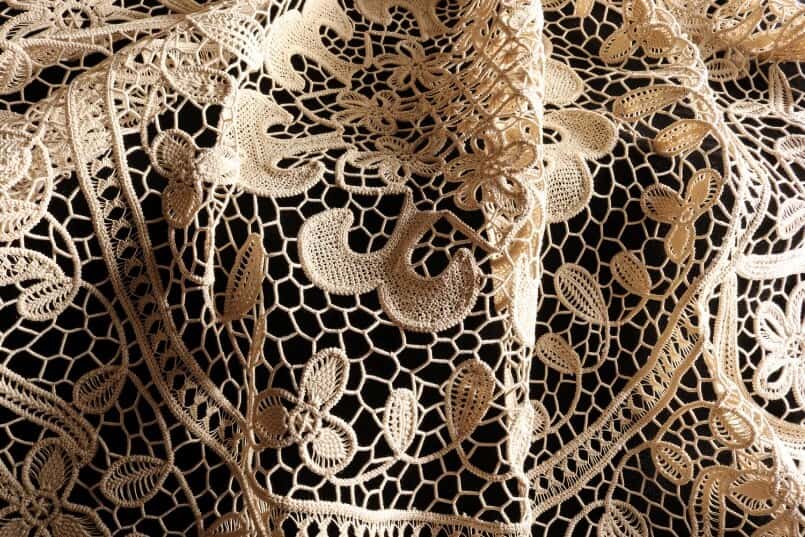
Guipure lace is structurally distinct. It typically has no net ground (or very minimal), and motifs are connected by bridges/bars, creating dimensional texture and a stronger visual presence.
For guipure to read as quiet luxury lace rather than decorative overload, the focus must be on guipure lace motifs—specifically clarity, hierarchy, and controlled density.
What “Clear Motif” Means
- the floral or geometric shape is readable immediately
- edges are clean and defined (strong edge definition)
- motifs contain hierarchy—layers and structure, not a flat mass
What “Not Too Dense” Means
- motifs are not compressed into a single “block”
- negative space is intentional (not accidental emptiness)
- spacing supports silhouette and construction lines
- the surface breathes, which increases premium perception
The best guipure for modern luxury lace fabrics stands out through structure and precision, not through quantity of detail. This is “architectural texture,” not ornamentation.
From a production standpoint, guipure also requires attention to weight, drape, and stability. For B2B teams, this is where lace quality consistency for production is crucial—motif repeat accuracy, thickness consistency, and finishing stability can make or break a premium line.
If your assortment strategy includes sustainability-led materials, pairing guipure statements with softer eco bases can broaden collection appeal. You can reference future-facing eco direction in Why Eco-Friendly Lace Fabric Is the Next Power Move for Conscious Fashion Brands.
Tulle Lace Negative Space: When “Empty” Is Actually Design
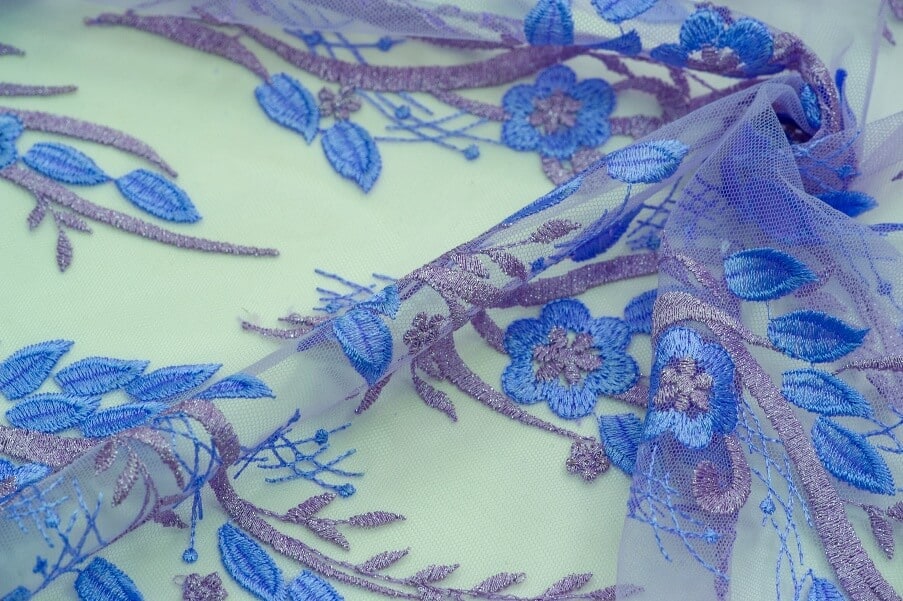
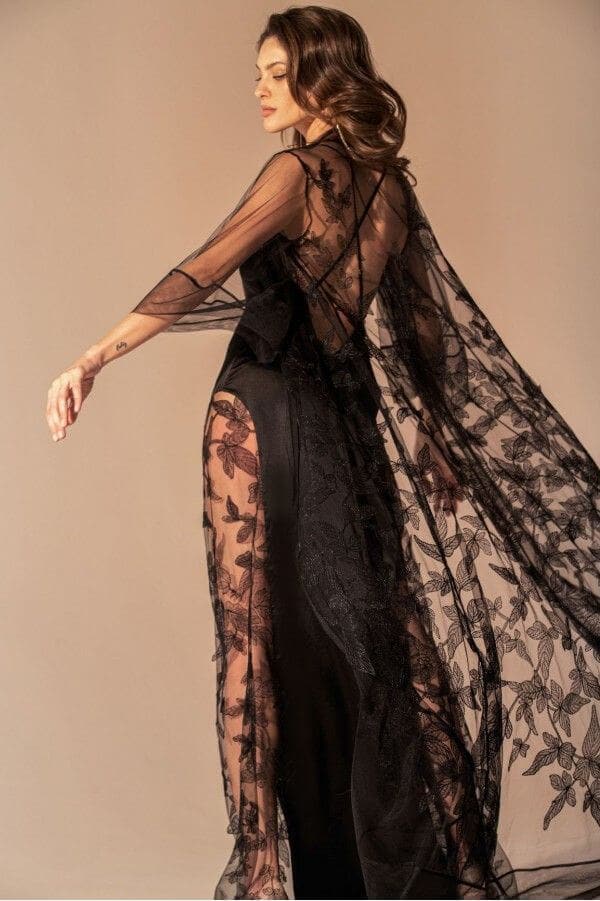
Tulle lace is built on a sheer mesh ground with embroidered or woven motifs. In quiet luxury lace, the critical factor isn’t only what is present—but what is intentionally absent.
Tulle lace negative space refers to purposeful gaps that serve design objectives rather than simply reducing density.
Intentional negative space can be designed to:
- frame the silhouette (silhouette framing)
- control the path of the eye (visual rhythm)
- create luxury restraint (premium calm rather than decoration)
- improve pattern compatibility (seams, darts, panels)
In other words: the space must “work” with the garment. It must not look like leftover emptiness. This is why the best tulle lace in modern collections often looks extremely simple at first glance—yet becomes exceptionally powerful once applied to the body in motion and photographed in high-end lighting.
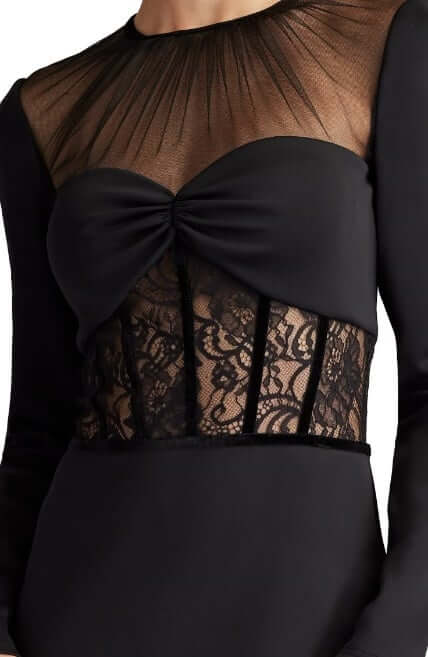
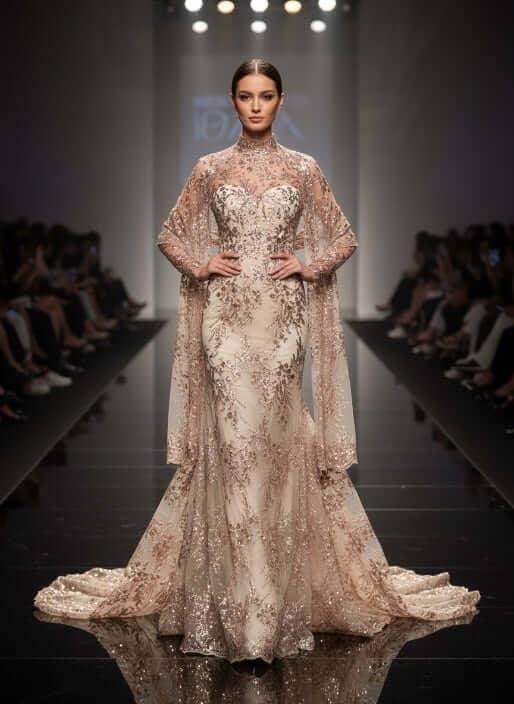
For B2B sourcing teams, tulle lace with intentional negative space is a scalable option across multiple silhouettes, including premium blouses, overlay dresses, modern bridal details, and quiet eveningwear.
Controlled, Polite Colors in Lace: Why “Quiet” Color Looks More Premium
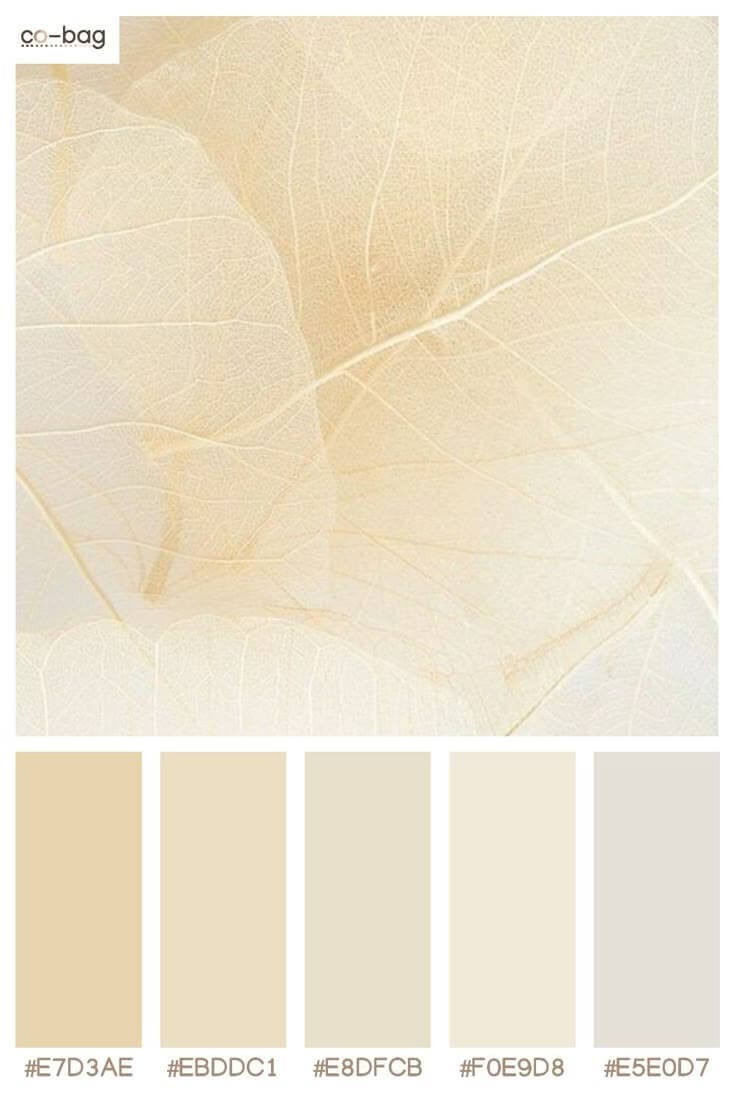
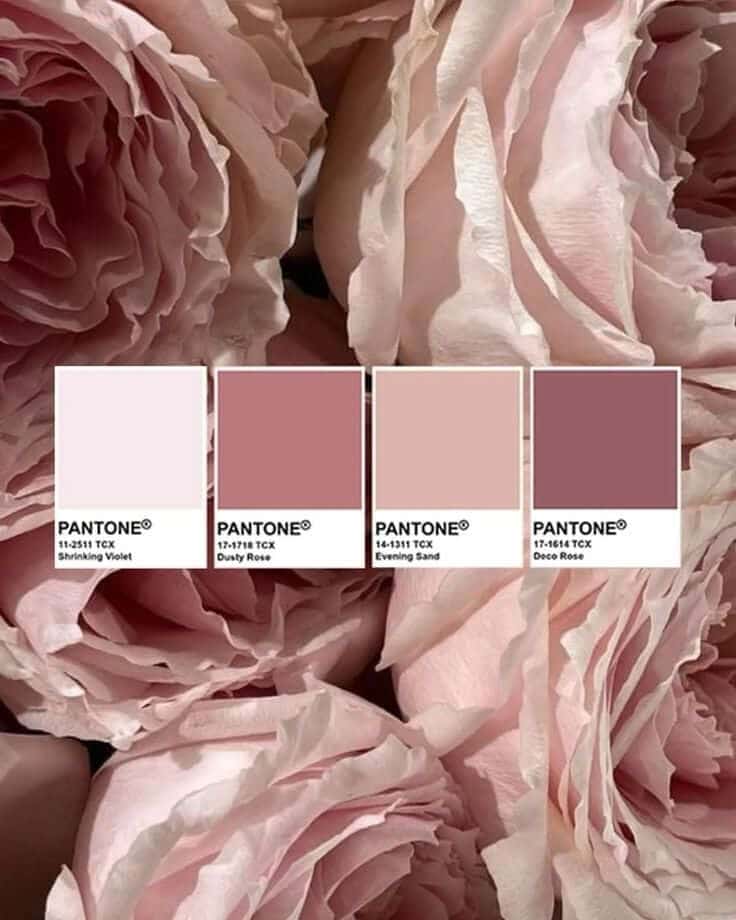
A controlled color palette for lace does not mean dull or generic color. It means colors that do not force emotion, do not steal attention from silhouette, and do not destabilize styling.
Polite tones allow the brand to speak—while the lace supports.
Color Psychology: Why Polite Colors Often Read More Expensive
Premium consumers associate luxury with:
- stability
- maturity
- calm confidence
- longevity
- “no need for attention”
Therefore, quiet tones often feel more expensive than aggressive color statements—especially when the garment’s value is supposed to come from material quality and construction.
Quiet Color Spectrum for Lace (Examples)
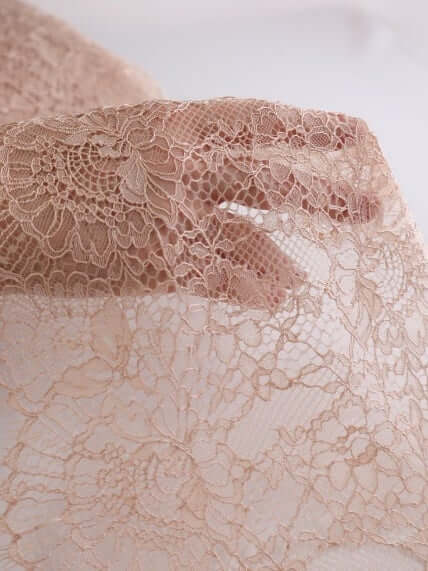
- Ivory
- Nude / skin-tone range
- Champagne
- Soft black
- Greige
These tones are commercially powerful because they:
- coordinate easily with other fabrics
- photograph well under studio lighting
- remain reusable across multiple seasons
- highlight texture rather than shouting color
Textile Reality: Color Control Signals Quality
In lace, color instability can destroy perceived value quickly—especially online. Premium lace should show:
- dye-lot consistency across production
- stable undertones (avoiding unexpected yellowing/greening)
- controlled sheen behavior
- predictable interaction with linings
This is where luxury lace fabric sourcing becomes operational: color consistency is not “aesthetic”—it is a quality assurance requirement. If you are exploring cellulose-based blends as part of modern sustainability narratives, see Tencel: The New Eco-Friendly Innovation.
Polite color is not absence of identity. It is the choice to let the brand identity lead.
Why a Supplier Who Understands “Stillness” Matters (B2B Reality)
In quiet design, every flaw is magnified.
When a garment “speaks less,” all elements become more visible: spacing accuracy, edge definition, motif clarity, and drape behavior. A minor inconsistency can damage the perceived value of the entire piece—and by extension, the brand.
That is why in quiet luxury lace programs, the supplier is no longer just a seller of fabric. The supplier becomes a brand-level contributor.
A premium lace operation requires:
- quality consistency (repeatability across lots)
- design understanding (how lace behaves with silhouette and pattern)
- taste-based curation (knowing what not to recommend)
- production awareness (factory compatibility, trimming, and finishing needs)
In this context, the best vendor is not the one with the most designs. It is the one who selects strategically and supports execution. If you want your teams to explore broader lace education, historical references, and trend-cycles to inform buying direction, you can start from The Return of Past Fashion That Will Shake Current Fashion Trends.
For designer and manufacturing clients, working with a lace supplier for designer brands is critical—especially when the collection depends on quiet luxury signals rather than decorative volume. This is where a true B2B lace partner Asia can create advantage: stable sourcing, curated direction, production readiness, and consistent premium output.
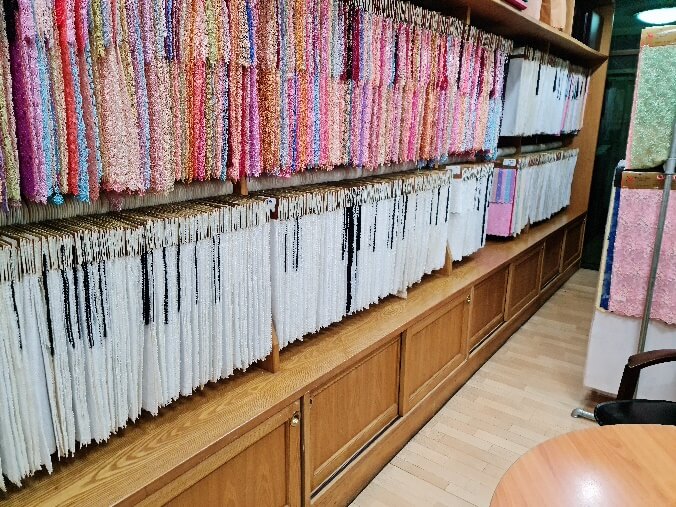
When you source with a supplier that specializes in premium lace wholesale, you are not only purchasing fabric—you are purchasing risk reduction: fewer sampling errors, fewer QC claims, and a stronger chance that your product will look premium in real market conditions.
Conclusion: In the Quiet Luxury Era, Lace Isn’t Measured by Beauty—But by Precision
Expensive lace is not lace that tries to prove it is expensive. Expensive lace is lace that makes the entire brand look more premium—without needing to speak loudly.
If we look at today’s fashion landscape, luxury has not disappeared. It has simply changed its communication style. The modern definition of luxury is discipline: controlled texture, intentional spacing, stable color, and drape that performs.
This is precisely why quiet luxury lace has become a strategic tool for designer boutiques, brand owners, and garment manufacturers who want premium perception without noise. And this is also why modern luxury lace fabrics must be sourced with a more technical, brand-aware mindset than in the past.
If you are a brand owner, designer, or manufacturer looking for high-quality lace plus distinctive collections that align with Quiet Luxury—then your sourcing partner matters. A supplier who understands spacing, negative space, motif hierarchy, and production consistency can become the difference between “nice fabric” and “premium brand signal.”
For those seeking premium lace wholesale and truly strategic luxury lace fabric sourcing, United Lace is positioned to support you as a long-term, production-ready partner—curating lace that fits brand identity, performs in manufacturing, and elevates market perception. If you’d like to move from concept to sampling and see curated options aligned with your brand’s positioning, book a visit via the United Lace contact and showroom appointment page. Explore United Lace’s design-led apparel references via Parry Lace Studio for styling inspiration and modern lace applications.
FAQs
What is Quiet Luxury in fashion, and how does it relate to quiet luxury lace?
Quiet Luxury is a premium fashion approach focused on restraint, quality, and confidence—without loud branding or excessive detail. In this context, quiet luxury lace is used to deliver controlled texture, subtle depth, and refined brand taste rather than attention-grabbing ornamentation.
Why does “still but expensive” lace aesthetic often look more premium than dense lace?
Because quiet lace leaves no room to hide flaws. Spacing, texture, dye stability, and drape are fully visible. When these variables are executed precisely, the result communicates confidence and quality—key cues of the “still but expensive” aesthetic.
What lace should a Designer Boutique choose for lace for designer boutique collections?
Choose lace with balanced spacing, non-overcrowded motifs, stable coloration, and strong pattern compatibility. The best lace for designer boutique collections supports silhouette, photographs well, and can be reused across seasons—strengthening brand identity and reducing development risk.
How are Chantilly lace and Guipure lace different for modern luxury lace fabrics?
Chantilly is delicate, airy, and refined—ideal for premium RTW and office luxury. Guipure is more structured and dimensional—ideal for silhouettes that need clearer surface architecture, including eveningwear and modern bridal. Both can qualify as modern luxury lace fabrics when spacing, clarity, and quality are controlled.
What is chantilly lace spacing and why is it important?
Chantilly lace spacing refers to the intentional relationship between motifs and negative space—creating readable rhythm, silhouette support, and easier integration with construction lines. Proper spacing reduces visual noise and improves premium perception.
What are guipure lace motifs and how do you evaluate them?
Guipure lace motifs should be immediately readable, with clean edge definition and motif hierarchy (layers, structure). Premium guipure avoids over-density, preserving intentional negative space for breathability and a more expensive feel.
What is tulle lace negative space and why does it matter in Quiet Luxury?
Tulle lace negative space is the purposeful open area between motifs on a sheer ground. In Quiet Luxury, it functions as a design tool: framing silhouette, controlling visual rhythm, and improving pattern compatibility—so the lace supports the garment rather than overpowering it.
Which colors create a controlled color palette for lace?
Ivory, nude tones, champagne, soft black, and greige are classic choices because they don’t force emotion, coordinate easily, and highlight texture over color—helping lace feel calm, premium, and reusable across collections.
Why does lace quality consistency for production matter so much in quiet luxury lace?
Because quiet designs amplify every flaw. If motif repeats shift, edges lose definition, or dye lots vary, the product’s premium perception drops quickly. Consistency reduces QC risk and protects brand image.
What should you look for in a lace supplier for designer brands and premium lace wholesale?
Look for a supplier who understands brand positioning, recommends lace strategically (including what not to use), maintains stable quality and color across repeat orders, and can function as a B2B lace partner Asia for ongoing collection development.

 |  |  |  |  |
#unitedlace #lace #embroidery #cottonlace #drylace #frenchlace #eyelet #chantillylace #lacewholesale #fancylacefabric #lacewholesaleonline #multicolor #tencel #cotton #guipure #wholelacesupplier #lacesupplier #lacecharacteristic #laceproperties #innovation #ecofriendly