Table of Contents
- What “Fabric Sourcing” Means for Professional Designers
- Why Fabric Sourcing Is More Important Than Most Brands Think
- Fabric Sourcing SOP for Designer Boutiques (Professional Checklist + Risk Controls)
- 1️⃣ Start with Brand Positioning—Before You Choose Fabric
- 2️⃣ Build Deep Fabric Knowledge (Especially Lace)
- 3️⃣ Evaluate Fabric Quality Like a Professional (Beyond “Pretty or Not”)
- 4️⃣ Manage B2B Purchasing Risk (MOQ, Lead Time, Lot Consistency)
- 5️⃣ The Role of a Premium Lace Supplier in Bangkok Has Changed
- Fabric Sourcing as a Quiet Luxury Strategy
- Conclusion
- FAQs
In professional fashion, fabric is not merely a raw material—it is the foundation of brand perception. A strong design can fail because the fabric decision was wrong. And a “quiet” or minimalist silhouette can instantly look premium when the fabric choice is right.
That is why fabric sourcing has become one of the most critical skills for Designer Boutiques and Brand Owners, especially in the era of Quiet Luxury—where brands speak less through decoration, and quality becomes more visible than ever.
From a brand-owner perspective, sourcing is where aesthetic intention meets operational reality. At United Lace, we see this daily—not only as a wholesale lace partner to designers and manufacturers, but also through Parry Lace Studio, our ready-made lace garments sub-brand that tests how lace performs in real wear, real styling, and real customer expectations.
What “Fabric Sourcing” Means for Professional Designers
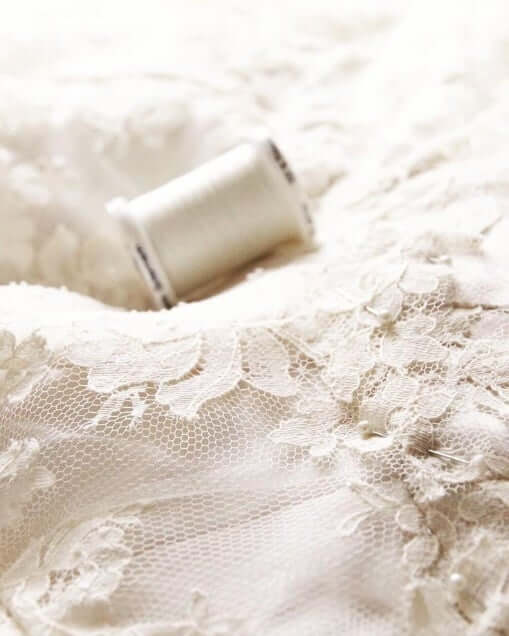
From a professional design and brand-management perspective, fabric sourcing is the discipline of selecting materials to control:
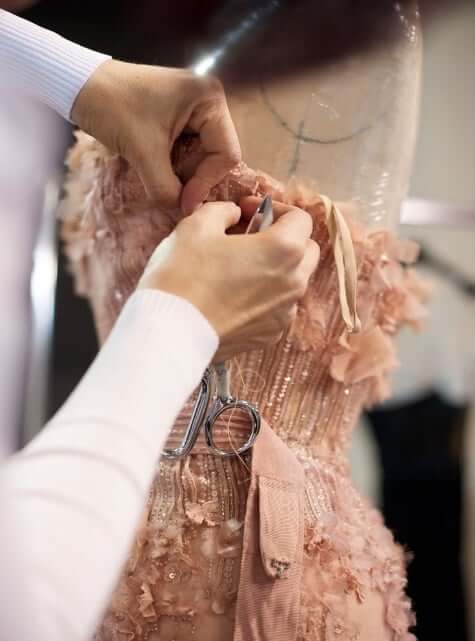
- Perception (how premium the product feels at first sight and first touch)
- Stability (production consistency, repeatability across lots, and performance during sewing)
- Profitability (margin structure, pricing power, and commercial viability)
Fabric sourcing is not simply “finding fabric.” It is a strategic process that typically includes:
- Selecting materials aligned with the brand DNA
- Evaluating technical quality and construction
- Analyzing production risk (what can go wrong in sampling and bulk)
- Calculating margin and positioning implications
- Choosing the right supplier for continuity and long-term reliability
For professional designers, fabric sourcing is a business decision, not only a matter of taste.
Lace selection guide (brand identity)
Why this matters in B2B reality
In a B2B context—where you work with pattern makers, sample rooms, garment factories, merchandisers, and wholesale timelines—fabric sourcing is the lever that determines whether a collection becomes:
- A repeatable, scalable product line, or
- A one-time creative experiment that collapses under production constraints.
Why Fabric Sourcing Is More Important Than Most Brands Think
Fabric sourcing is not “just the step before production.” It is an upstream brand quality-control system—and it simultaneously determines four major outcomes:
- Perceived Value (how expensive/premium customers perceive the product to be)
- Production Success (whether it can be manufactured properly and consistently)
- Commercial Performance (pricing, sell-through, profitability)
- Brand Consistency (long-term coherence across collections)
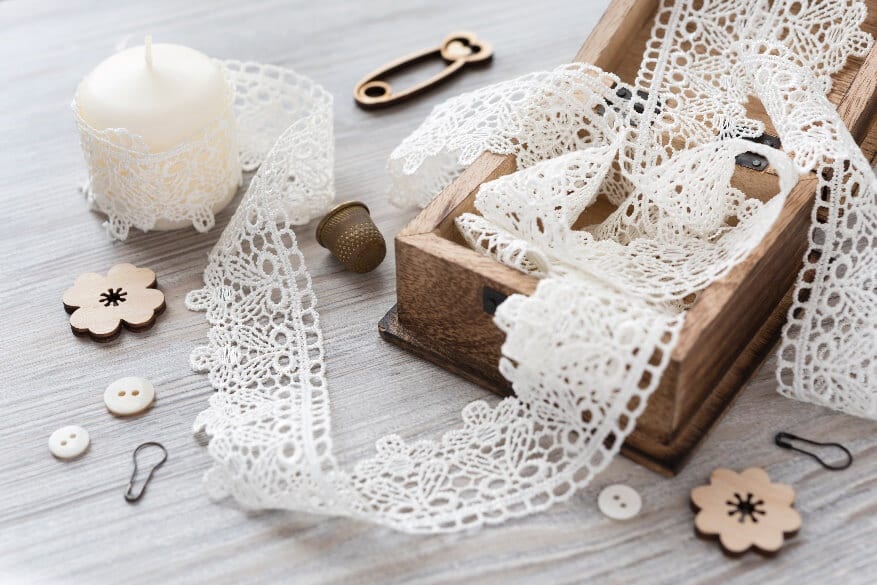 🔹 Because customers “read luxury” through fabric—before they read design
In the Premium / Designer Boutique market, customers don’t separate “design” from “material.” They judge the total quality signal, and fabric delivers the fastest, most instinctive signal of value.
In practice:
- A clean pattern in a cheap-feeling fabric looks “basic.”
- A clean pattern in a refined fabric looks “intentional” and “quietly expensive.”
This is the Quiet Luxury mechanism: less decoration means more exposure—so the fabric becomes the headline.
🔹 Because fabric sourcing controls sewing outcomes—not just aesthetics
Many designers work as if the process is “design first, fabric later.” In reality, fabric often decides whether that design can exist as intended—through its drape, recovery, stability, seam behavior, bulk, transparency, and tolerance under industrial handling.
B2B implication: The hidden cost of poor sourcing is rarely the fabric price—it’s the downstream damage:
- additional sampling rounds
- delayed delivery
- compromised finishing
- quality claims/returns
- dead stock from inconsistent reorders
Fabric Sourcing SOP for Designer Boutiques (Professional Checklist + Risk Controls)
Below is a step-by-step system designer boutiques can apply—from collection ideation to purchase and re-ordering. It is especially suitable for brands working in Quiet Luxury, Premium RTW, Modern Bridal, and Occasionwear—particularly when lace (Chantilly / Guipure / Tulle Lace) is part of the collection.
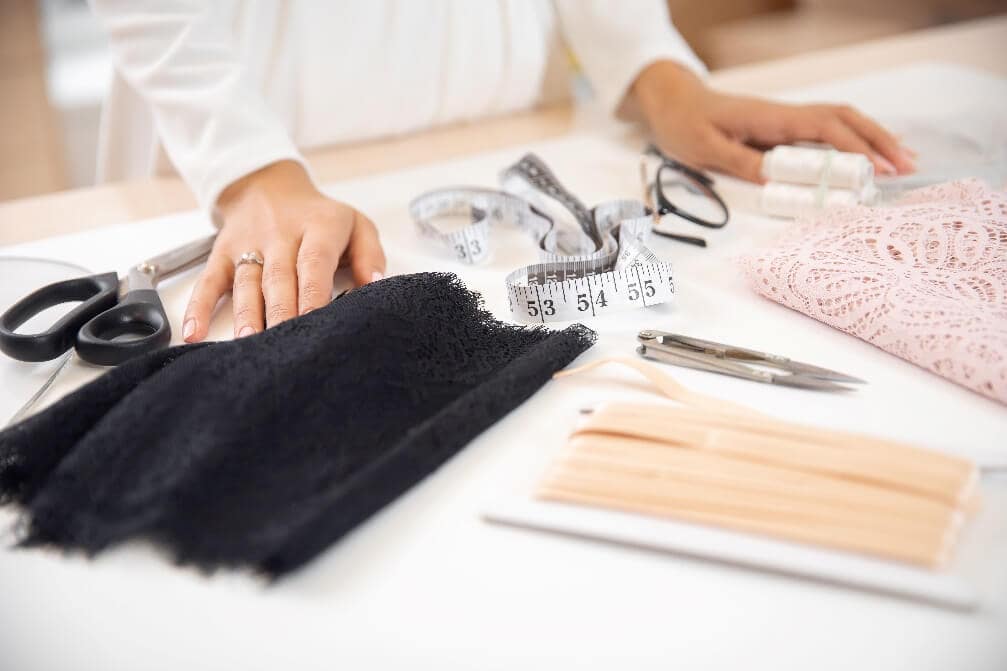
1️⃣ Start with Brand Positioning—Before You Choose Fabric
The first question is not “Is this fabric beautiful?” It is:
- Where does our brand sit in the market?
- What kind of luxury are we selling?
- In what context does our customer wear these pieces?
If you operate in Quiet Luxury, your fabrics must typically be:
- not loud
- tonally controlled
- refined in texture
- reusable across multiple collections (so the brand can build a consistent material signature)
B2B editorial note: Positioning is not just marketing language—it’s the logic that governs your sourcing decisions:
- fiber & yarn quality
- finishing standards
- color discipline
- supplier continuity
- re-order feasibility
2️⃣ Build Deep Fabric Knowledge (Especially Lace)
What makes a boutique brand look “grown up” is not having many fabrics—it’s knowing how to choose the right fabric for the right role, and controlling fabric behavior with precision.

🔹 Lace, in particular, is powerful—but only when chosen precisely
Lace can elevate a collection immediately, but it can also destroy perceived value if the spacing, mesh, color, or motif structure is off. Below are the key lace categories and professional selection criteria.
Chantilly Lace — “Whisper-Level Luxury” (Refined, Delicate, Editorial)

Structure: fine motifs on a sheer ground; thin threads
Strengths: soft drape, romantic refinement, editorial subtlety
Professional selection criteria:
- Spacing must “breathe” (not clumped)
- The tulle/mesh must be smooth (high mesh quality)
- The motif must have rhythm (not messy, not crowded)
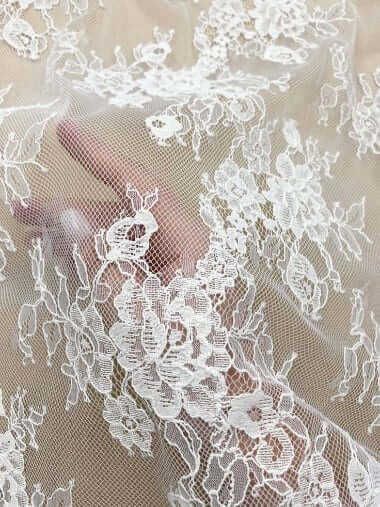
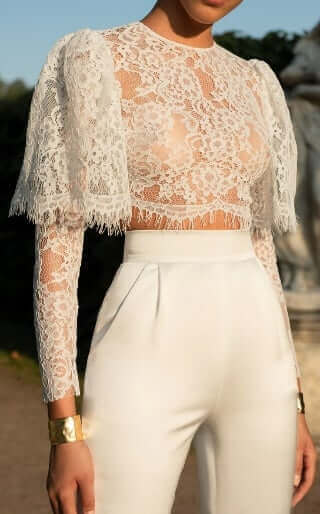
Best for: sleeves, yokes, necklines, overlays on satin/crepe
Watch-outs: if the ground is rough or the ivory tone is off, the lace looks cheaper instantly.
Guipure Lace — “Architectural Luxury” (Structured, Motif-Driven, Modern)
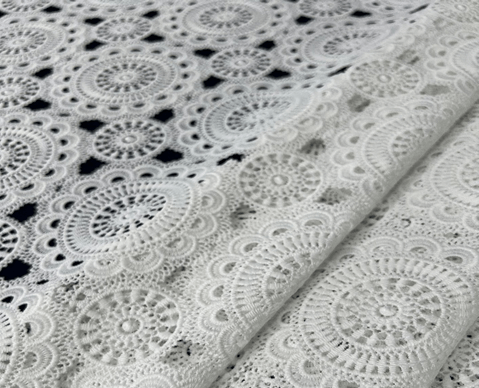
Structure: no mesh ground; motifs connected by bridges/bars
Strengths: clear motif definition, structured look, modern silhouettes
Professional selection criteria:
- Motif hierarchy must be clear (hero vs supporting motifs)
- Bridges must be balanced—not too thick, not too dense
- Negative space should have intentional shape (not random emptiness)
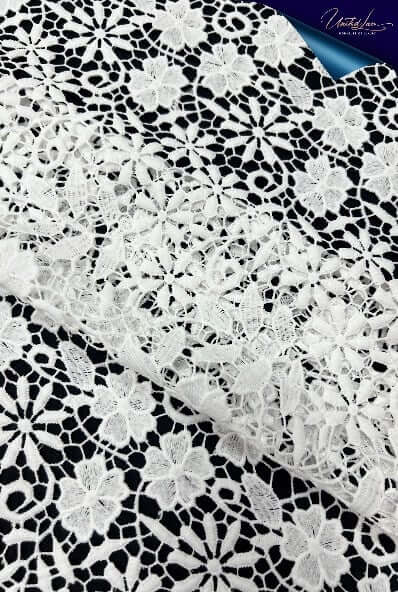
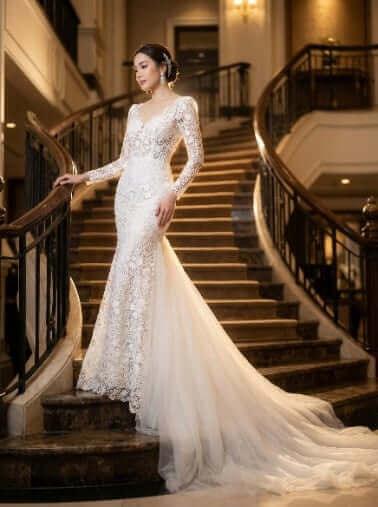
Best for: structured dresses, panels, hems, collars, power pieces
Watch-outs: seam bulk can become heavy; comfort issues occur if relief is too thick.
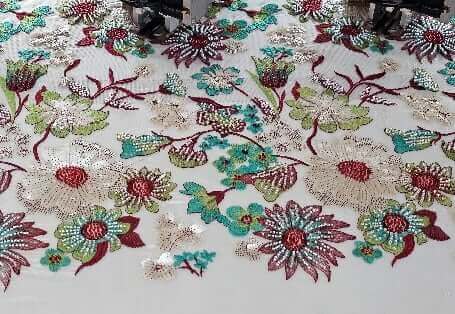
Tulle Lace / Embroidered Tulle — “Luxury Through Light + Negative Space”
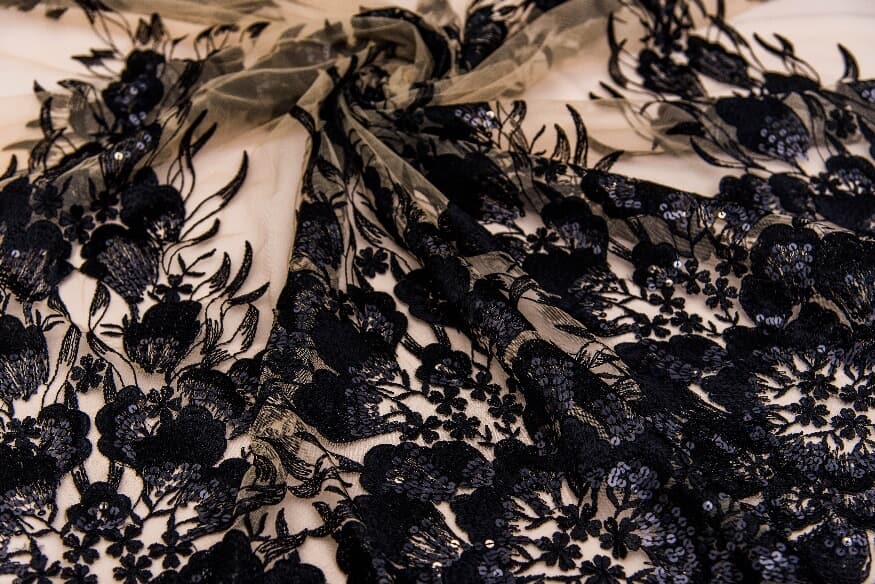
Structure: embroidered motifs on a tulle ground
Strengths: controlled transparency, modern sensuality, illusion engineering
Professional selection criteria:
- Mesh must be fine and stable (no stretching during sewing)
- Motif-to-air ratio must be balanced (motif vs negative space)
- Do a media test (photograph it) because motifs can disappear on camera
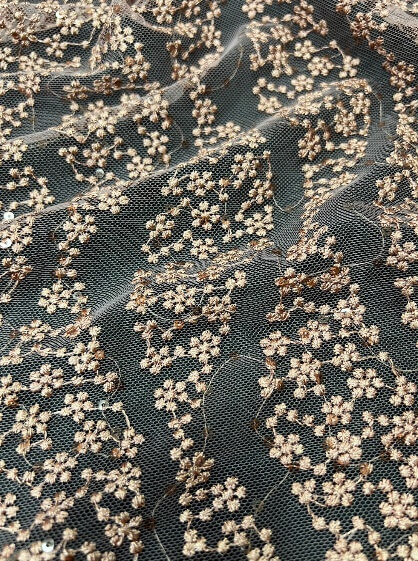
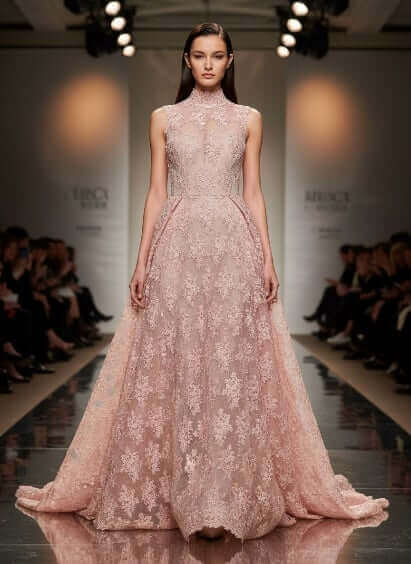
Tulle Lace / Embroidered Tulle
Best for: modern bridal, minimal eveningwear, illusion panels
Watch-outs: if transparency is uniform across the entire yardage, real-world wearability drops—making the design harder to sell.
Cotton Lace / Eyelet — “Clean Luxury + Real Wearability”
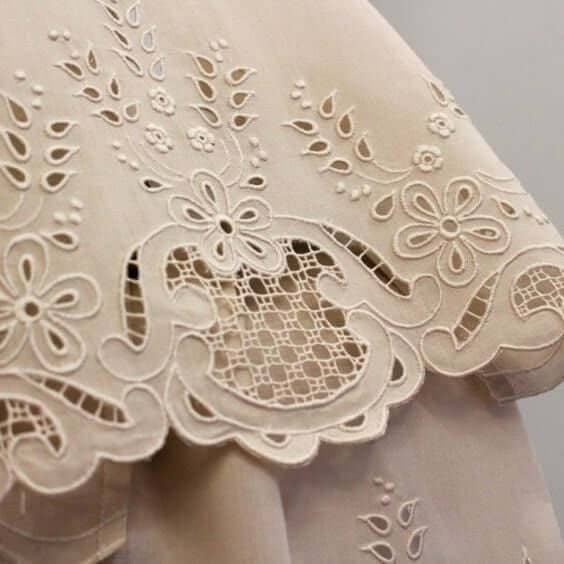
Strengths: breathable, tropical-friendly, premium casual/resort positioning
Professional selection criteria:
- Cotton handfeel must not be stiff
- Pattern must look clean, not dense or muddy
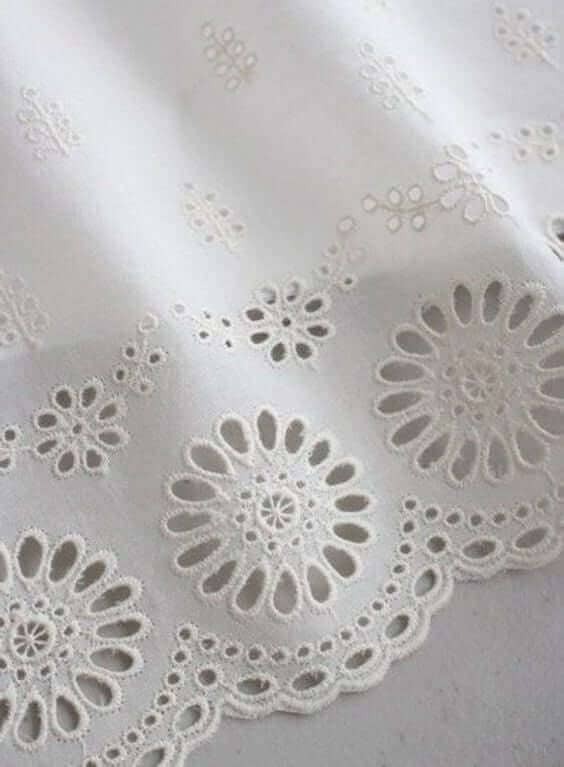
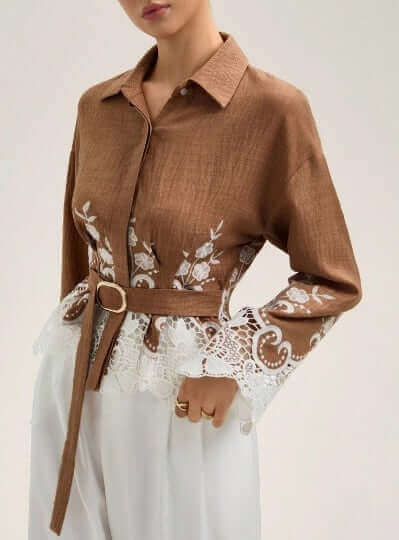
Best for: resort, summer office wear, premium casual sets
Watch-outs: shrinkage and wrinkling must be controlled before production.
Metallic / Beaded Lace — “Occasion Luxury” (Impact, Night, Statement)
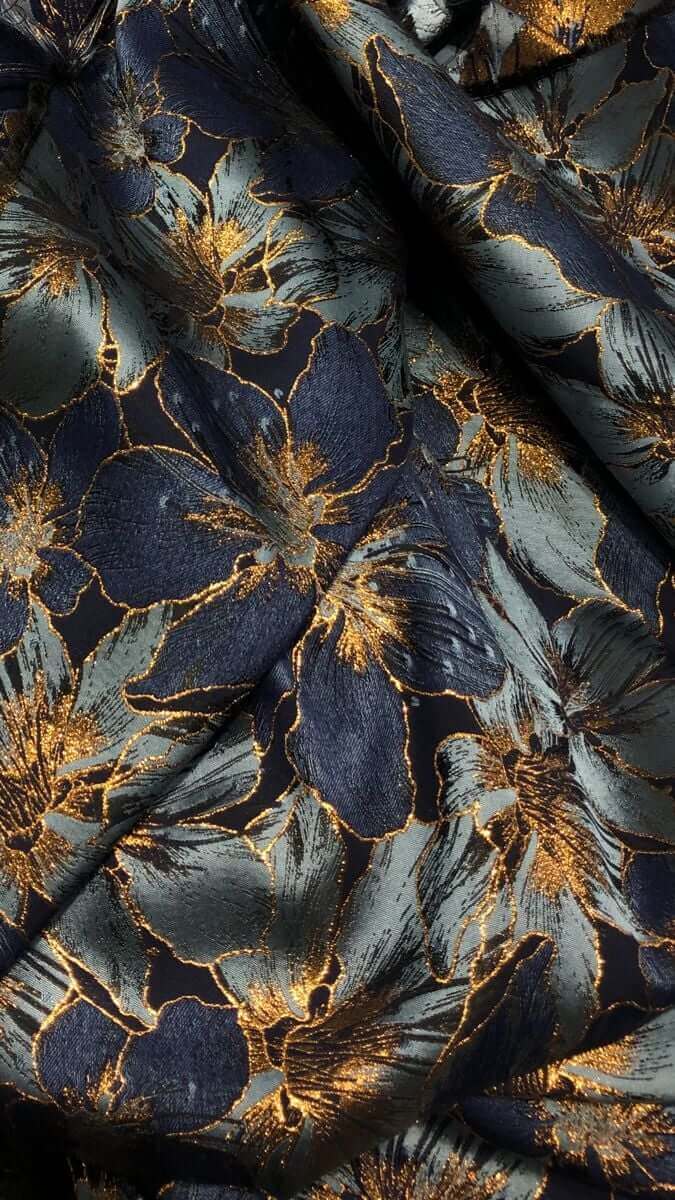
Strengths: high visual impact for evening / event dressing
Professional selection criteria:
- Total weight (including beads) must not collapse the silhouette
- Bead security (durability of embellishment) must be verified
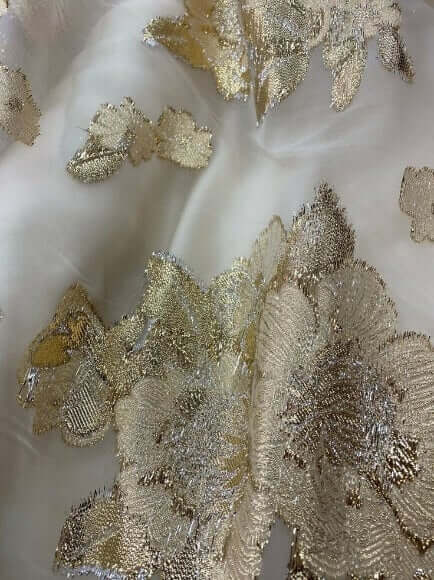
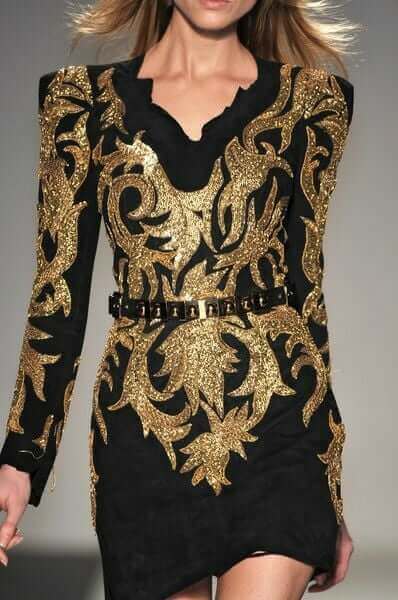
Best for: eveningwear, statement bridal, special drops
Watch-outs: harsh reflection on camera can read “cheap” instead of premium.
3️⃣ Evaluate Fabric Quality Like a Professional (Beyond “Pretty or Not”)
The goal of professional quality evaluation is not to decide whether a fabric is “beautiful.” It is to answer five operational questions clearly:
- Brand Fit: Does it truly communicate your brand level?
- Construction Fit: Will the silhouette hold—or collapse in sewing?
- Stability: Are color/pattern/ground stable, especially across lots?
- Wearability: Is it comfortable (itching, stretching, sagging)?
- Media Performance: Does it photograph “expensive” or “broken”?
🔹 A professional sourcing checklist should cover:
- ✔ Spacing & Pattern Rhythm: the pattern must have tempo, not clumps
- ✔ Color Stability: consistency across dye lots
- ✔ Sewing Behavior: does it stretch, split, distort, fray?
- ✔ Photo Performance: no blotches, no “flat cheap texture” on camera
- ✔ Repeatability: can you reuse it without looking repetitive?
B2B editorial expansion: In the Quiet Luxury era, you should treat “media performance” as part of fabric QC. Many premium pieces are sold through imagery first (lookbooks, e-commerce, press pulls, influencer content). A fabric that performs well in hand but fails on camera will cost you margin through re-shoots, extra styling, and lower conversion.
4️⃣ Manage B2B Purchasing Risk (MOQ, Lead Time, Lot Consistency)
From a Designer Boutique perspective, the risk controls are non-negotiable:
- MOQ must fit your business model
- Lead time must be explicit
- Color must be consistent
- The supplier must offer continuity of stock (or reliable reorder plans)
This is why choosing wholesale lace fabric Thailand is not just about quality—it is also about supplier stability.
Practical B2B lens: the “best fabric” is not the one that wins a moodboard—it’s the one that:
- can be sampled efficiently,
- can be produced with consistent output, and
- can be reordered without brand-damaging variation.
5️⃣ The Role of a Premium Lace Supplier in Bangkok Has Changed
In the past, lace suppliers were often treated as “raw material vendors.” In the Quiet Luxury era, that role changes completely—because design speaks less, and quality is easier to see.
For Designer Boutiques and Brand Owners, a Premium Lace Supplier Bangkok should not be only a “fabric provider.” The supplier must function as:
- Quality Gate (screening before you commit)
- Brand Partner (understanding your positioning and aesthetic language)
- Risk Manager (helping you avoid production and reorder traps)
🔹 A good supplier should:
- understand your brand positioning
- be confident enough to say which fabrics you should not use
- curate before presenting options
- provide technical guidance, not just price lists
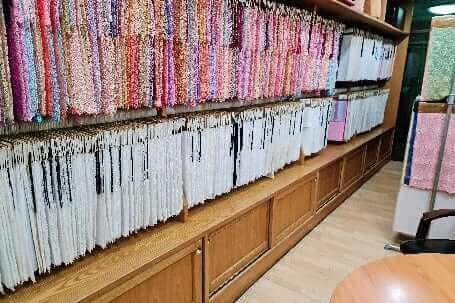
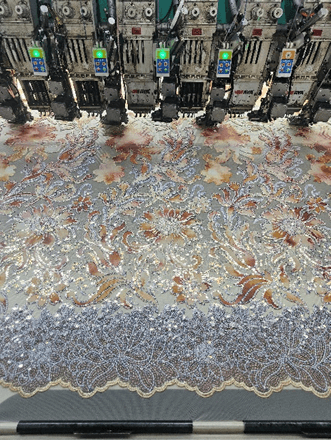
In the context of United Lace, we prioritize being a partner, not just a seller. With over 75 years of experience and wholesale lace distribution in Thailand, we support designers and garment manufacturers in selecting materials aligned with long-term brand growth.
Equally important: a professional sourcing partner is strongest when it can connect material intelligence with real market application. That is why the brand owner behind United Lace also operates Parry Lace Studio—a ready-made lace garments sub-brand that translates lace into modern, wearable silhouettes. This dual perspective helps sourcing conversations stay grounded in what matters commercially:
- how lace performs not only in sampling and bulk production, but also in wearability, styling, and customer perception
- how “quiet” design language depends on precision (spacing, texture, tone, drape) rather than decorative volume
- how to choose lace that reads premium on-body and on-camera, not just on the roll
If your team is building a collection in Quiet Luxury positioning, treat your supplier relationship as a strategic layer of your brand system—because the wrong lace choice does not only create a quality issue; it creates a brand credibility issue.
Lace advice / brand site: https://www.unitedlace.com/
View products: https://www.unitedlace.com/products.html
Fabric Sourcing as a Quiet Luxury Strategy
Quiet Luxury is not only “simpler dressing.” It is a strategic shift of the selling point:
- from decoration → to material, proportion, and precision.
When design speaks less, fabric speaks louder. Therefore, fabric sourcing becomes a brand control system, not merely procurement.
Quiet Luxury makes fabric sourcing twice as important, because when the design is clean:
- small color deviations become obvious
- inaccurate lace spacing becomes obvious
- rough texture becomes obvious
Editorial expansion for B2B teams: This is where many “premium-looking” brands get exposed. In a loud-design era, complexity can hide inconsistencies. In Quiet Luxury, the product becomes a test of discipline:
- disciplined color standards
- disciplined handfeel standards
- disciplined QC tolerances
- disciplined vendor management
If your sourcing does not include these disciplines, the brand will look unstable—even if your pattern work is excellent.
Conclusion
Fabric sourcing for professional designers is not about choosing the most beautiful fabric. It is about choosing the fabric that can work for the design across every dimension—from brand perception to production execution and commercial performance.
In an era where fashion speaks more quietly—especially under Quiet Luxury—fabric becomes the loudest communicator, because there are no dramatic details to hide mistakes. A slight color shift, a rough surface, unstable drape, or inaccurate lace spacing can instantly make a garment feel “not quite there,” even when the pattern is strong.
Ultimately, fabric sourcing is an investment in what customers recognize immediately: brand confidence. In premium fashion, perceived value does not come from adding more—it comes from choosing with precision from the start.
In other words: sourcing is not procurement—it is brand governance. And when your sourcing partner understands both wholesale fabric discipline United Lace and the end-wear reality of lace garments Parry Lace Studio, your brand gains a clearer path to consistency, confidence, and long-term premium positioning.
FAQs
1) What is fabric sourcing in the fashion business?
Fabric sourcing is the process of selecting and procuring fabrics that fit the brand, the design intent, and production realities. It is not just choosing the “prettiest” fabric—it includes evaluating technical quality, color stability, sewing performance, and reorder capability, especially for premium brands that must protect brand perception with precision.
2) Why is fabric sourcing critical in the Quiet Luxury era?
In Quiet Luxury, designs become cleaner—so fabric quality becomes the most visible and touchable proof of value. If fabric selection is inaccurate (off-tone color, rough ground, unstable drape), the brand image is damaged immediately. Precise sourcing protects the calm, refined premium signal Quiet Luxury requires.
3) What fabrics should a Designer Boutique choose for a premium collection?
Designer boutiques should prioritize fabrics that hold shape, have refined texture, and maintain sophisticated color discipline—such as quality crepe, suiting, softly lustrous satin, or lace with strong spacing control. The goal is for the fabric to support silhouette without competing with the design, and to remain reorderable long-term.
4) What is the difference between Chantilly lace and Guipure lace?
Chantilly lace features delicate motifs on a sheer ground, ideal for soft, refined, “quietly romantic” applications. Guipure lace has no mesh ground and uses connecting bridges, offering clearer structure and motif impact. The right choice depends on your brand mood and silhouette strategy.
5) How do professionals evaluate lace quality?
Professional evaluation includes checking motif spacing, color consistency, mesh quality (for tulle lace), bridge thickness (for guipure), and seam bulk in construction. A media test—photographing the lace in natural light—is essential to confirm the texture still reads premium on camera.
6) What are the advantages of wholesale lace sourcing in Thailand?
Sourcing wholesale lace fabric in Thailand can improve lead-time control, reduce risk around color lots, and make reordering more practical—especially for brands needing continuity across collections and B2B production cycles.
7) What should you expect from a premium lace supplier in Bangkok?
A premium lace supplier should understand brand positioning, provide technical recommendations for sewing and usage, control cross-lot color quality, and support reorder planning. They should act as a material partner—not merely a vendor.
8) How does fabric sourcing reduce hidden costs?
Precise sourcing reduces sample revisions, seam/bulk issues, production corrections, and dead stock risk. It also improves first-time photo performance—reducing reshoot costs and marketing opportunity loss.
9) What lace types fit the Quiet Luxury aesthetic?
Quiet Luxury lace should have rhythmic spacing (not dense), refined neutral tones, and high-detail texture. Chantilly lace with smooth ground or guipure lace with clear motifs (without visual chaos) works well—because the lace supports the silhouette rather than overpowering it.
10) What questions should you ask a lace supplier before ordering?
Ask about dye-lot consistency, MOQ per color, lead time, reorder capability, and construction recommendations (underlay and sewing guidance). These ensure the lace will support both brand image and production stability over time.

 |  |  |  |  |
#unitedlace #lace #embroidery #cottonlace #drylace #frenchlace #eyelet #chantillylace #lacewholesale #fancylacefabric #lacewholesaleonline #multicolor #tencel #cotton #guipure #wholelacesupplier #lacesupplier #lacecharacteristic #laceproperties #innovation #ecofriendly