Table of Contents
- Modern Workwear No Longer Requires Choosing Between Professionalism and Individuality
- Hybrid Dressing bridges these two worlds.
- Who Is the Creative Professional, and What Should Their Clothing Communicate?
- Hybrid Dressing Is About Relationships Between Fabrics, Not Simply Mixing Materials
- Why Hybrid Dressing Matters in 2026 and Beyond
- Four Contrasting Fabric Combinations That Define Hybrid Dressing
- Six Design Variables That Determine Professional Elegance
- Hybrid Dressing Formulas for Different Professional Situations
- Strategic Opportunities for Fashion Brands and Garment Manufacturers
- Choosing the Right Lace for a Hybrid Professional Collection
- Common Mistakes That Undermine Hybrid Dressing
- United Lace: A Specialist Material Partner for Modern Workwear
- Conclusion: Professionalism and Creativity Belong in the Same Wardrobe
- Developing your next premium workwear or ready-to-wear collection?
- FAQs
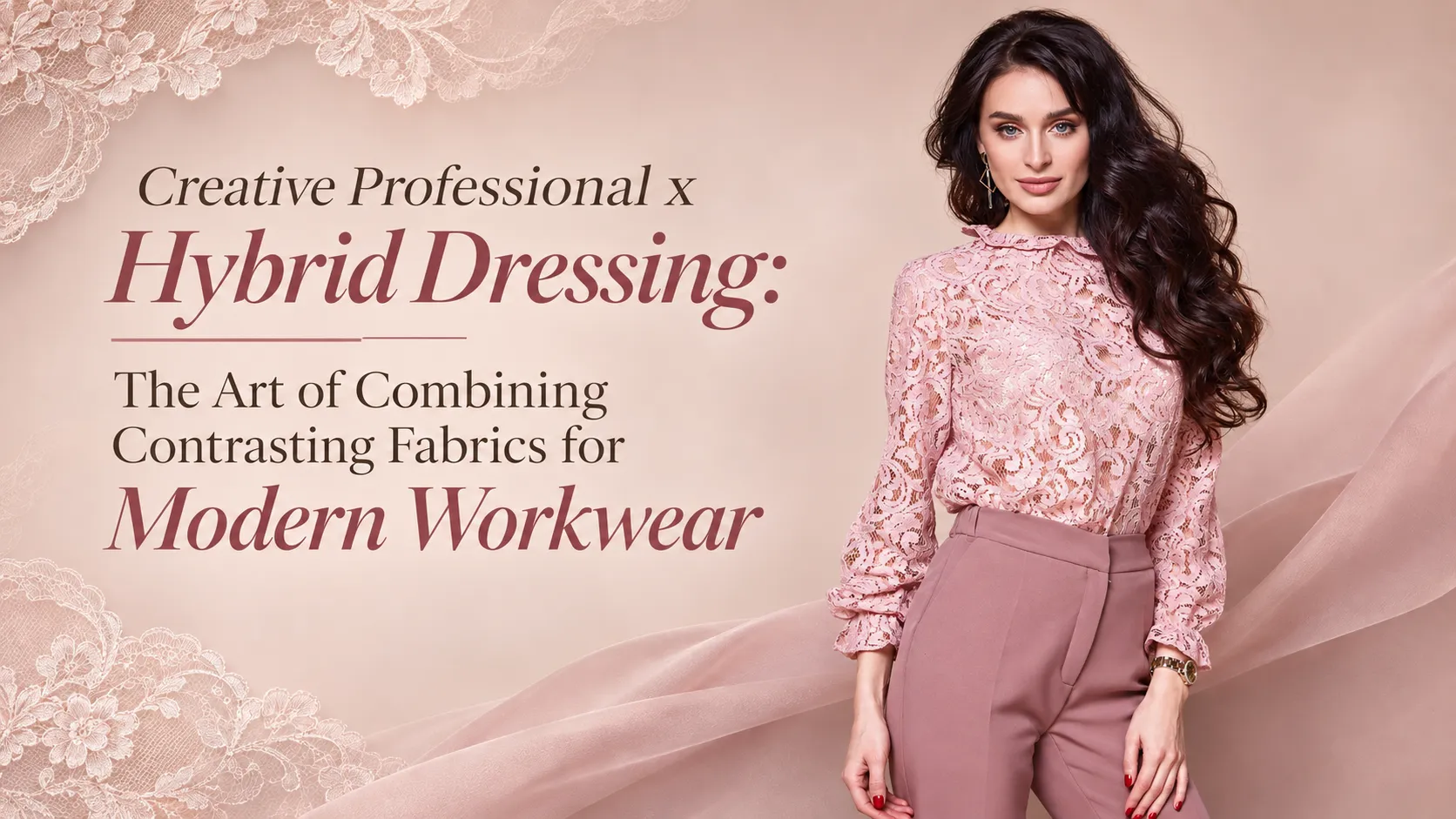
Where the precision of tailoring meets the sophistication of lace and embroidery.
Modern Workwear No Longer Requires Choosing Between Professionalism and Individuality
The modern workplace has evolved, yet professional wardrobes often remain divided between conventional business attire and expressive fashion.
Traditional tailoring—structured blazers, crisp shirts, straight-leg trousers and minimalist dresses—communicates authority but can lack individuality. Conversely, garments featuring distinctive textures, lace, embroidery and unconventional proportions express creativity but may appear inappropriate for formal business environments.
Hybrid Dressing bridges these two worlds.
By combining contrasting textile characteristics, designers can create garments that balance structure, texture, comfort and identity.
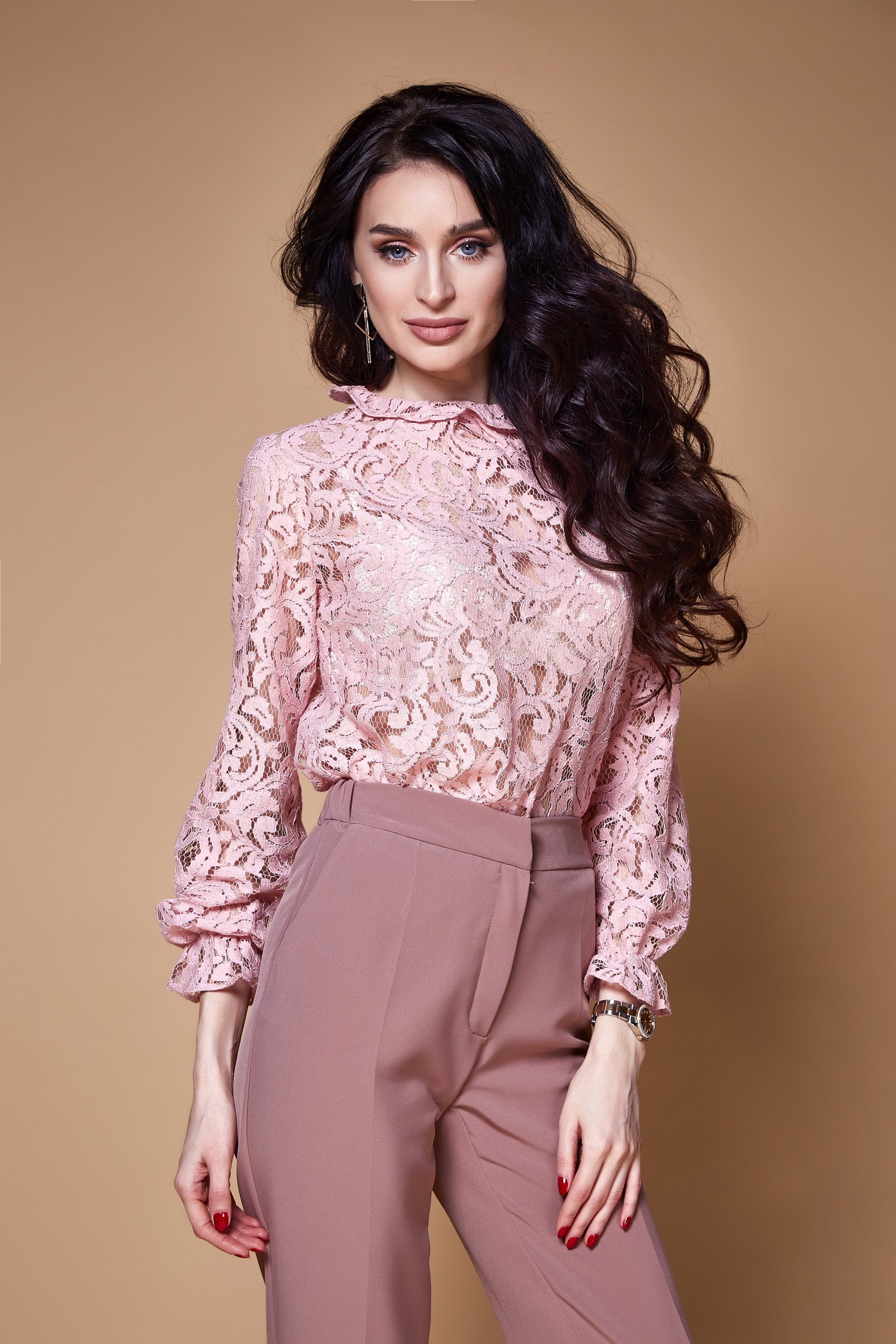
A tailored blazer with Chantilly lace sleeves, a cotton poplin shirt with architectural Guipure detailing, or a crepe dress featuring tonal embroidery demonstrates how contrasting fabrics can coexist without compromising sophistication.
This philosophy reflects the direction explored in Fabric & Lace Trends 2026 for Thai Fashion Brands, where fabric becomes an essential expression of brand identity rather than simply a foundation for garment construction.
For fashion brands and manufacturers, Hybrid Dressing represents more than a styling trend. It creates opportunities to develop versatile collections that transition from professional meetings to creative environments and evening engagements.
Who Is the Creative Professional, and What Should Their Clothing Communicate?
The term Creative Professional extends beyond artists and designers. It encompasses entrepreneurs, executives, architects, consultants, marketers and professionals whose careers require expertise, analytical thinking and originality.
Their wardrobes should communicate four characteristics: credibility, creativity, attention to detail and contextual awareness.
Professional credibility comes from balanced silhouettes, accurate seam construction, appropriate proportions and fabrics that maintain their shape.
Creativity emerges through carefully considered details: placement embroidery, contrasting textile surfaces, architectural lace panels or subtle variations in garment construction.
The objective is refinement rather than excessive decoration.
Consider three navy garments: a matte wool blazer communicates authority, a fluid crepe dress suggests effortless sophistication, while a blouse featuring tonal French lace conveys individuality and craftsmanship.
For designers, these differences demonstrate how fabric selection influences perceived value and brand personality.
The philosophy closely aligns with Quiet Luxury Lace and the Art of Understated Elegance: sophistication emerges from material quality and intentional design rather than visual excess.
Hybrid Dressing Is About Relationships Between Fabrics, Not Simply Mixing Materials
Successful Hybrid Dressing depends on establishing a clear relationship between two or three contrasting materials.
Each fabric should serve a specific purpose.
The primary fabric establishes structure, the secondary material introduces movement or texture, and decorative elements create distinctive visual accents.
An effective starting framework is the 70:20:10 principle:
- 70% Structural Foundation: Suiting, crepe, cotton poplin or compact knit establishes the garment's silhouette.
- 20% Textural Contrast: Chantilly lace, Guipure, embroidered tulle, organza or jacquard provides dimension.
- 10% Decorative Accent: Embroidery, trims, buttons, piping or metallic threads completes the design.
These proportions are creative guidelines rather than fixed manufacturing specifications.
Another useful principle is one statement element, one restrained element.
A Guipure pencil skirt pairs naturally with a minimalist cotton blouse. A blazer featuring embroidered sleeves works best with clean-cut trousers. A textured jacquard jacket benefits from a matte, understated inner layer.
The strategic objective is visual hierarchy: every material contributes without competing for attention.
Why Hybrid Dressing Matters in 2026 and Beyond
As fashion moves from late 2026 into 2027, designers have an opportunity to reinterpret conventional workwear through softer tailoring, functional layering and distinctive textile surfaces.
Romantic materials traditionally associated with occasionwear—particularly lace and embroidery—can become components of contemporary professional fashion.
Combining lace with denim, knitwear, lightweight suiting or structured cotton expands its commercial potential.
For fashion brands, this creates a valuable intersection between workwear, premium ready-to-wear and occasionwear.
A garment designed for meetings, presentations, dinners and social events offers customers multiple styling possibilities. Greater versatility can improve perceived value and potentially reduce cost per wear.
Color also contributes to collection longevity.
Transformative Teal, Peach Powder and Fuchsia Red can appear as embroidery accents, linings or detachable elements, while navy, ivory, charcoal and chocolate establish sophisticated foundations.
Designers can explore these combinations through Color Trends 2026: Seven Shades Shaping Fashion.
For manufacturers, developing commercially adaptable silhouettes with distinctive textile detailing offers a practical pathway toward premium product differentiation.
Four Contrasting Fabric Combinations That Define Hybrid Dressing
1. Tailoring Meets Chantilly Lace
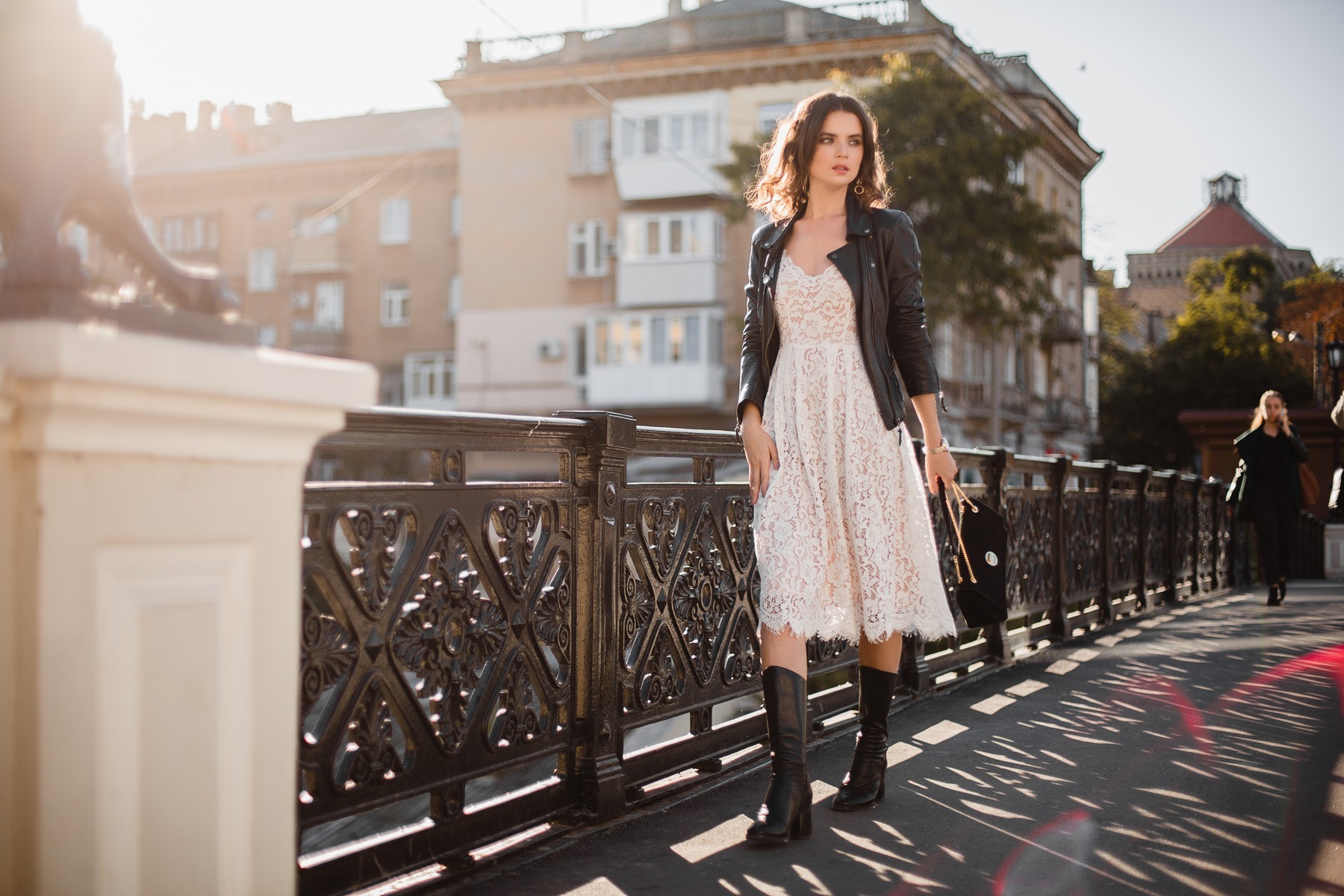
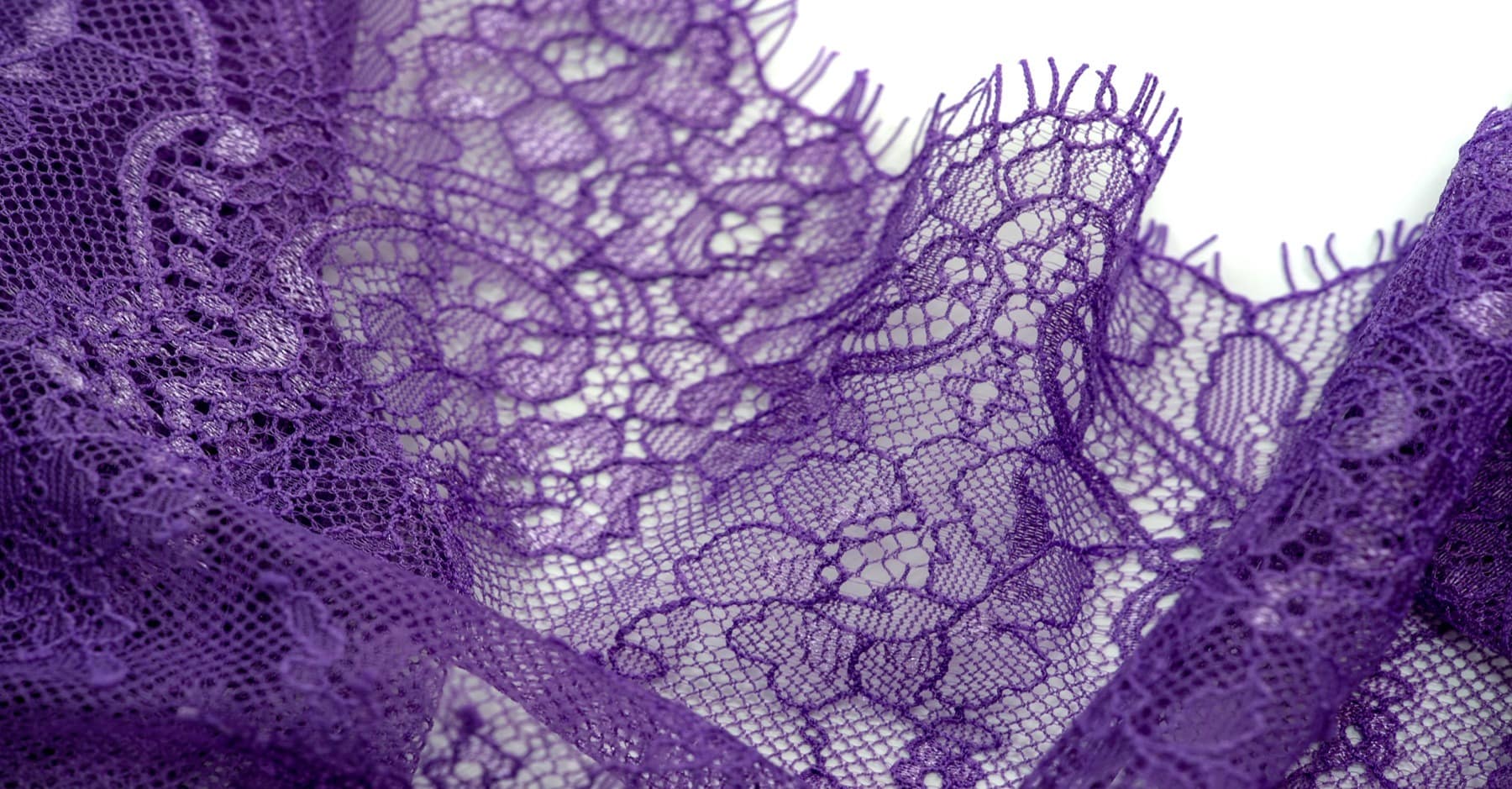
Structured tailoring communicates precision, while Chantilly lace introduces delicacy, softness and graceful movement.
The combination works particularly well in blazers, blouses and contemporary dresses.
Designers can incorporate Chantilly lace into sleeves, shoulder yokes, overlays or carefully positioned inserts.
Because fine lace may have limited resistance to mechanical stress, placement should prioritize areas with controlled tension.
Tonal lace sleeves on a navy tailored jacket can create sophistication without excessive transparency.
A fully lined Chantilly blouse beneath a structured blazer offers another commercially versatile interpretation.
For premium collections, fine motif scale and controlled lace density are essential to balancing elegance with workplace appropriateness.
2. Cotton Poplin Meets Guipure Lace
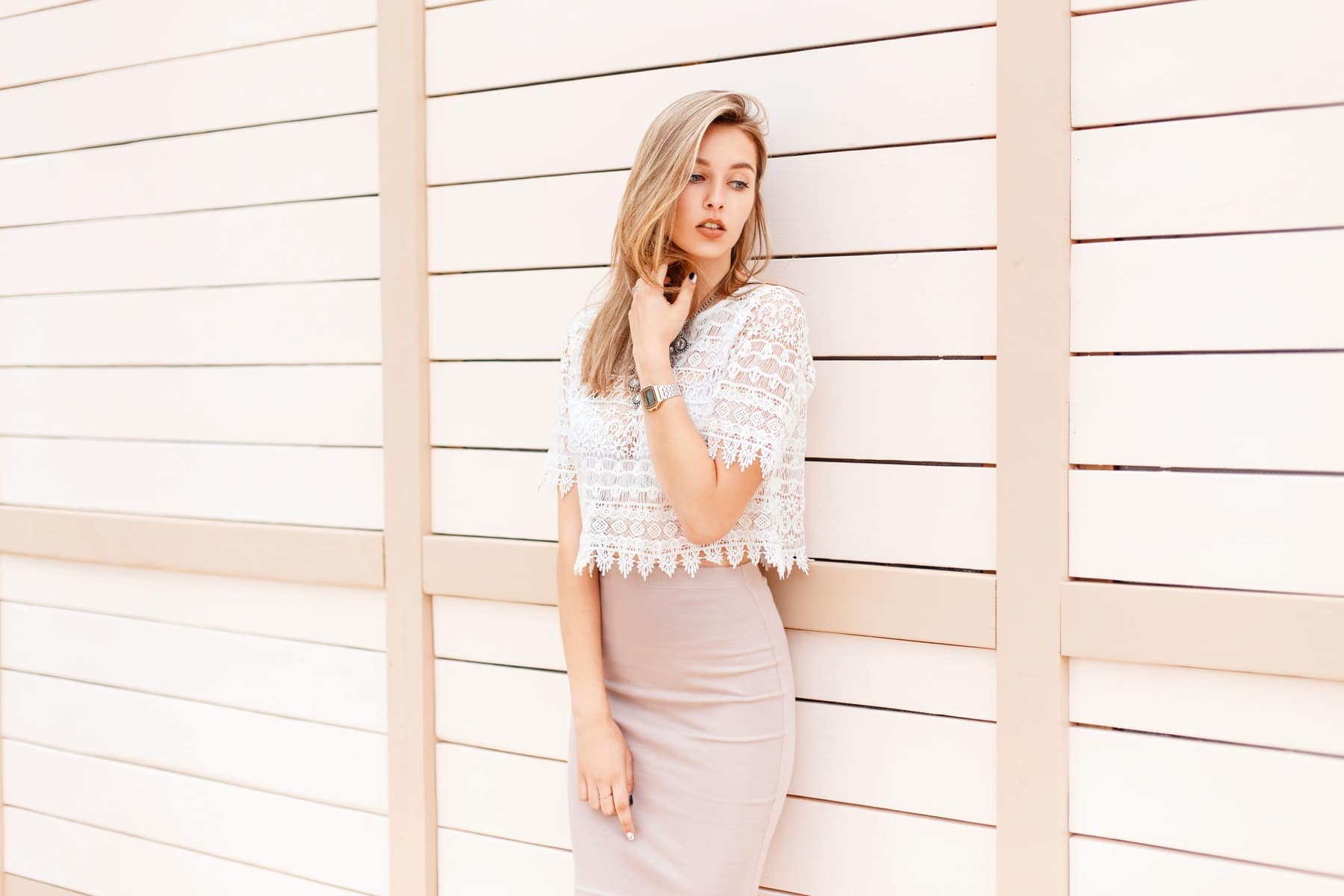
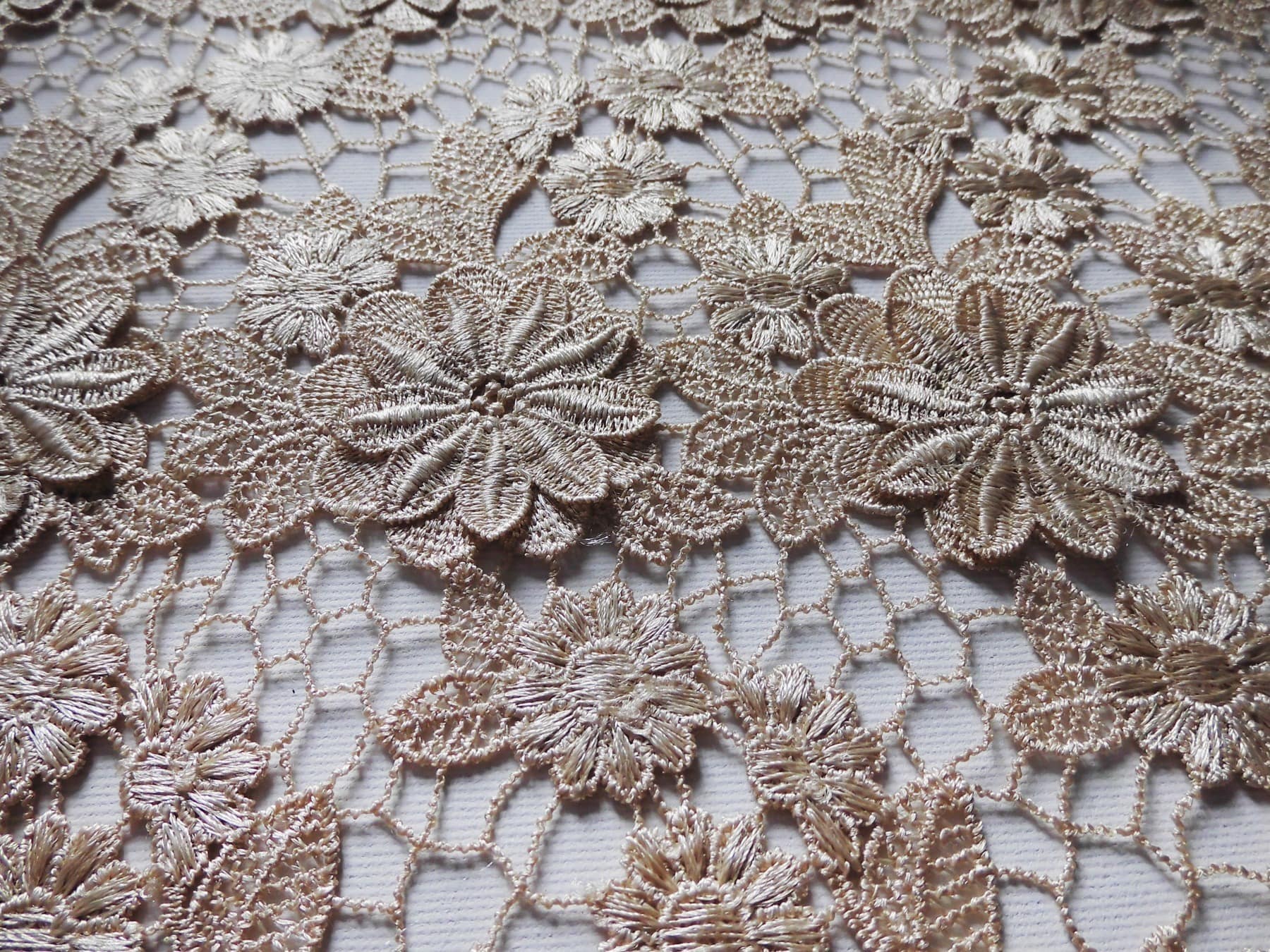
Cotton poplin offers crispness, smoothness and visual clarity. Guipure lace introduces raised motifs, architectural texture and dimensional structure.
This contrast works beautifully for shirt collars, cuffs, plackets, hems and tailored skirts.
A white poplin blouse paired with a Guipure A-line skirt produces a polished professional silhouette with distinctive character.
When selecting Guipure lace fabrics, manufacturers should evaluate motif proportions, negative space, fabric weight and structural rigidity.
Oversized motifs may overwhelm smaller garments, while excessively stiff lace can restrict movement.
The objective is to use Guipure as a design feature that enhances silhouette and perceived craftsmanship.
3. Crepe Meets Embroidered Tulle
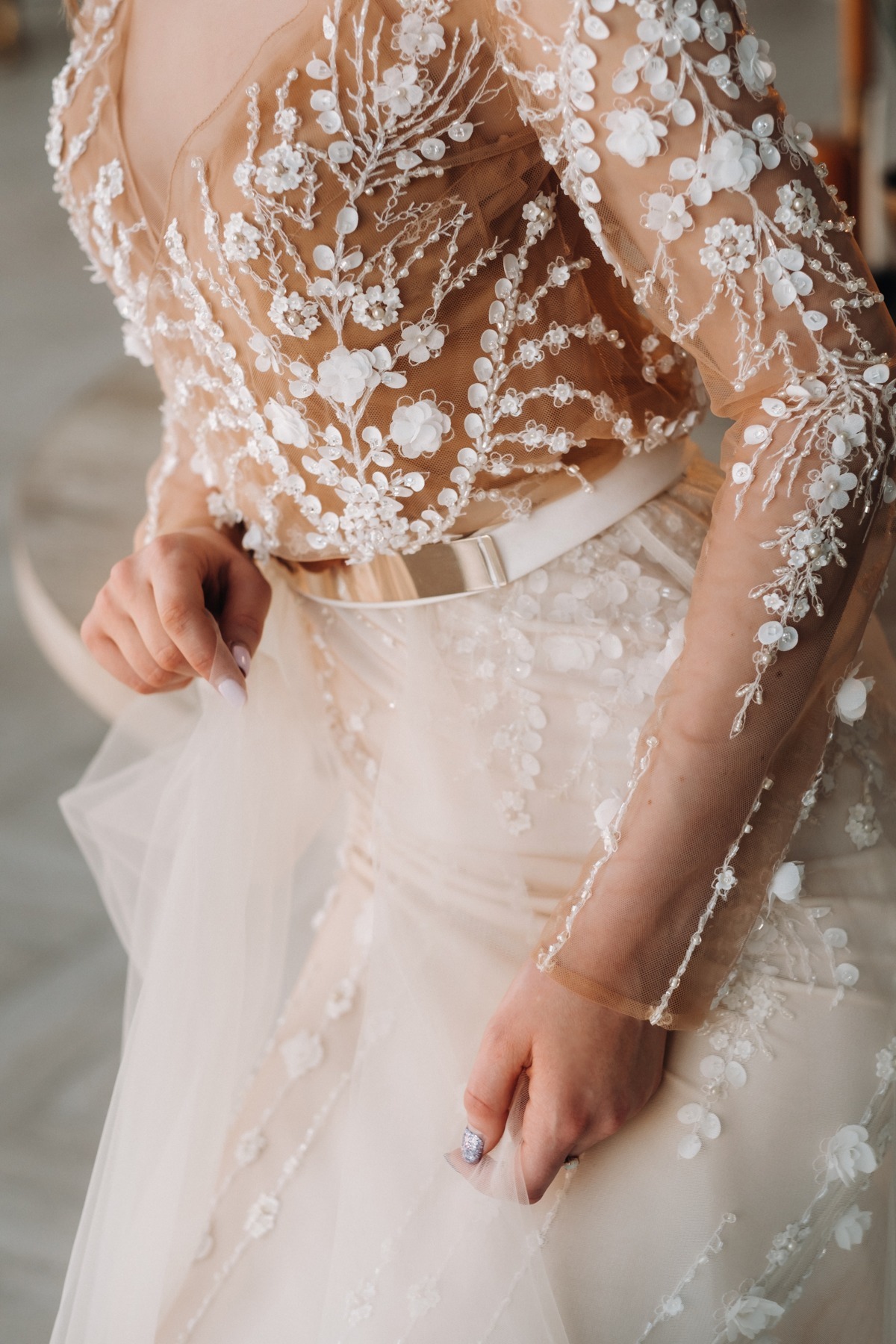
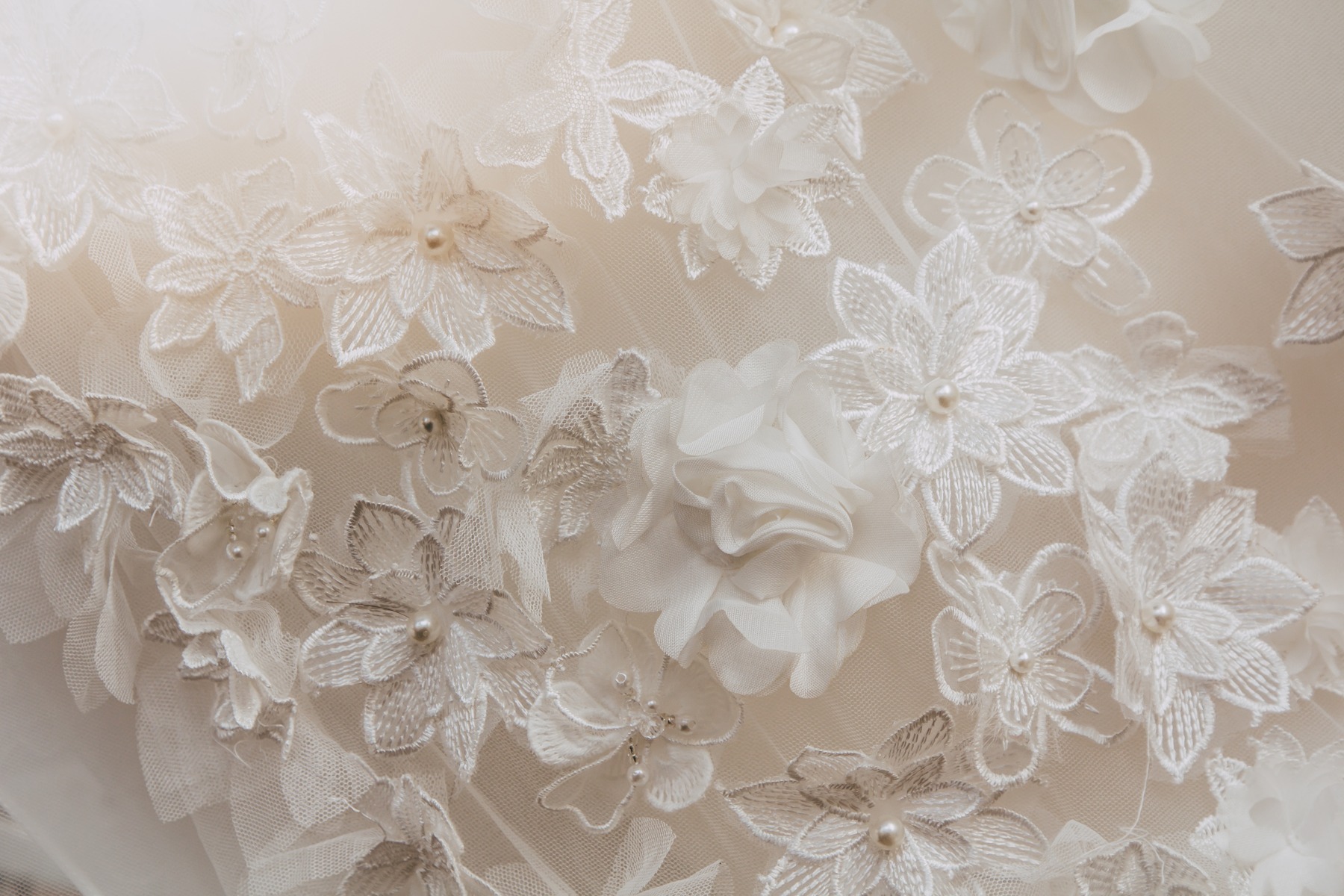
Crepe provides a fluid, relatively understated foundation that complements the dimensional character of embroidered tulle.
This combination is especially effective for professional dresses, sophisticated blouses and transitional eveningwear.
Designers can position embroidered tulle and decorative lace across sleeves, shoulder panels or detachable overlays.
Tonal embroidery produces quiet sophistication, while contrasting embroidery creates a stronger statement suitable for after-work occasions.
Manufacturers must evaluate embroidery density, mesh stability and seam construction to ensure that decorative details do not distort the underlying garment.
4. Compact Knit Meets Lace Panels
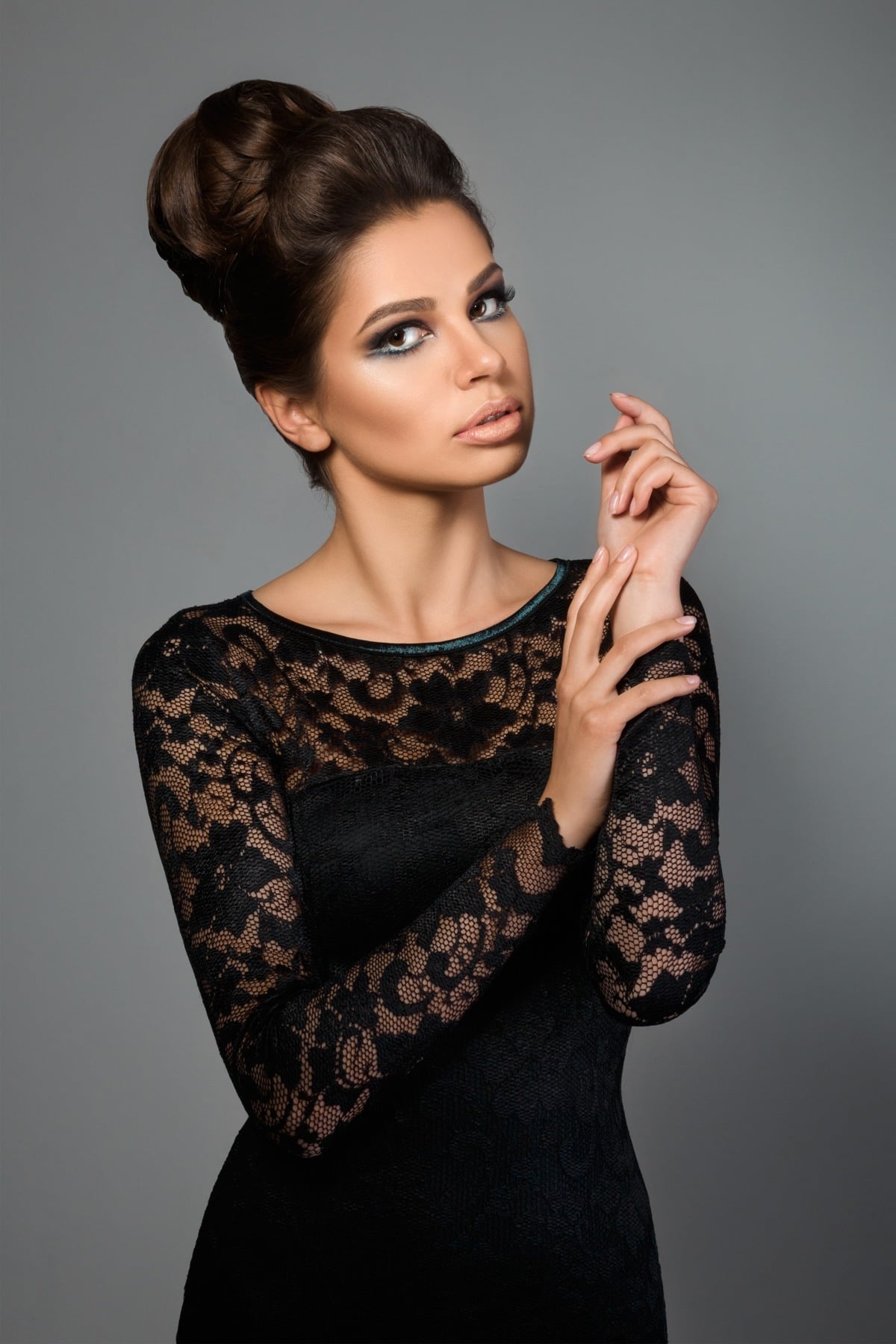
Compact knit offers comfort and flexibility, while lace panels provide visual interest without requiring an entirely new silhouette.
Potential applications include sleeve inserts, upper-back panels and side detailing.
However, the compatibility of fabric stretch is critical.
Combining highly elastic knitwear with non-stretch lace can produce seam distortion, pulling or restricted movement.
Manufacturers should consider stretch lace or relocate decorative panels away from high-tension areas.
For additional design guidance, explore Lace for Workwear 2026: Luxury Office Lace.
Six Design Variables That Determine Professional Elegance
1. Structure
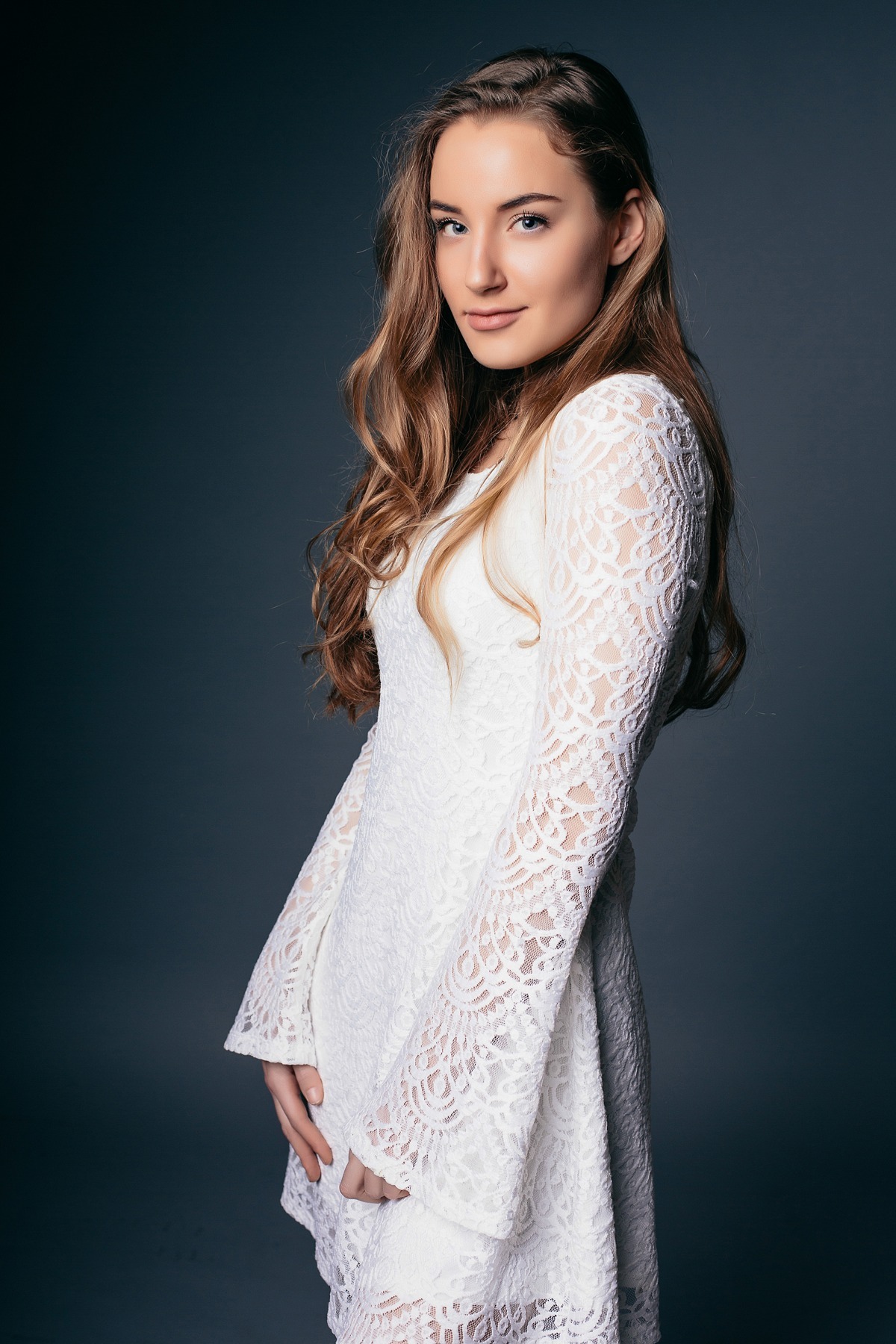
At least one fabric should establish the garment's silhouette.
Suiting, poplin, twill, structured crepe or appropriately constructed Guipure provides visual definition and helps softer materials appear intentional.
2. Drape
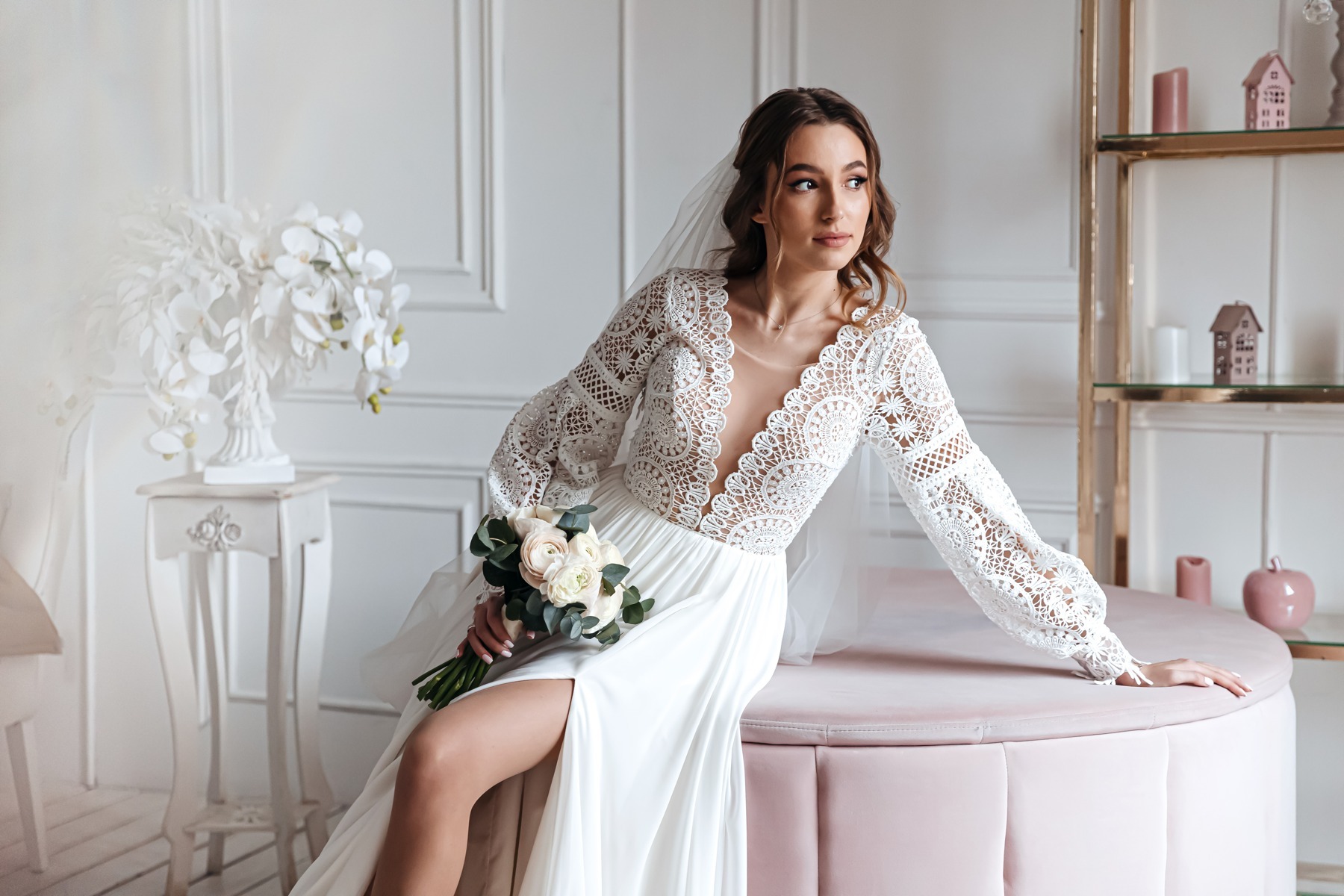
Fabric drape determines how clothing responds to movement.
Combining structured materials with fluid textiles creates balance. A sharply tailored jacket complements flowing trousers, while a structured Guipure skirt works effectively with a draped crepe blouse.
3. Transparency
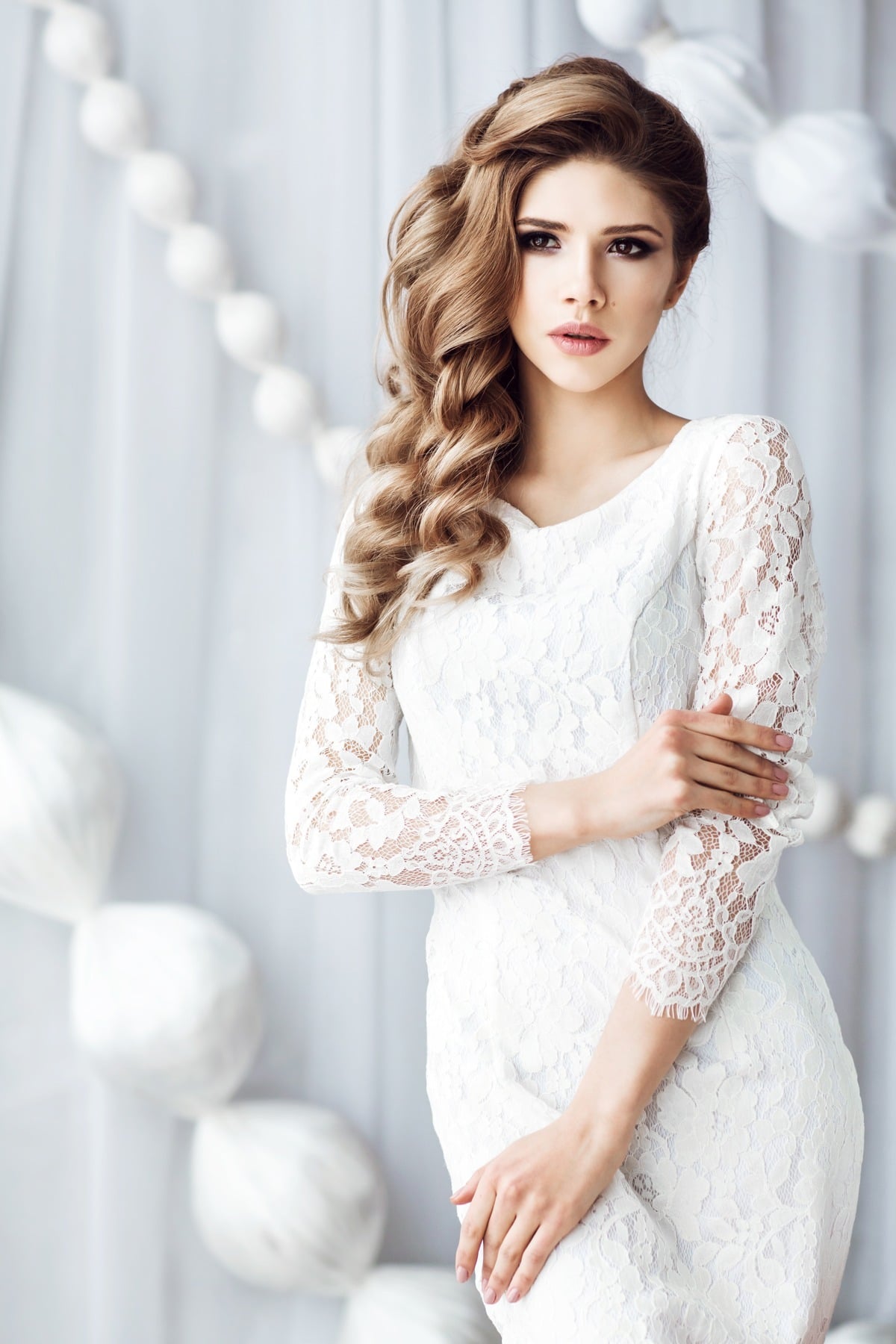
Transparency should be controlled according to the professional setting.
Tonal linings, double layers, positioned lace inserts and selectively sheer sleeves can create depth without excessive exposure.
4. Motif Scale
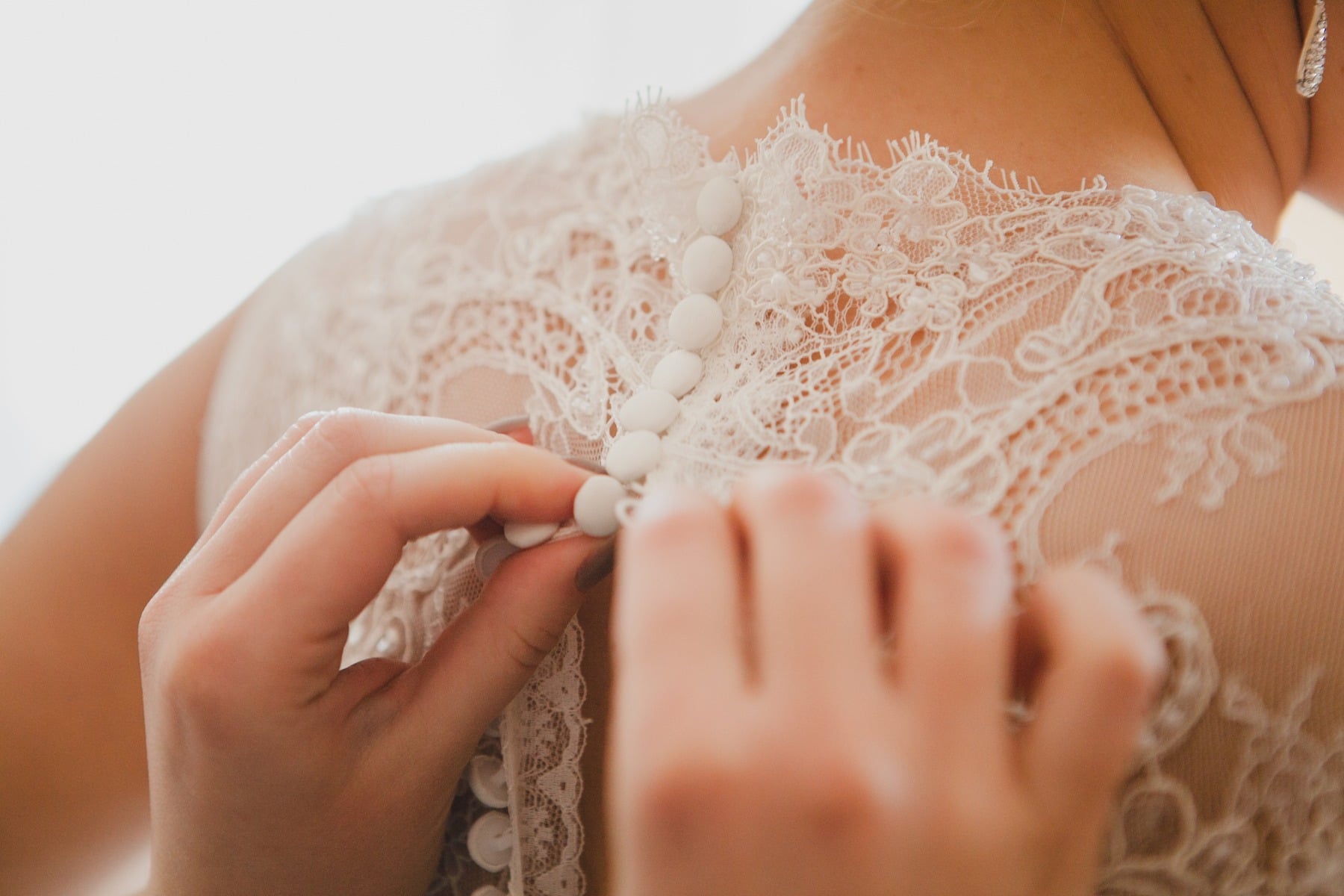
Small motifs generally offer subtle versatility, while larger patterns produce stronger visual statements.
Designers should consider garment proportions and avoid cutting important motifs across poorly positioned seams.
5. Surface Contrast
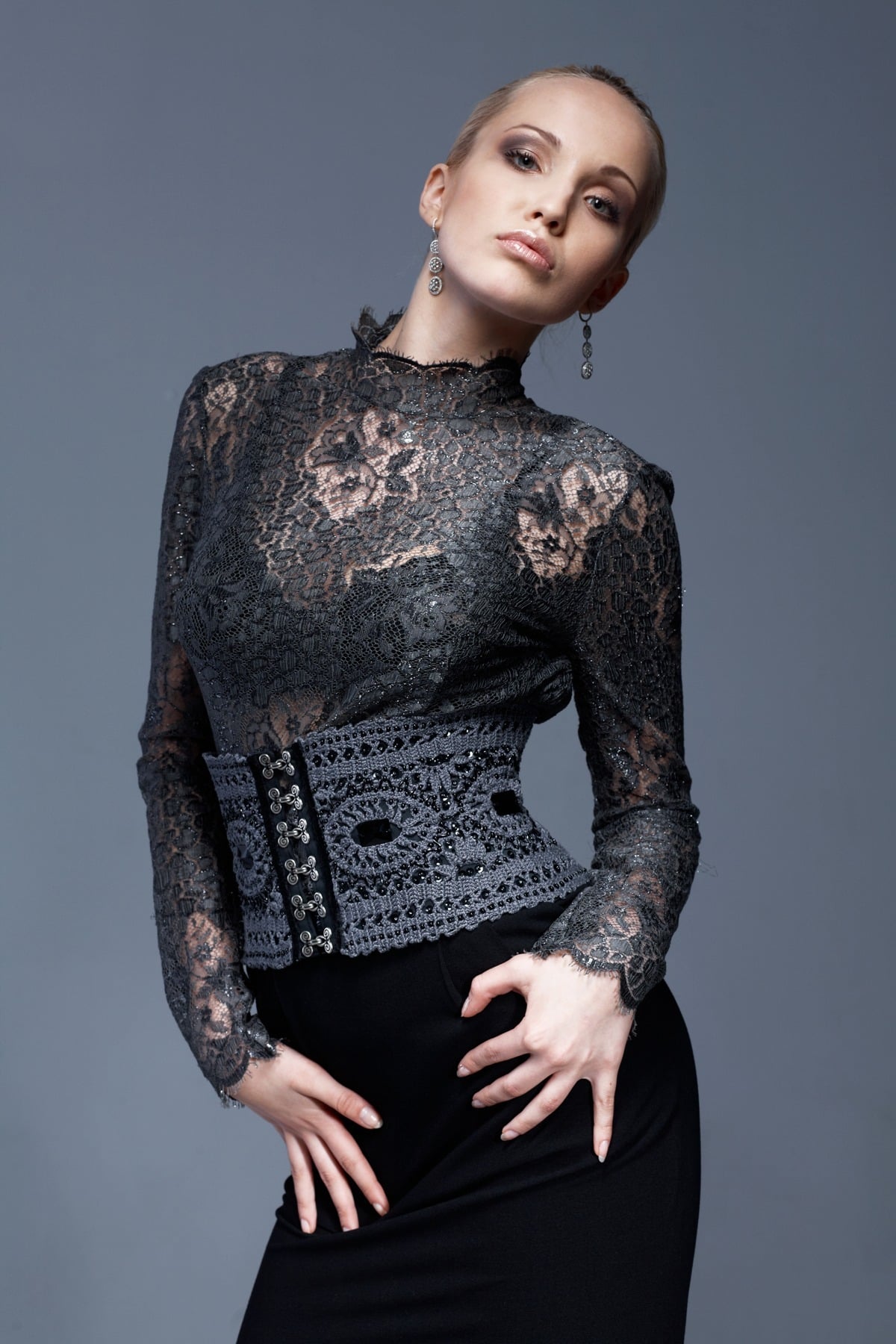
Matte versus lustrous, smooth versus raised, and opaque versus sheer surfaces create visual interest.
Restricting the design to one or two dominant contrasts helps maintain professional refinement.
6. Color Discipline
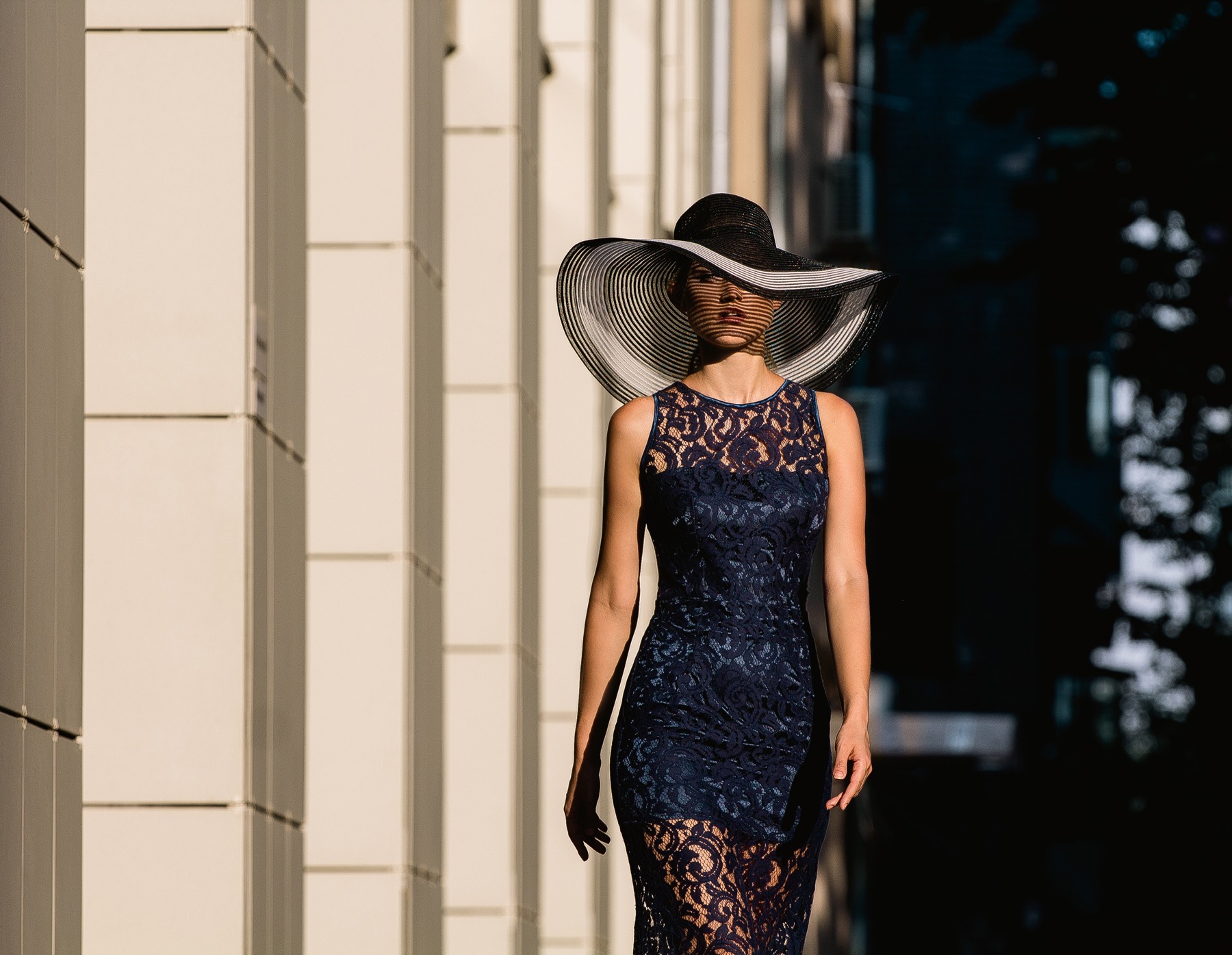
Monochromatic and tonal combinations simplify the integration of contrasting textures.
Navy-on-navy, ivory-on-cream, black-on-charcoal and chocolate-on-bronze allow lace and embroidery to stand out through surface detail rather than competing colors.
Hybrid Dressing Formulas for Different Professional Situations
Important Business Meetings
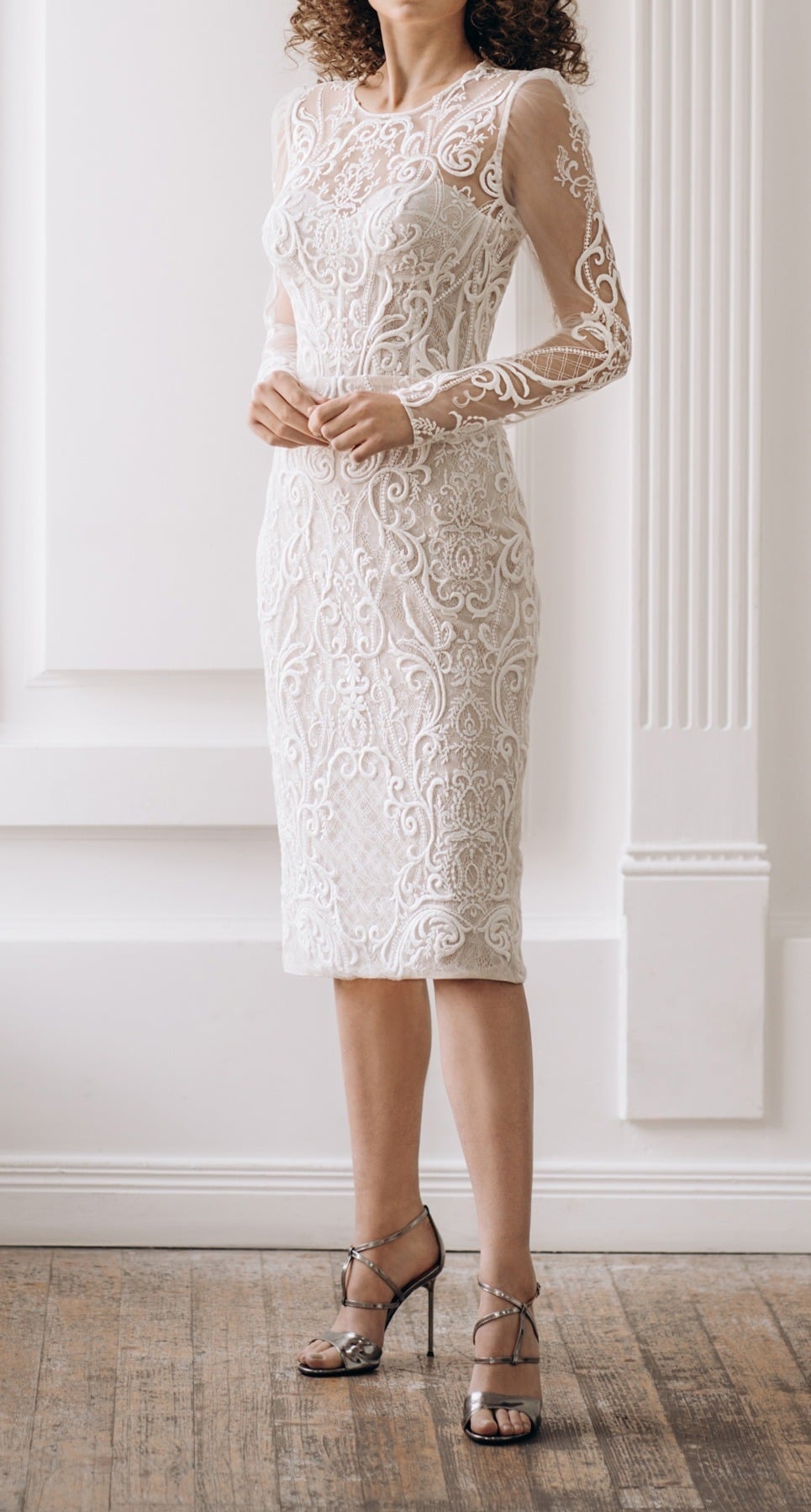
Begin with a defined silhouette: a fitted blazer, straight-leg trousers or precisely constructed sheath dress.
Introduce creativity through Guipure collars, tonal embroidered sleeves or understated lace blouse panels.
Avoid excessive bodice transparency and prioritize fabrics that retain their appearance after prolonged sitting.
Presentations and Public Speaking
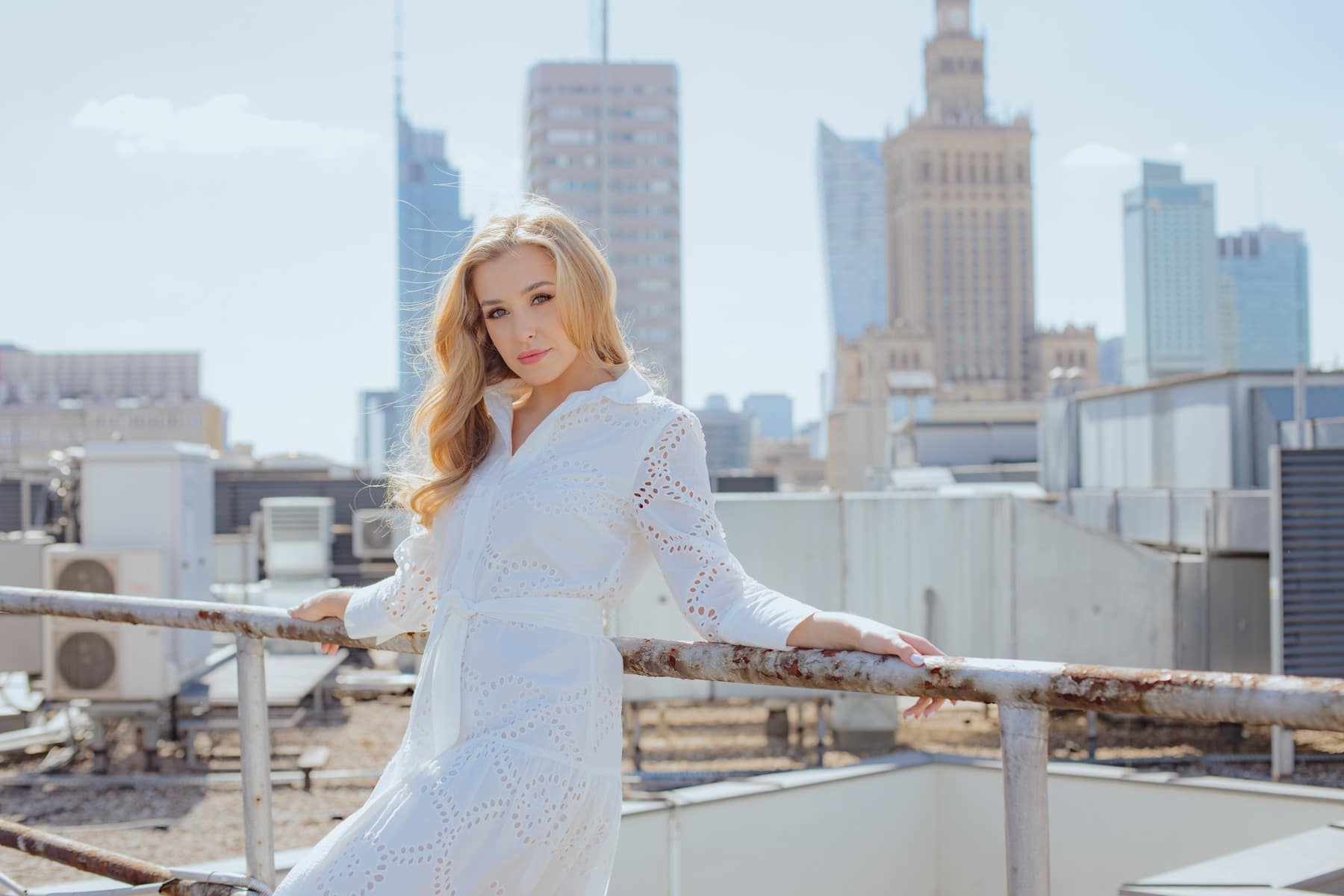
Garments should communicate clearly from a distance.
Architectural Guipure placement around shoulders, sleeves or the waist can reinforce proportions without distracting from the speaker.
Avoid excessively fine repetitive patterns that may produce moiré effects on camera.
Creative Working Days

Relaxed trousers, voluminous skirts or lightweight overshirts can be combined with cotton lace, denim or knitwear.
Maintain at least one precise element, such as a tailored collar, structured shoulder or clean waistline.
Meetings Followed by Evening Events
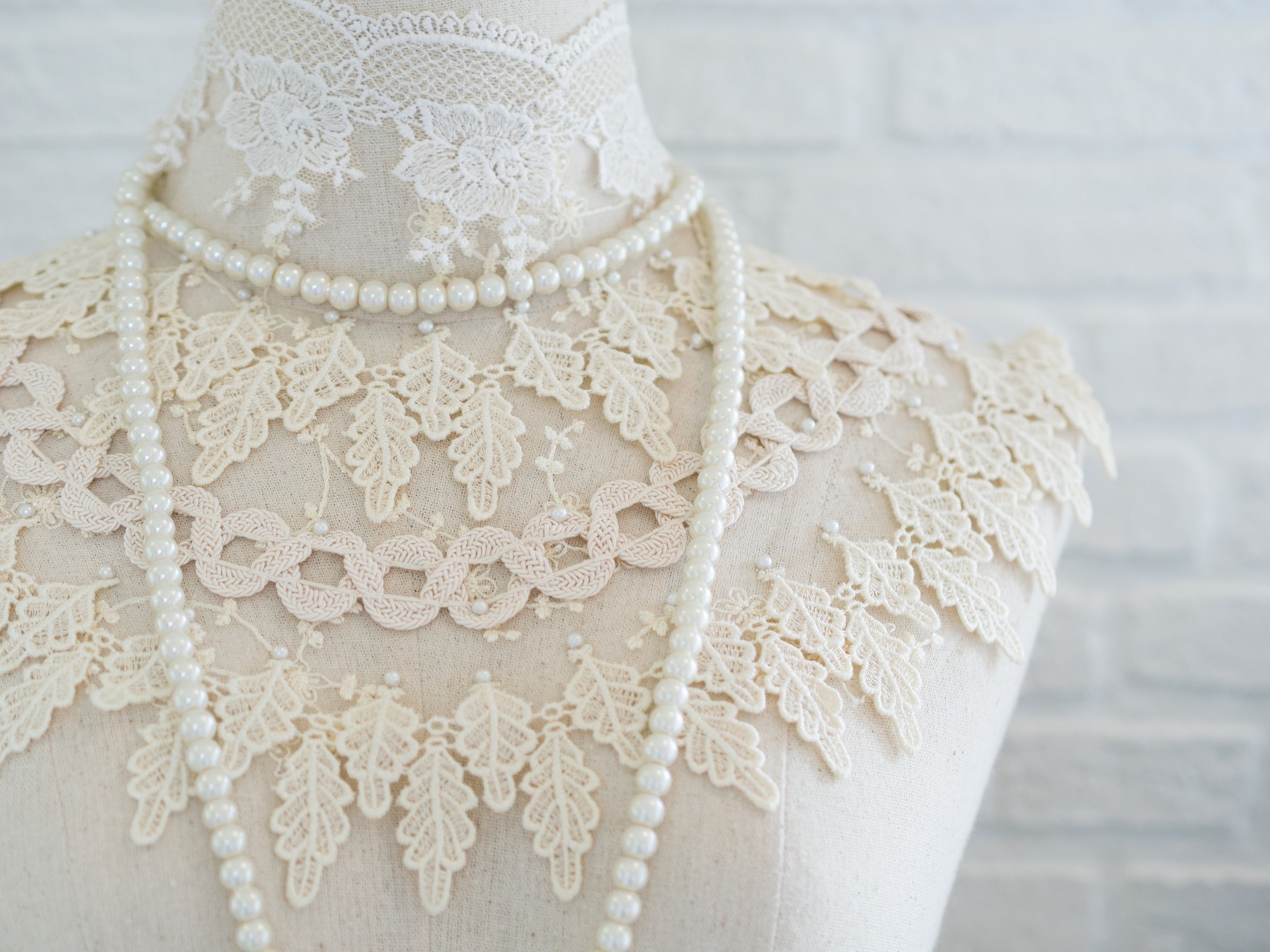
Begin with a versatile base garment and introduce removable details.
Detachable Guipure collars, embroidered belts, tulle overlays and lace capelets can transform professional attire into an evening-ready ensemble.
This modular approach increases styling flexibility without requiring an entirely separate wardrobe.
Hybrid Dressing for Thailand's Hot and Humid Climate
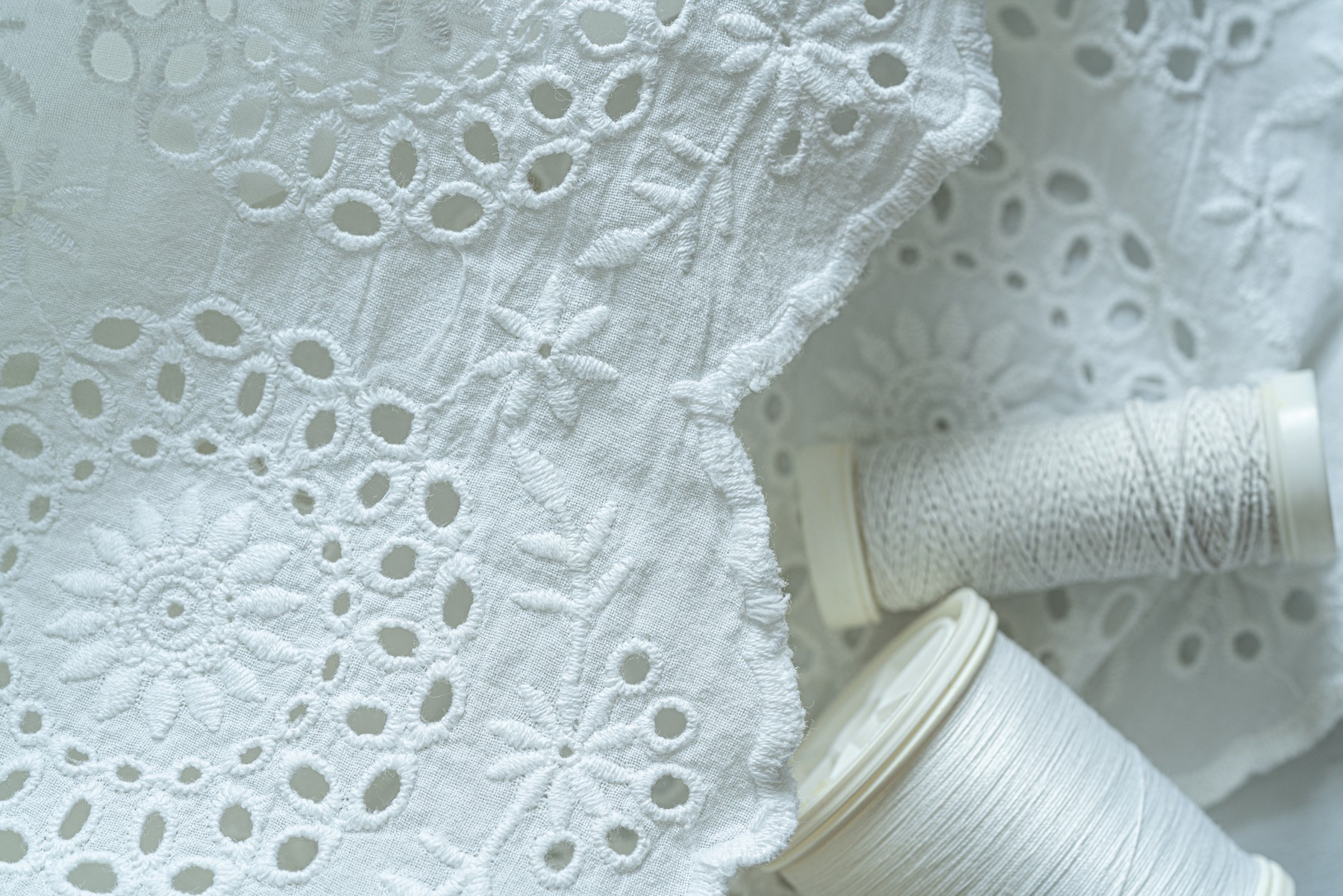
For Thai fashion brands, climate compatibility is fundamental to successful product development.
Professional clothing must accommodate outdoor heat, humidity, commuting and air-conditioned interiors.
Fabric evaluation should consider airflow, moisture management, weight, lining construction and drying performance.
Cotton poplin and cotton lace offer a natural hand-feel and can provide effective comfort when appropriately constructed.
Linen blends create relaxed sophistication, while viscose and lyocell can contribute fluidity and a cool-touch sensation, depending on fabric construction and finishing.
Lightweight Chantilly and tulle may improve ventilation in selectively positioned panels.
However, lining selection often determines whether a lace garment is genuinely comfortable.
Heavy, poorly ventilated linings can undermine the benefits of lightweight outer fabrics.
Manufacturers should consider breathable linings, appropriate stretch compatibility and carefully engineered half-lining where suitable.
For further sourcing considerations, see Fabric Sourcing for Professional Designers.
Building a Practical Creative Professional Wardrobe
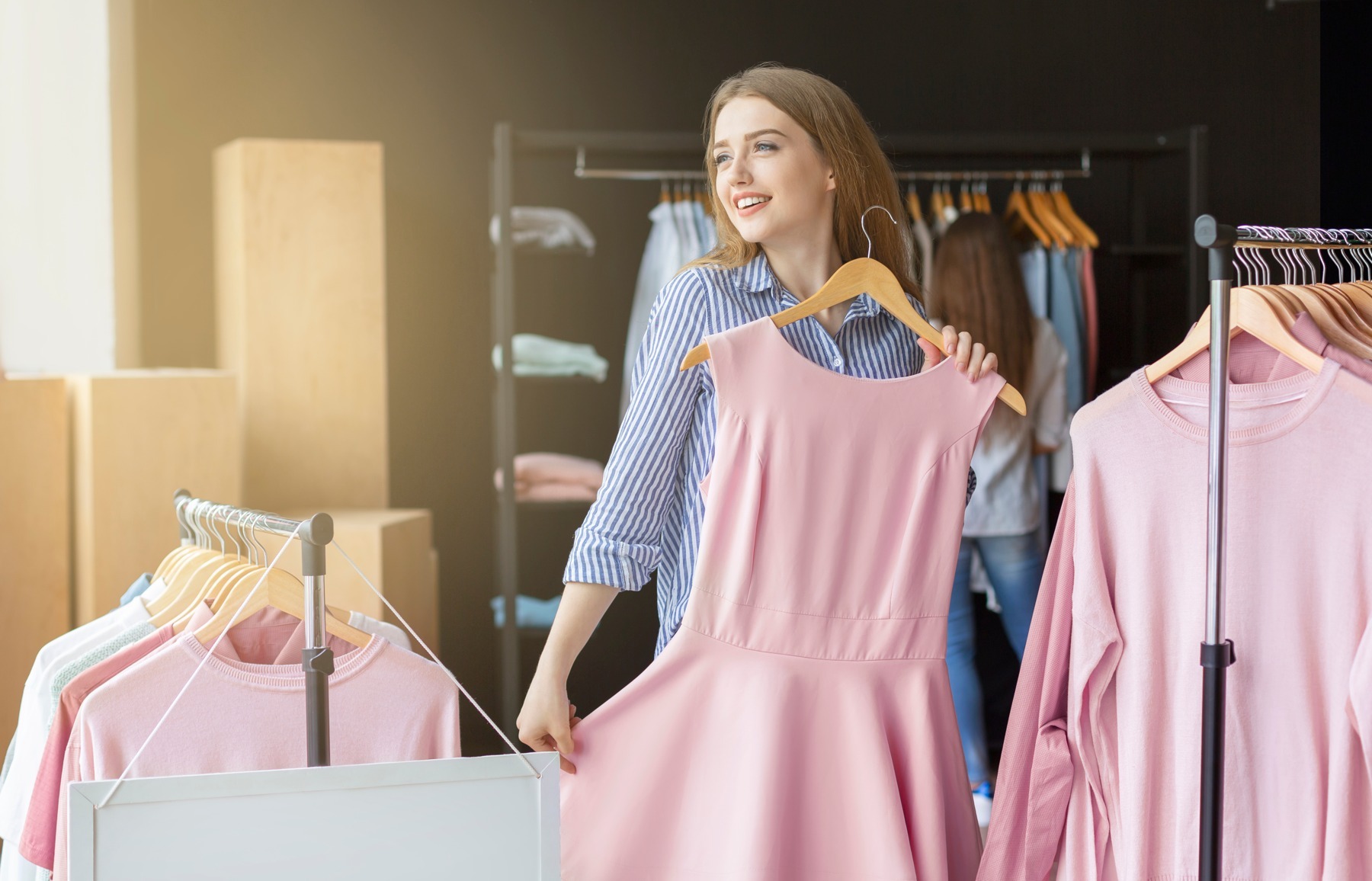
An effective hybrid wardrobe begins with a disciplined color foundation.
Choose two or three base colors, such as navy, ivory and charcoal, supported by one accent shade.
Establish essential garments: a tailored blazer, two trouser silhouettes, a skirt, a versatile dress and layering tops.
Next, introduce two or three personality pieces.
These might include a Chantilly-sleeved blouse, architectural Guipure skirt, embroidered jacket or detachable lace collar.
Every statement piece should complement multiple existing garments.
The underlying philosophy is simple: purchase and design clothing according to versatility, not appearance alone.
For fashion brands, communicating three or more styling possibilities can help customers understand the practical value of premium textile craftsmanship.
Strategic Opportunities for Fashion Brands and Garment Manufacturers

For B2B fashion development, Hybrid Dressing must extend beyond moodboards into commercially viable product architecture.
A coherent collection should distinguish between three fabric functions.
Hero Fabric: A signature Guipure design, distinctive embroidery or premium Chantilly lace establishes brand recognition.
Supporting Fabric: Crepe, cotton poplin or lightweight suiting provides structural balance.
Commercial Base: Reliable, repeatable materials support core styles and volume production.
Before bulk manufacturing, technical evaluation should include shrinkage, colorfastness, pilling, seam slippage, stretch recovery and post-care appearance.
Particular attention is required when combining fabrics with different dimensional stability or elasticity.
For bordered lace, marker planning and motif positioning affect fabric consumption and cutting efficiency.
Manufacturers should also verify usable width, motif repeat, stock availability and consistency across production lots.
One signature lace design can support several coordinated products—dress panels, blouse sleeves, skirts and detachable collars—creating assortment consistency while potentially improving purchasing efficiency.
These principles are central to professional wholesale lace and embroidery fabric sourcing.
Choosing the Right Lace for a Hybrid Professional Collection
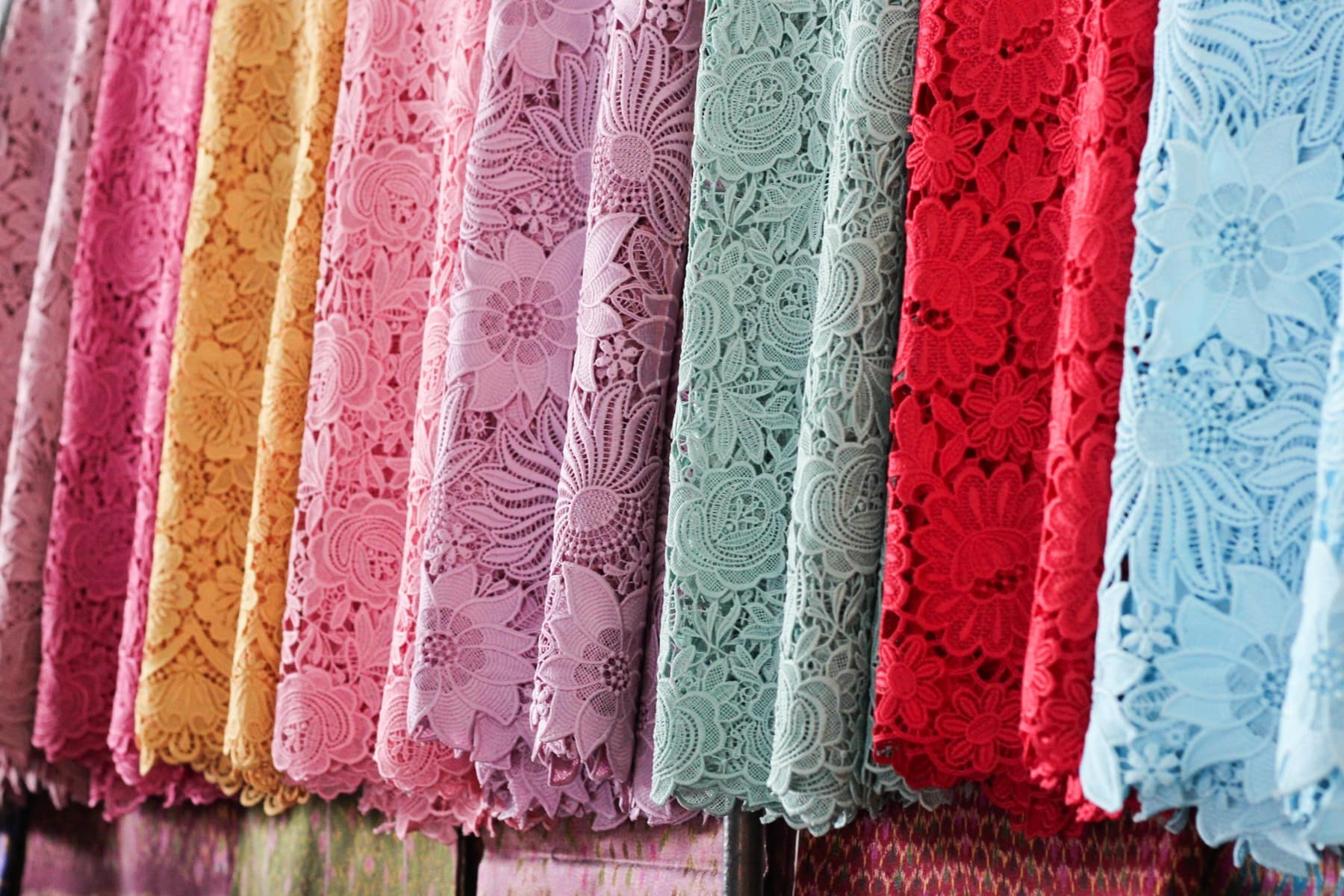
The appropriate lace depends on the intended silhouette, manufacturing requirements and target customer.
Chantilly Lace: Ideal for refined blouses, sleeves and fluid overlays. Fine motifs and professional colors such as navy, black and stone offer versatility.
Guipure Lace: Particularly suitable for structured skirts, dresses, collars and architectural panels. Geometric motifs and deliberate negative space create contemporary sophistication.
Cotton Lace and Eyelet: Effective for creative casualwear, resort-inspired workwear and tropical collections. Their matte appearance coordinates naturally with cotton and linen blends.
Tulle Lace and Embroidered Tulle: Suitable for lightweight overlays, yokes and modular details. Ground stability and embroidery placement must be assessed carefully.
Metallic and Beaded Lace: Best used selectively for transitional evening collections, with embellishment concentrated in accents rather than heavily decorated full garments.
Designers can explore these categories through United Lace's premium lace and embroidery collection.
For inspiration on transforming lace into contemporary ready-to-wear, Parry Lace Studio, United Lace's fashion label, demonstrates how fabric selection, silhouette, proportion and styling influence the character of finished garments.
Common Mistakes That Undermine Hybrid Dressing
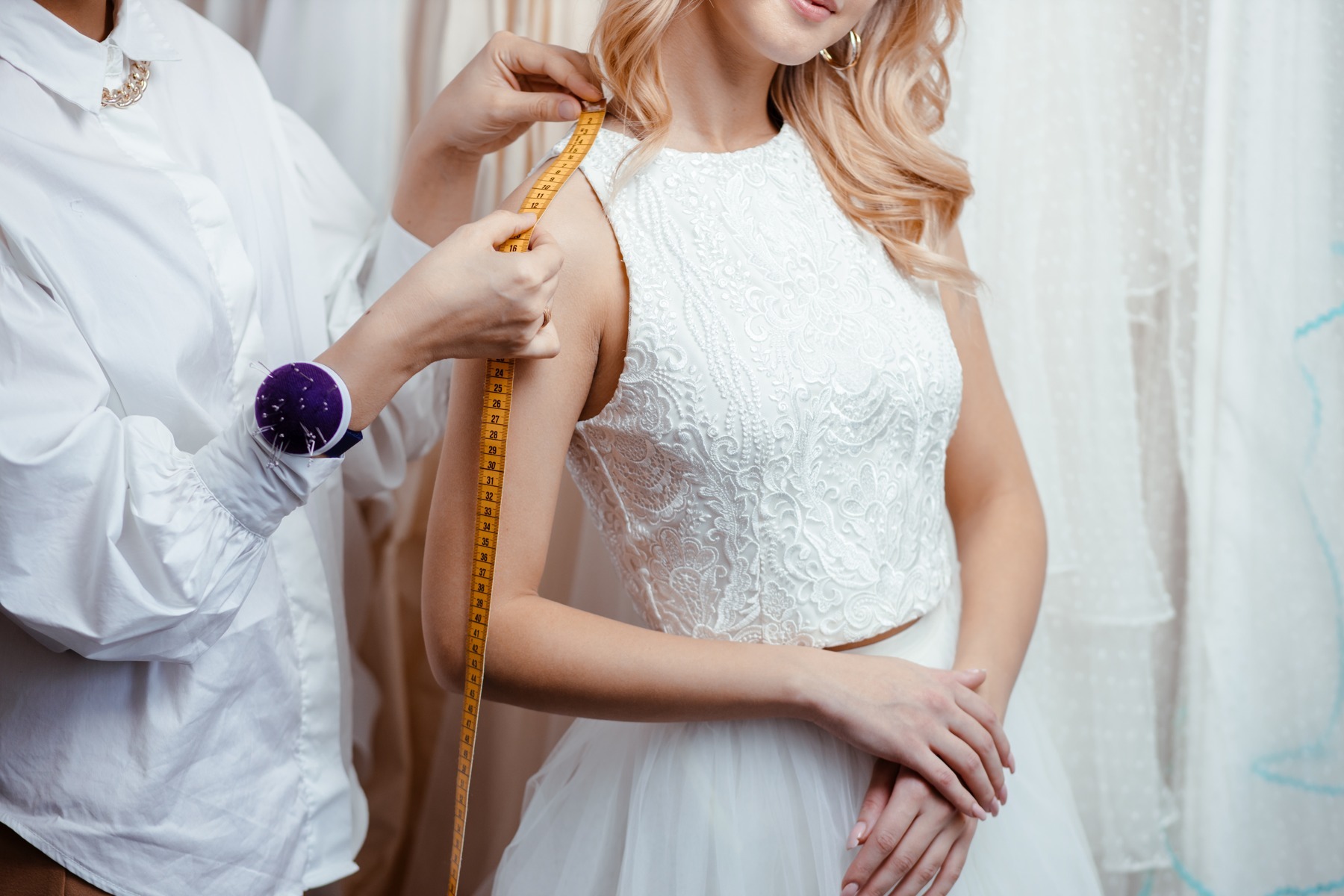
One frequent mistake is selecting lace based solely on close-up photographs without evaluating its drape on a finished garment.
Another is combining too many statement fabrics, resulting in visual competition rather than harmony.
Manufacturers may also add lace to existing patterns without adjusting seam allowances, lining, ease or construction methods.
Equally problematic is assuming creativity requires excessive colors or decoration.
Sophisticated innovation can emerge from precise placement, controlled transparency and unconventional proportions.
Care compatibility must also be considered. When the main fabric and decorative component require incompatible maintenance methods, customers may find the garment inconvenient.
Finally, brands should communicate versatility through product photography.
Displaying office, creative-day and evening styling demonstrates the full commercial value of Hybrid Dressing.
United Lace: A Specialist Material Partner for Modern Workwear
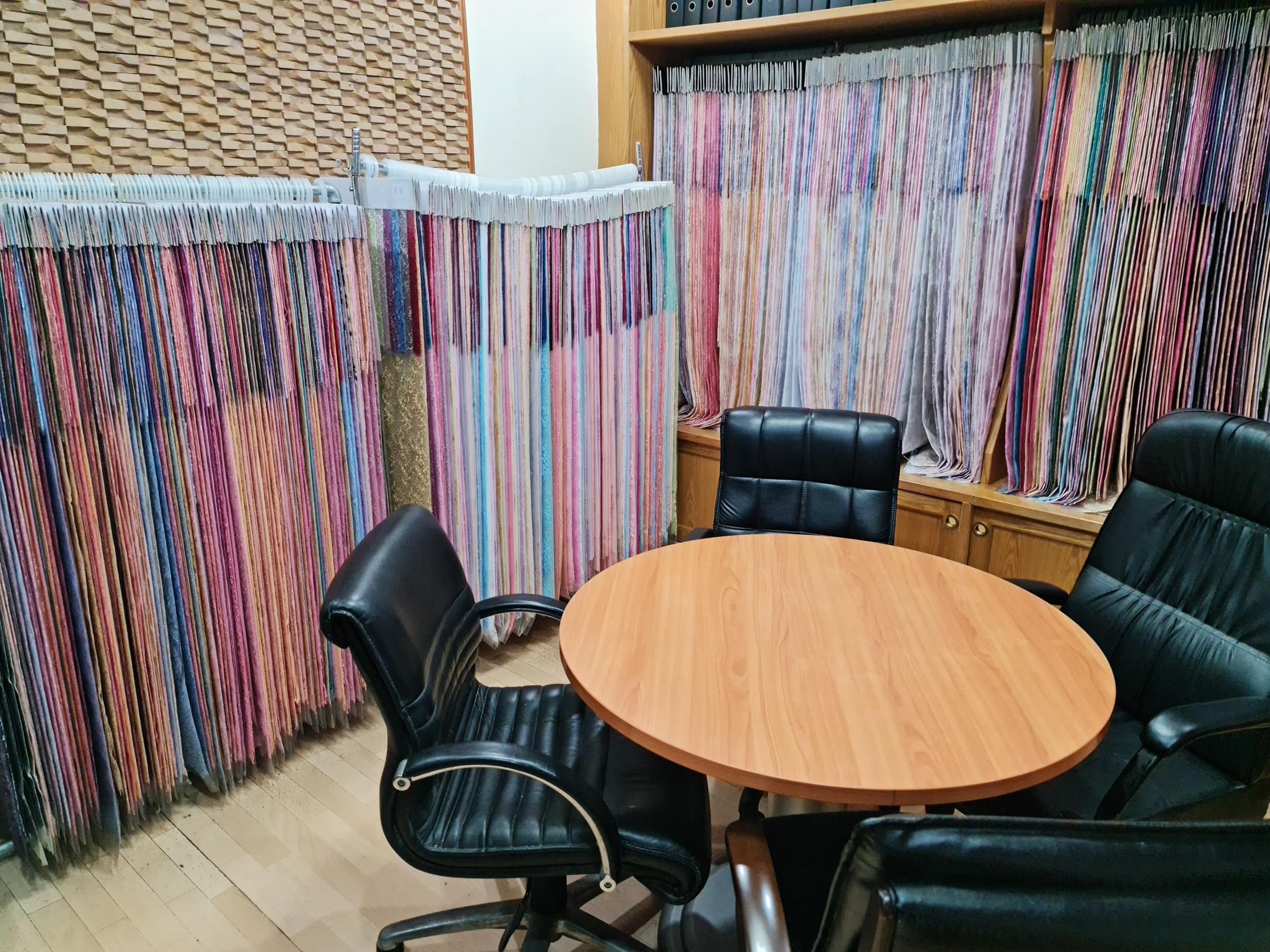
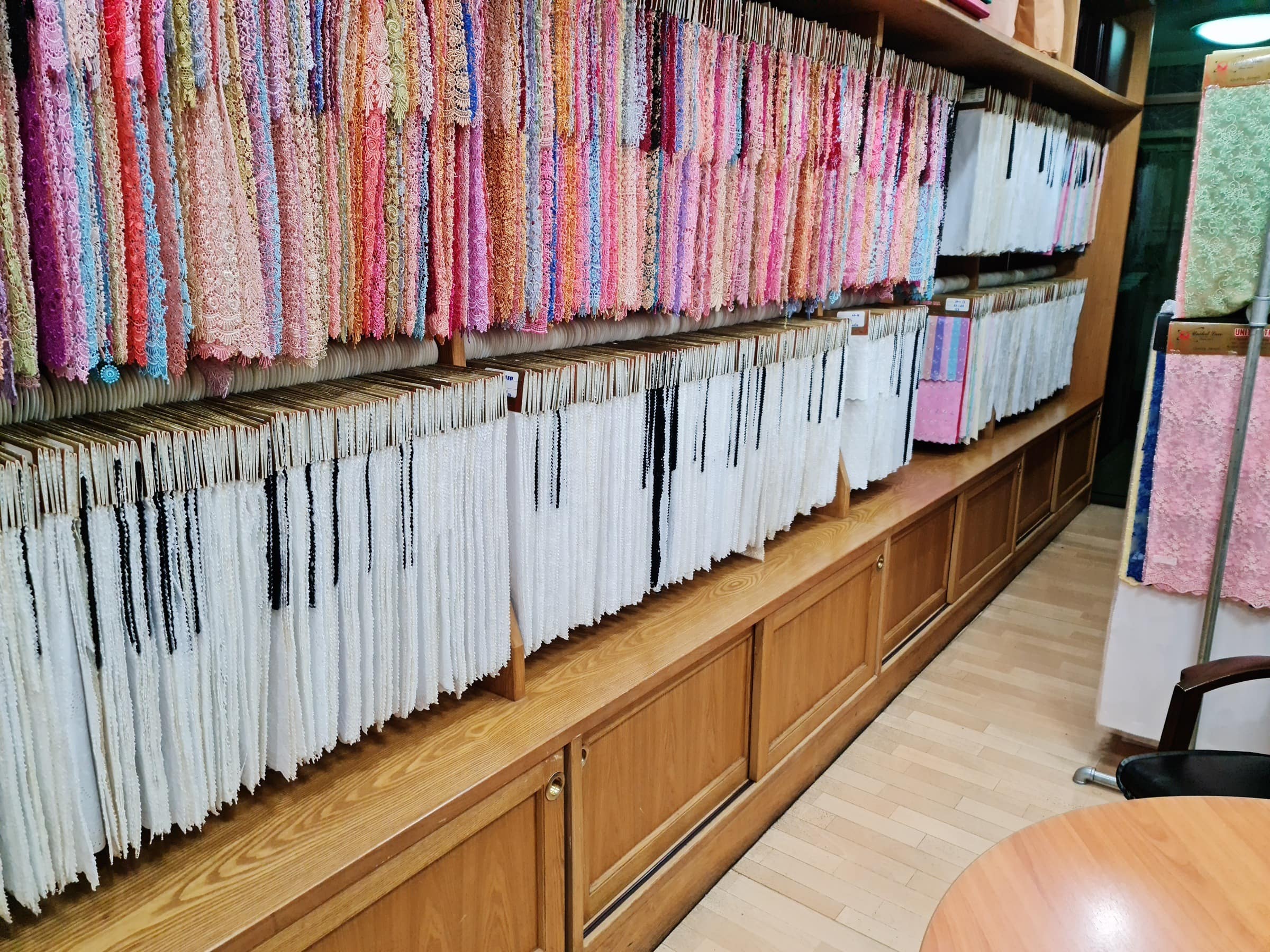
Developing a successful hybrid collection requires more than sourcing attractive fabrics.
Designers and manufacturers must understand how materials behave during cutting, sewing, lining, movement, laundering and repeat production.
With more than 75 years of experience in lace and embroidery textiles, United Lace specializes in supplying fabrics for fashion designers, clothing brands, fabric retailers and garment manufacturers.
Its product categories include Chantilly, Guipure, French lace, cotton lace, Raschel, tulle, appliqué and embellished embroidery.
For B2B buyers, specialist sourcing knowledge helps connect design ambition with practical manufacturing requirements.
This includes understanding motif scale, hand-feel, drape, usable width, fabric density, production suitability and repeat-order considerations.
The importance of these material characteristics is further explored in Lace Fabric Trends in 2026: The New Luxury for Fashion Brands.
For brands developing differentiated collections, United Lace provides a specialist perspective on premium lace and embroidery sourcing.
Conclusion: Professionalism and Creativity Belong in the Same Wardrobe
Creative Professional x Hybrid Dressing represents a shift from categorizing clothing by occasion toward designing meaningful relationships between fabrics, silhouettes and personal identity.
Successful professional fashion does not need to dominate attention. It should communicate confidence, individuality and refinement.
For designers, the starting point is understanding the role of each fabric before developing the silhouette.
For manufacturers, success depends on translating creative combinations into comfortable, consistent and commercially viable garments.
For fashion brands, lace and embroidery offer powerful opportunities to build recognizable textile identities.
Ultimately, Hybrid Dressing is not a compromise between formalwear and fashion. It is a deliberate approach to creating clothing versatile enough for contemporary life, disciplined enough for professional environments and distinctive enough to be remembered.
Developing your next premium workwear or ready-to-wear collection?
Explore United Lace's lace and embroidery fabric collections for professional wholesale sourcing and design inspiration.
LINE Official: @unitedlace
Instagram: @united.lace
FAQs
What is Hybrid Dressing in fashion?
Hybrid Dressing combines contrasting fashion elements—such as tailoring and lace, structured workwear and romantic fabrics, or functional textiles and embroidery—into coordinated garments that balance professionalism, comfort and individuality.
Which fabrics are best for modern professional workwear?
Lightweight suiting, crepe, cotton poplin, compact knit and linen blends provide practical foundations. Chantilly lace, Guipure, cotton lace and embroidered tulle introduce distinctive texture and premium design value.
Can lace be worn in professional office environments?
Yes. Guipure works well in structured panels and skirts, while Chantilly and embroidered tulle are effective for sleeves and overlays. Appropriate lining, motif scale and color selection help preserve professional sophistication.
How can designers combine different fabrics without overwhelming a garment?
Establish one structural foundation, introduce one contrasting textile and limit decorative accents. The 70:20:10 principle provides a useful starting point, particularly when supported by a restrained tonal palette.
Is Hybrid Dressing suitable for tropical climates?
Yes, provided fabrics, linings and garment construction are selected appropriately. Lightweight materials, controlled layering and good airflow are essential for comfortable workwear in hot and humid environments.
Why should fashion brands develop hybrid workwear collections?
Hybrid collections can expand wearing occasions, differentiate products through signature fabrics and connect workwear with premium ready-to-wear and occasionwear.
What should garment manufacturers consider when sourcing lace in bulk?
Manufacturers should evaluate motif repeat, usable width, dimensional stability, color consistency, seam performance, care requirements, stock availability and repeat-order feasibility before approving bulk production.
Where can fashion designers source premium lace and embroidery fabrics in Thailand?
United Lace is a Bangkok-based wholesale specialist with more than 75 years of experience supplying lace and embroidery fabrics for designers, fashion brands and garment manufacturers.

 |  |  |  |  |
#unitedlace #lace #embroidery #cottonlace #drylace #frenchlace #eyelet #chantillylace #lacewholesale #fancylacefabric #lacewholesaleonline #multicolor #tencel #cotton #guipure #wholelacesupplier #lacesupplier #lacecharacteristic #laceproperties #innovation #ecofriendly